
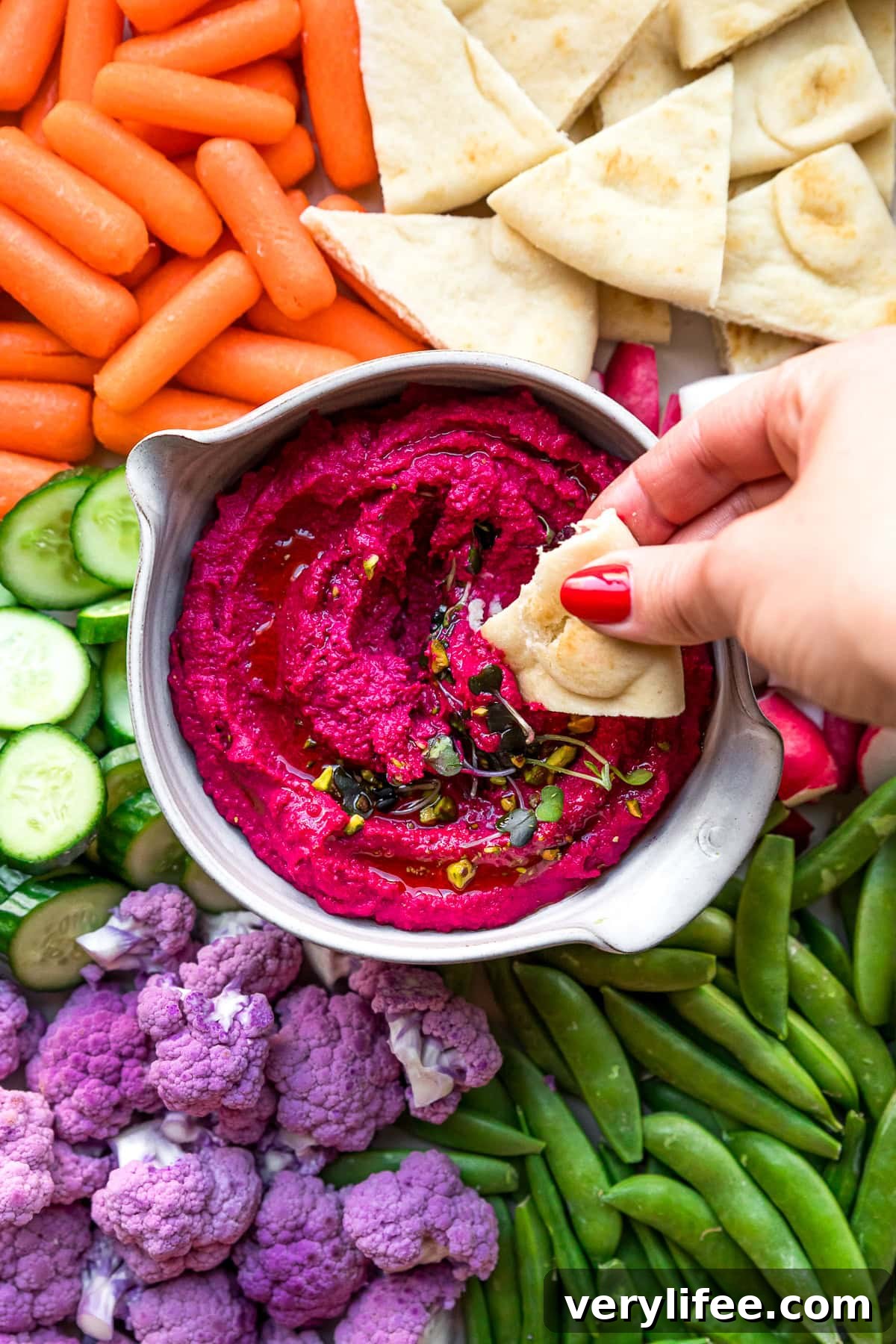
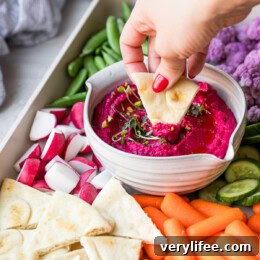
This vibrant beet hummus is a nutrient-dense, anti-inflammatory dip—perfect for mezze platters, snacking, or spreading on sandwiches. It combines roasted beets with chickpeas, tahini, olive oil, lemon, and spices for a silky, colorful spread that’s both delicious and wholesome.
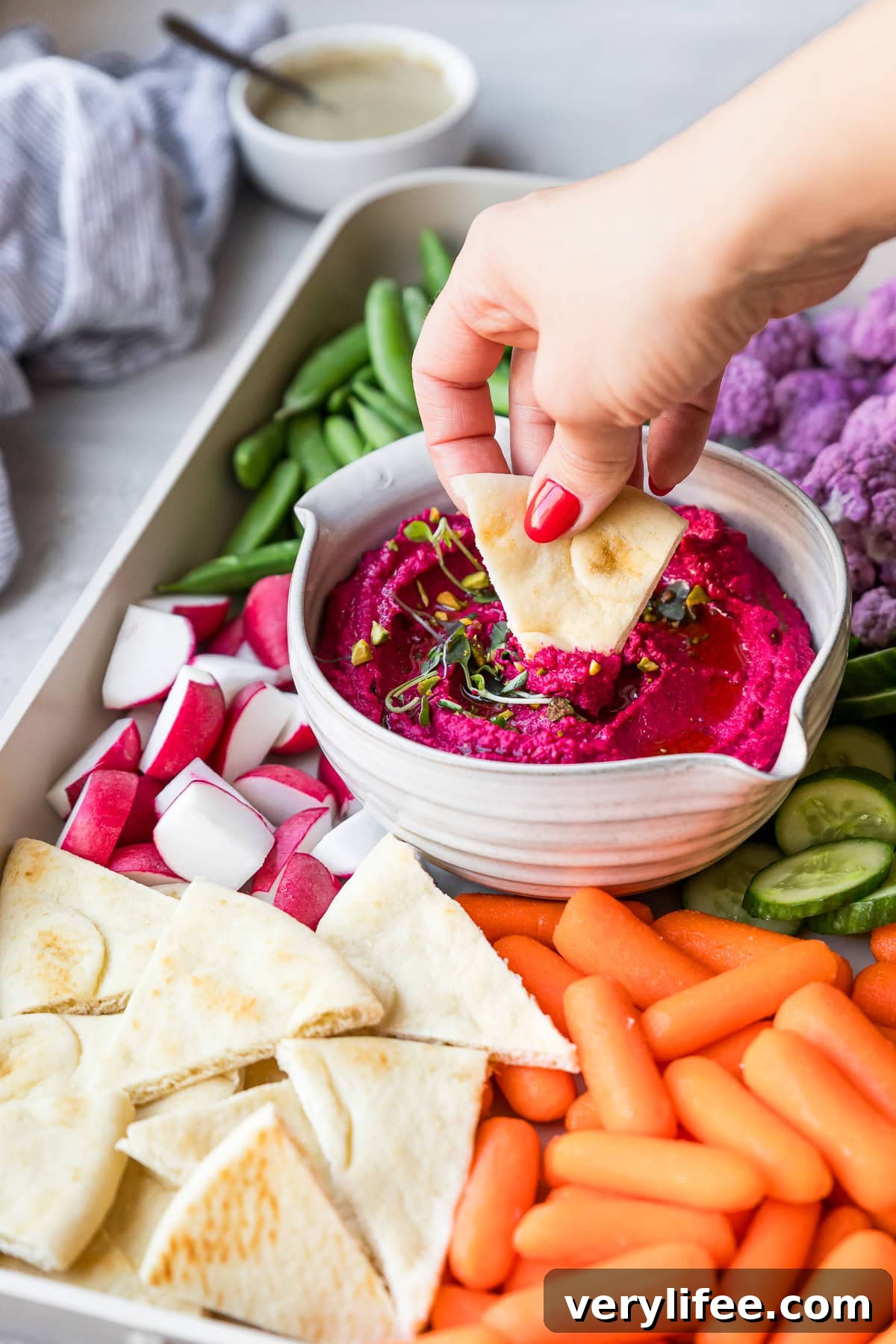
Beet Hummus
While roasted beets aren’t my top pick on their own, they transform beautifully in this hummus. Roasting brings out a subtle sweetness and earthy depth that blends seamlessly with canned chickpeas, tahini, lemon, and garlic. The result is creamy, colorful, and packed with fiber and antioxidants—an excellent addition to Mediterranean-style meals. If short on time, use pre-cooked beets from the store instead of roasting your own.
Why This Works

Traditional hummus is already anti-inflammatory thanks to chickpeas, olive oil, tahini, garlic, and lemon—ingredients rich in antioxidants and healthy fats. Adding roasted beets increases the nutritional value with more fiber, folate, and betalain antioxidants, while also giving the hummus an eye-catching magenta color.
- Vibrant color: The magenta hue comes naturally from roasted beets—no artificial coloring.
- Nutrient-packed: Beets contribute fiber and antioxidants; chickpeas add plant-based protein.
- Mediterranean-friendly: Uses whole, heart-healthy ingredients common to the Mediterranean diet.
- Anti-inflammatory benefits: Beets and olive oil supply antioxidants that support heart health and help reduce inflammation.
- Diet-friendly: Works well for vegetarian, vegan, gluten-free, dairy-free, high-fiber, and Mediterranean-style diets.
If you try this beet hummus recipe, share your photos on social media and tag the recipe source. It’s also a great recipe to make ahead for gatherings or a vibrant addition to weekly meal prep.

What You’ll Need
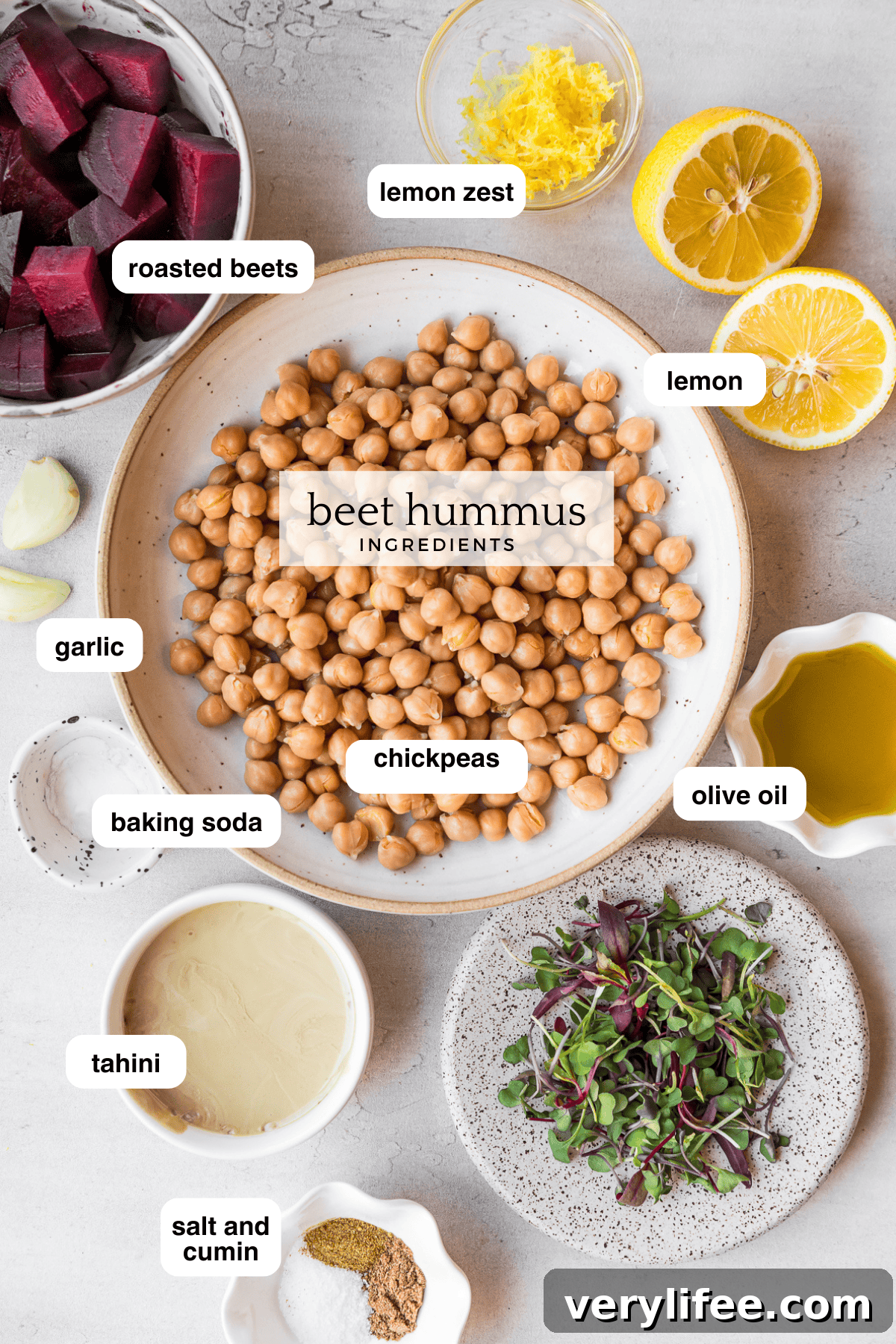
Below are the main ingredients used to make roasted beet hummus. Exact measurements appear in the recipe card further down.
- Beets: Trim the greens, scrub, and roast or use pre-cooked beets.
- Chickpeas: Also called garbanzo beans; the classic hummus base.
- Baking soda: Briefly boiling canned chickpeas with a pinch of baking soda helps soften them and yields a smoother texture.
- Garlic: Adds savory depth.
- Tahini: Sesame seed paste that gives hummus its signature creaminess.
- Olive oil: Enhances texture and flavor.
- Lemon: Use both zest and juice for bright citrus notes.
- Spices: Ground coriander, cumin, and kosher salt.
- Garnish: Lemon zest and microgreens or fresh herbs for a finishing touch.
How to Make Beet Hummus
A food processor works best for this recipe. If you don’t have one, a high-speed blender can also produce a smooth result. Roast the beet, cook the chickpeas briefly to soften them further, then blend everything until creamy. The step-by-step instructions and the printable recipe card are included below.
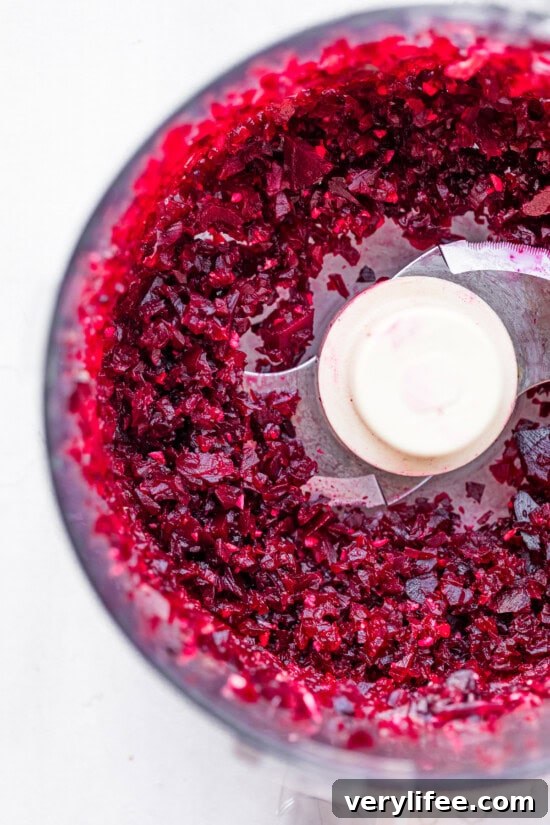
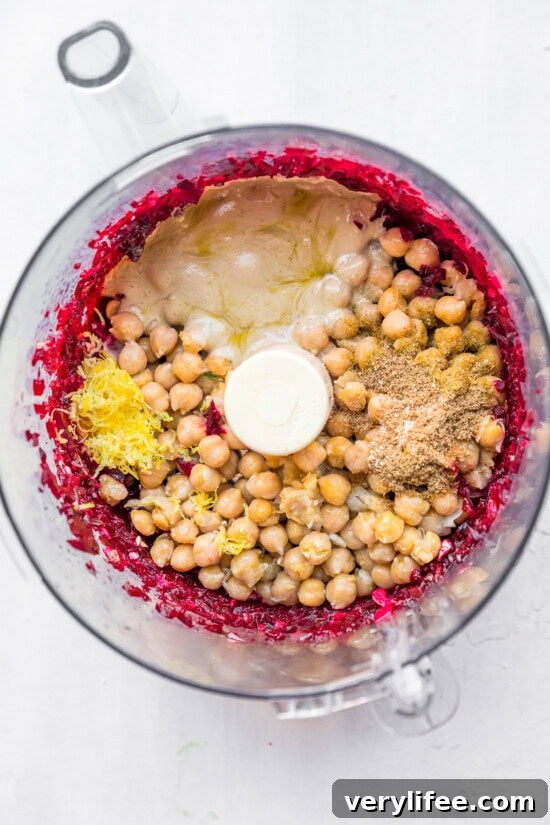
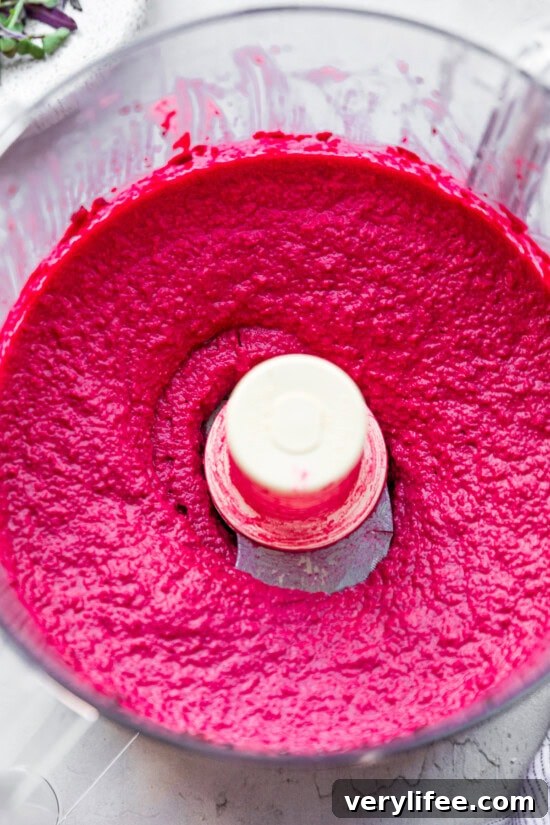
- Roast the beet: Preheat the oven to 400°F (200°C). Wrap the beet in foil and place it on a rimmed baking sheet. Roast 50 minutes to 1 hour 15 minutes, depending on size, until a fork slides in easily. Let it cool.
- Remove the skin: When cool enough to handle, rinse the beet under running water and rub the skin away with your fingers or a paper towel. Roughly chop the beet.
- Boil the chickpeas: In a small saucepan, combine the drained chickpeas and 1/4 teaspoon baking soda. Cover with water by about 2 inches, bring to a boil, then reduce to medium and simmer 20 minutes until very soft and some skins loosen. Drain and rinse under cold water.
- Blend the hummus: In a food processor, pulse the chopped beet and garlic until finely chopped. Add the chickpeas, tahini, olive oil, lemon zest, lemon juice, coriander, cumin, and salt. Process until completely smooth, scraping down the bowl as needed.
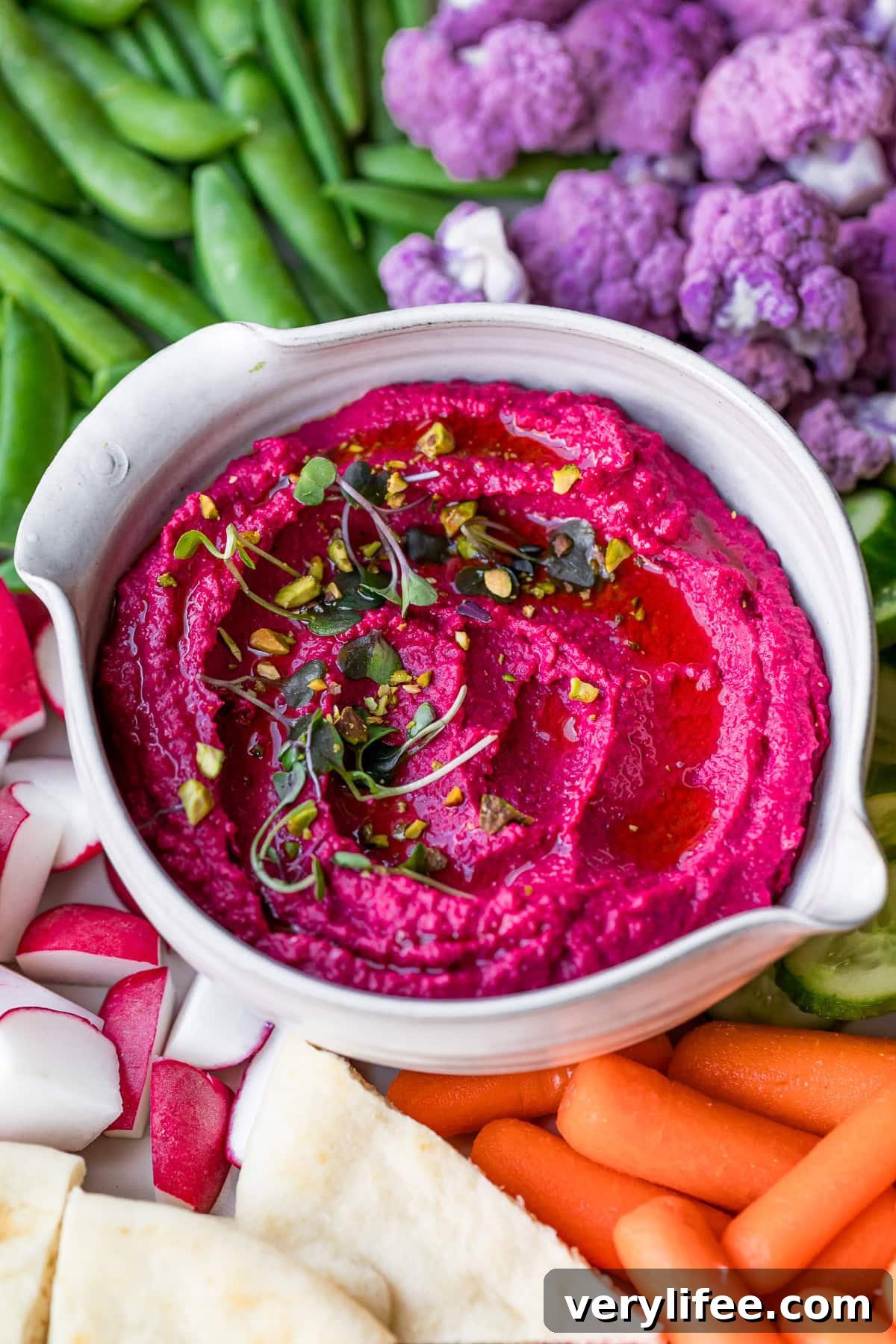
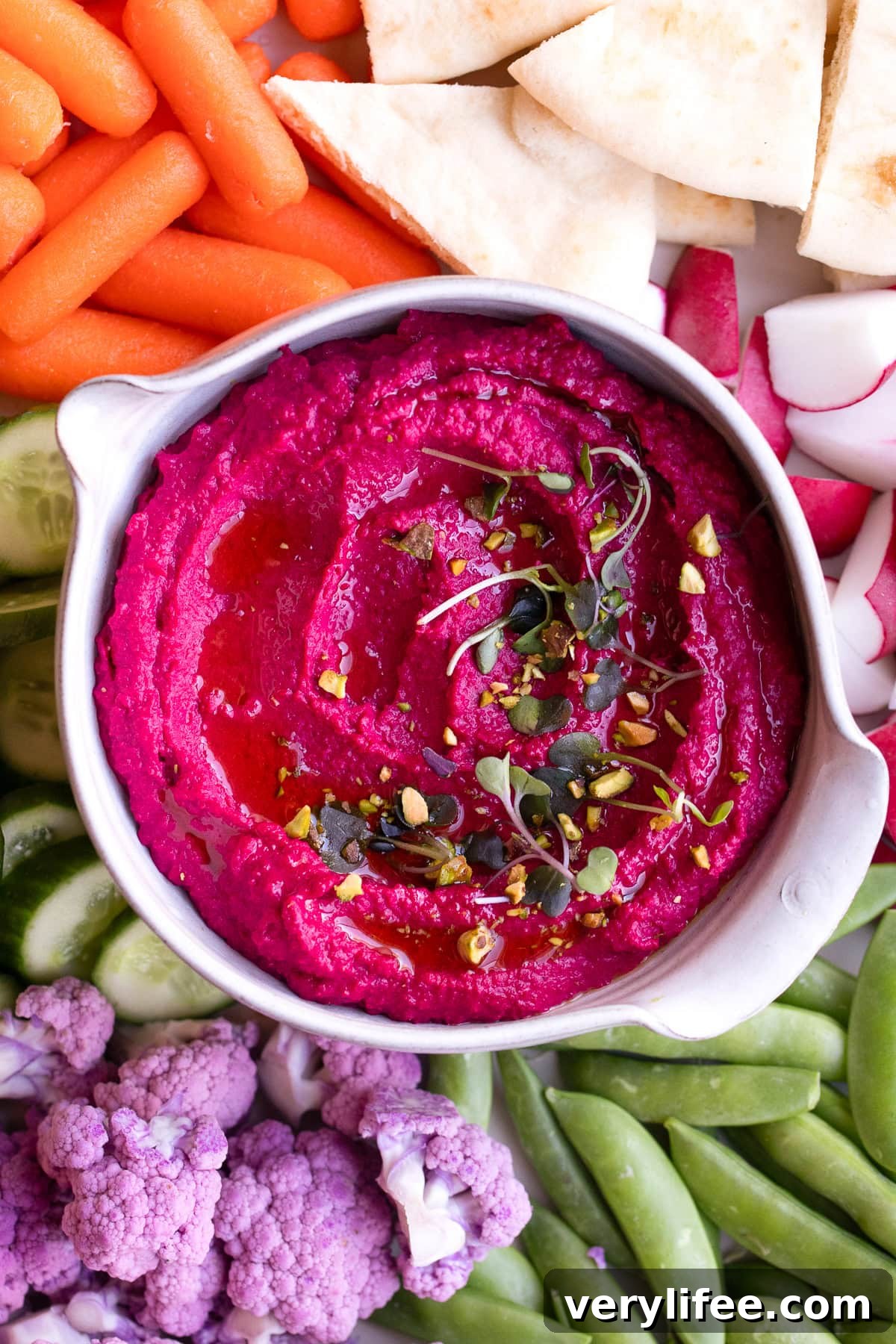
- Serve: Spoon the hummus into a shallow bowl, drizzle with olive oil, sprinkle lemon zest and microgreens or herbs if desired, and serve with pita wedges or fresh vegetables.
Variations
- Canned beets: You can use cooked beets from the store, but roasting intensifies flavor.
- No tahini: Substitute cashew butter or increase the olive oil for creaminess.
- Adjust flavors: Increase or decrease lemon and garlic to suit your taste.
- Add herbs and spices: Try za’atar, parsley, oregano, or thyme for different flavor profiles.
Serving Suggestions
- For dipping: Serve on a crudité platter with warm pita wedges and fresh vegetables like cucumber, radish, baby carrots, and bell peppers.
- Sandwich spread: Swap out mayonnaise or mustard for beet hummus to add color and nutrition.
- Grain bowls: Spoon hummus into a quinoa or rice bowl with greens, vegetables, and a protein for a satisfying meal.
- Use as a recipe substitute: Replace standard hummus in recipes such as nachos, cucumber boats, or layered dips.
Storage
- Refrigerator: Store homemade beet hummus in an airtight container for up to 4 days.
- Freezing: Freeze in an airtight container for up to 3 months. Thaw overnight in the fridge.
- After thawing: If the texture is too thick, stir in a little olive oil or water and blend until smooth.
More Healthy Dip Recipes You’ll Love
For additional snack and dip ideas, explore other sauces, dips, and spreads. Here are five crowd-pleasers to try:
- Baba Ganoush
- Tzatziki Sauce
- Hot Spinach and Artichoke Dip
- Taco Dip
- Lighter Buffalo Chicken Dip
Beet Hummus
Ingredients
- 1 medium beet, greens removed, scrubbed clean and dried
- 1 (15-ounce) can chickpeas, rinsed and drained
- 1/4 teaspoon baking soda
- 2 cloves garlic, roughly chopped
- 1/4 cup tahini
- 2 tablespoons extra-virgin olive oil
- 1 teaspoon lemon zest, plus more for garnish
- 2 tablespoons lemon juice
- 1/2 teaspoon ground coriander
- 1/4 teaspoon ground cumin
- 1 teaspoon kosher salt
- Microgreens or fresh herbs, optional for garnish
Optional for serving:
- Crudités such as sliced cucumbers, quartered radishes, sugar snap peas, baby carrots, cauliflower florets, and warm pita wedges
Instructions
- Preheat the oven to 400°F (200°C).
- Wrap the beet tightly in foil and place it on a rimmed baking sheet. Roast until fork-tender, about 50 minutes to 1 hour 15 minutes depending on size. Remove and cool. When cool enough to handle, rinse under running water and rub the skin off, or peel gently with a paper towel. Roughly chop the beet—this should yield about 3/4 cup. (Store-bought cooked beets can be used as an alternative.)
- Meanwhile, place the chickpeas and baking soda in a small saucepan and cover with water by about 2 inches. Bring to a boil over high heat, then reduce to medium and simmer for 20 minutes, until the chickpeas are very soft and some skins begin to loosen. Drain and rinse under cold water.
- In a food processor fitted with the blade, add the chopped beet and garlic and pulse until finely chopped, scraping down the sides as needed. Add the rinsed chickpeas, tahini, olive oil, lemon zest, lemon juice, coriander, cumin, and salt. Blend until completely smooth, about 1 minute, scraping the bowl periodically.
- Transfer the hummus to a shallow bowl and smooth the surface. Drizzle with olive oil, sprinkle with lemon zest and microgreens or herbs if desired, and serve with pita wedges and vegetables.
Notes
Makes about 2 cups of hummus.
Nutrition
Serving: 1/3 cup • Calories: 206.5 kcal • Carbohydrates: 20 g • Protein: 7 g • Fat: 12 g • Saturated Fat: 1.5 g • Sodium: 428 mg • Fiber: 5.5 g • Sugar: 4 g
Did You Make This Recipe?
Share a photo and tag the recipe source on social media using the recipe name so others can find it.