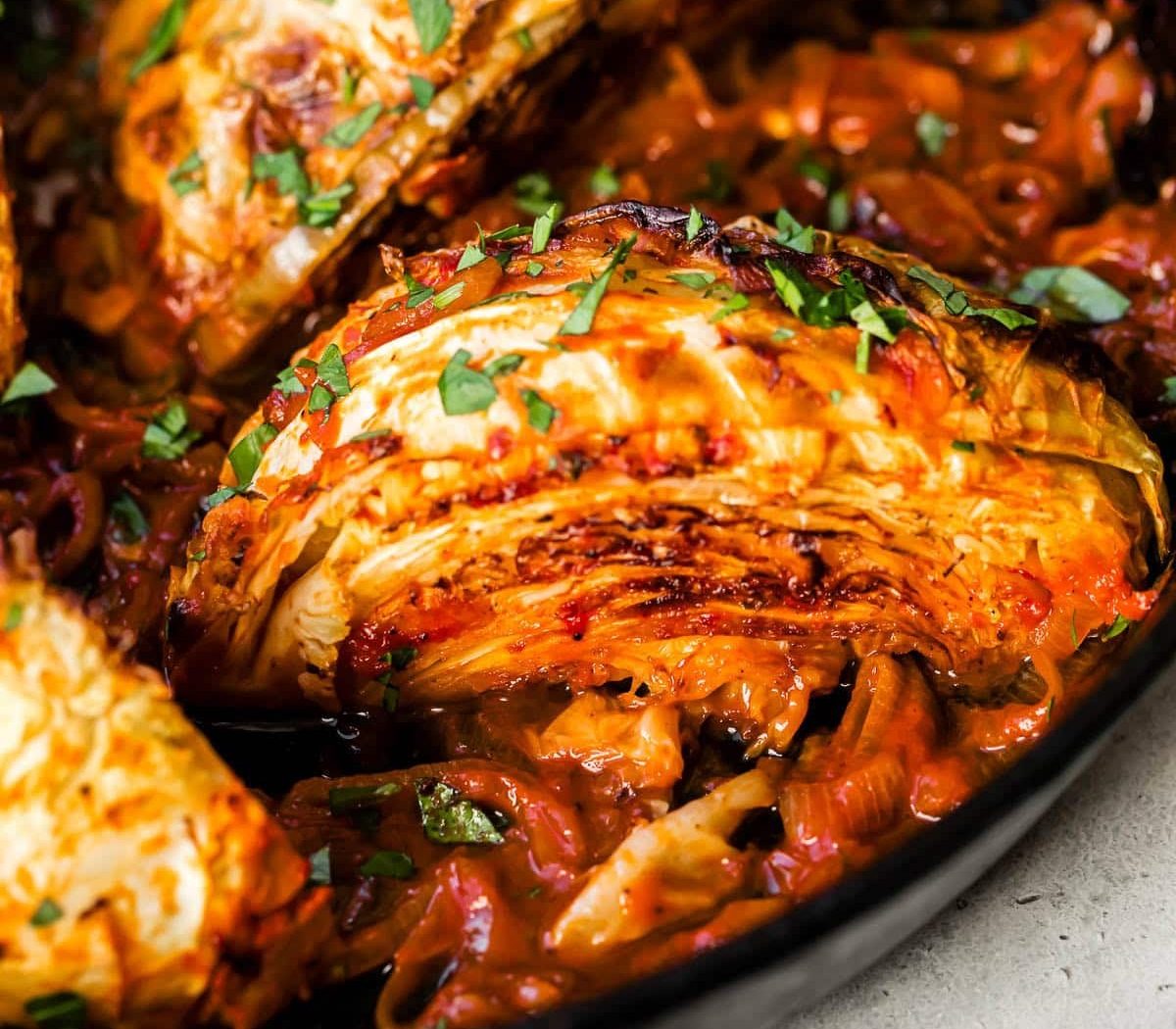
These braised cabbage wedges simmer in a savory tomato-and-wine sauce until they become meltingly tender. Often called melting cabbage, this easy skillet-to-oven side transforms a simple head of cabbage into a silky, flavorful dish perfect beside roasted or pan-seared proteins.
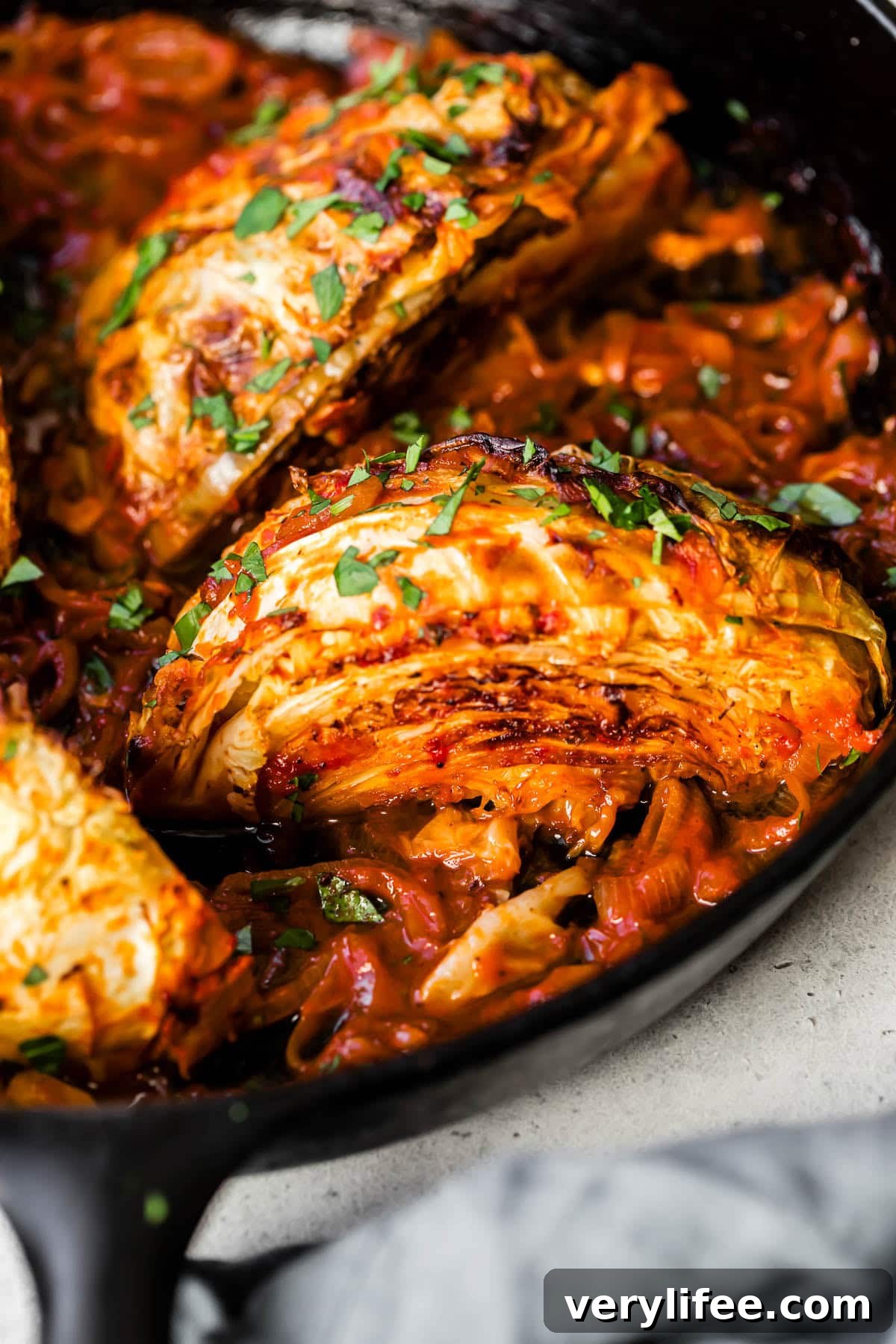
Melting Cabbage
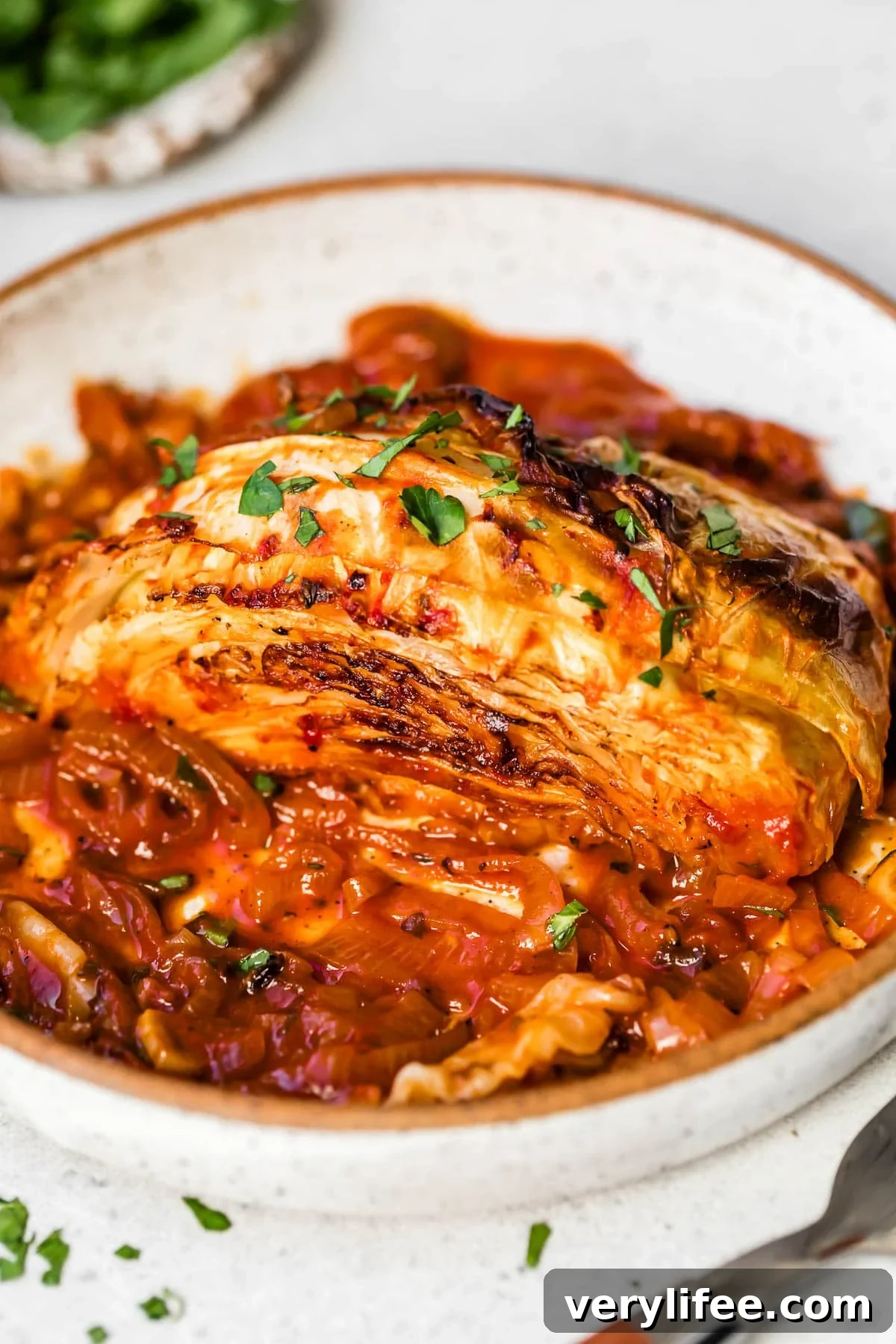
This version of melting cabbage has the comforting layers and tender texture of stuffed cabbage but without the meat. The wedges are seared to develop caramelized edges, then braised in a tomato-and-wine broth that concentrates into a rich, glossy sauce. It’s a terrific side for roast chicken, pork tenderloin, meatloaf, or mashed potatoes to catch every spoonful of sauce. If you enjoy cooking with cabbage, try using this method as a foundation for many seasonal variations.
Why This Braised Cabbage Recipe Works

Cabbage is inexpensive, widely available, and often underrated as a side dish. In this recipe the layers of the cabbage soak up the braising liquid and become tender without falling apart. The technique is simple, but the result is a satisfying, elegant vegetable side.
- High in fiber: About 7 grams of fiber per serving helps keep you full.
- Deep flavor: Searing and slow braising in a tomato-and-wine sauce builds savory complexity.
- Versatile: Pairs well with poultry, pork, beef, or simply served with potatoes or rice.

Ingredients You’ll Need
Cabbage has a mild flavor, so the braising liquid is built to be bold and savory. Exact measurements appear in the recipe card below.
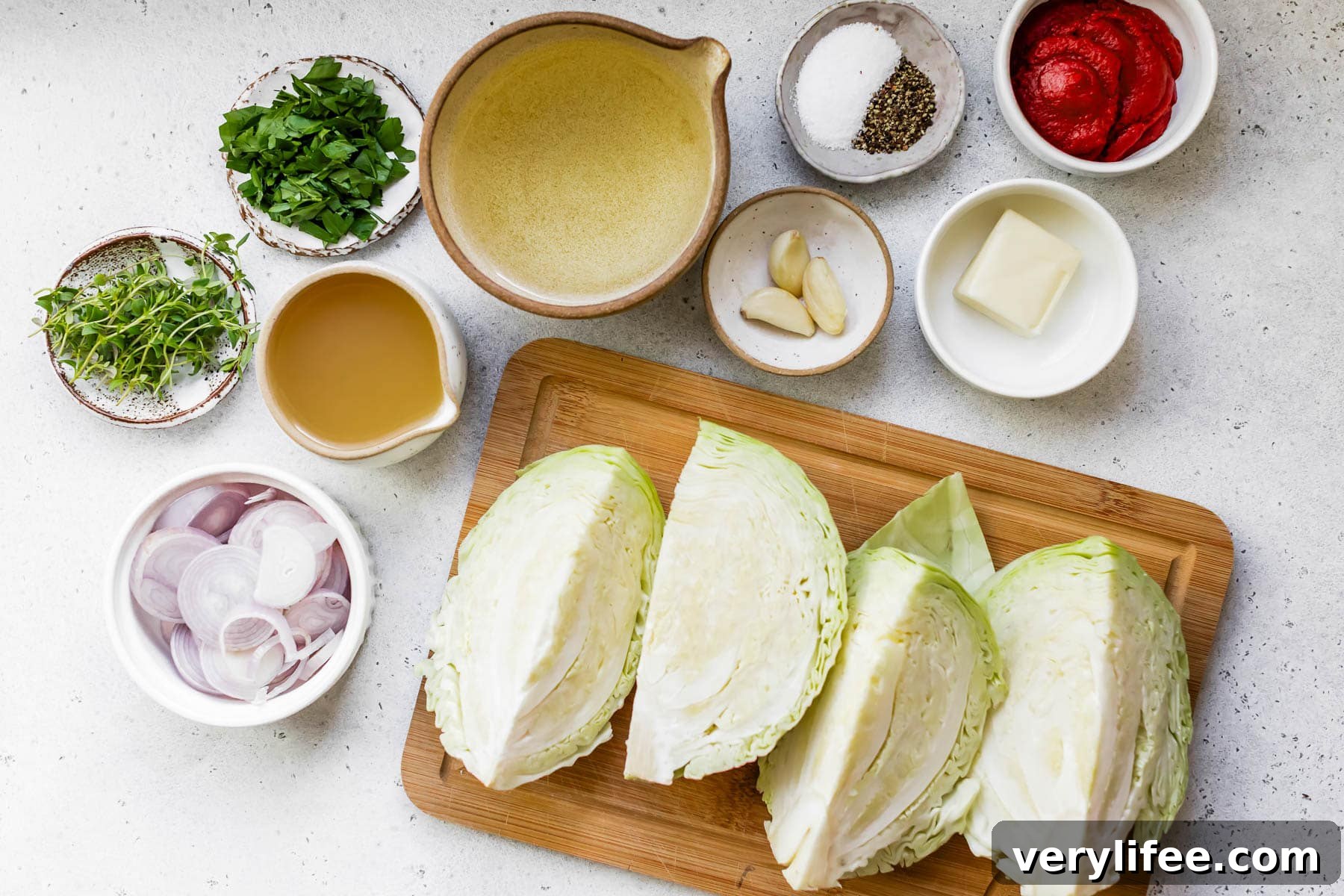
- Green cabbage: 2 pounds (about one small head or half a large one); cut into 4 wedges and keep the core intact so the leaves stay together.
- Dry white wine: 3/4 cup, divided. A light, dry white works well and adds brightness to the sauce.
- Broth: 3/4 cup vegetable, chicken, or mushroom broth to make the braising liquid.
- Concentrated tomato paste: 3 tablespoons for depth and natural sweetness.
- Butter: 2 tablespoons unsalted (or a dairy-free alternative), divided to sear and finish the cabbage.
- Aromatics: 2 medium shallots (sliced) and 3 large garlic cloves (thinly sliced).
- Herbs and seasoning: 2 teaspoons fresh thyme, 2 tablespoons chopped flat-leaf parsley, kosher salt and freshly ground black pepper.
How to Make Braised Cabbage
Searing the cabbage first produces caramelized edges that deepen the flavor; braising then softens the leaves into a silky texture. Follow the recipe instructions below for oven finishing.
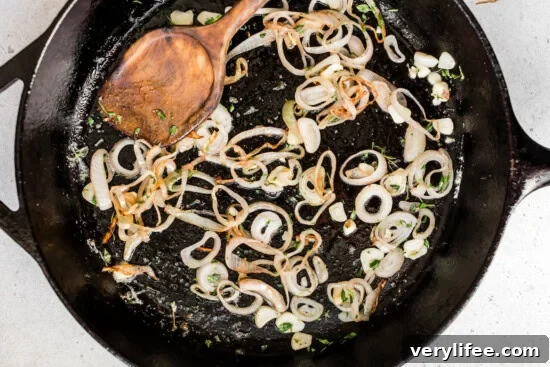
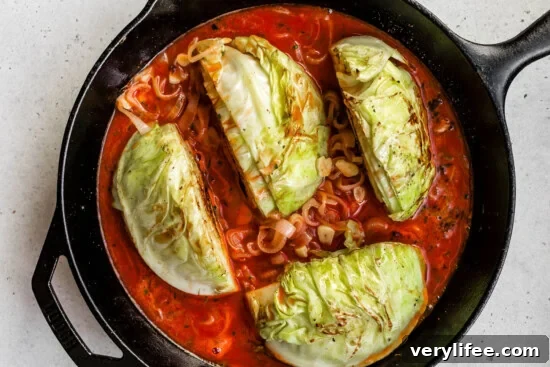
- Make the braising sauce: Whisk broth, wine, and tomato paste until smooth.
- Sauté the shallots: Melt 1 tablespoon butter in a skillet over medium heat and cook the shallots with a pinch of salt until tender. Add garlic and thyme, cook 1–1½ minutes, then add these aromatics to the braising sauce.
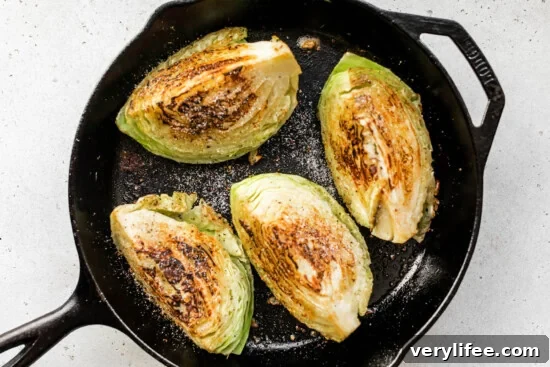
- Brown the cabbage: Melt the remaining butter in the skillet. Arrange the cabbage wedges cut-side down in a single layer and cook until deeply browned (about 3–4 minutes per side using tongs to rotate the wedges). Turn the wedges so the cut sides face up and season with salt and pepper.
- Simmer: Return the wedges cut-side down, pour the braising liquid into the pan, bring to a gentle simmer, and spoon sauce over the cabbage.
- Braise in the oven: Transfer the skillet to a 375°F oven and roast 35–45 minutes, rotating the skillet once after about 20 minutes. The cabbage is done when a paring knife slides through a wedge easily and the sauce has reduced and thickened. Finish with chopped parsley before serving.
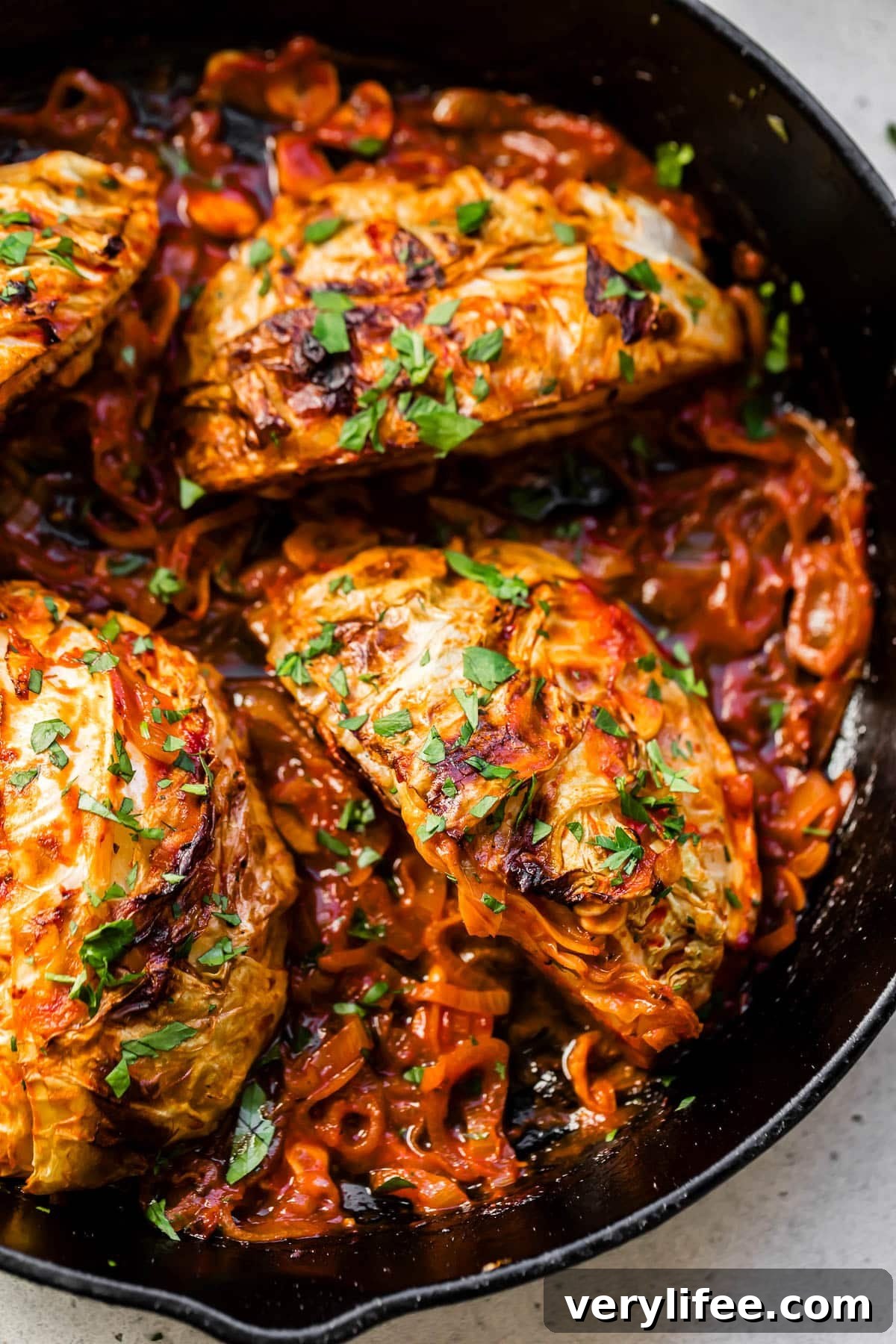
How much liquid do you need to braise cabbage?
You only need enough liquid to cover the bottom half of the wedges. The goal is partial submersion so the cabbage softens while the sauce reduces. If the pan begins to dry before the cabbage is tender, add a splash of water or more broth to loosen the sauce and continue cooking.
Variations
- Alternative cabbage: Use red cabbage for a slightly sweeter, more colorful presentation.
- Onion swap: Replace shallots with half of a red or yellow onion if needed.
- Dairy-free: Use olive oil or vegan butter instead of butter.
- Regular tomato paste: If using standard tomato paste, stir in a pinch of granulated or brown sugar to mimic the sweetness of double-concentrated paste.
- No wine: Omit the wine and use additional broth plus 1 tablespoon white or red wine vinegar for acidity.
- Herb swaps: Substitute rosemary for thyme and chives for parsley for a different herb profile.
Braised Cabbage Serving Suggestions
This braised cabbage pairs well with a wide range of proteins and starchy sides. Here are simple serving ideas:
- Proteins: roast beef, turkey meatloaf, pork chops, whole roasted chicken.
- Sides to soak up sauce: garlic mashed potatoes, rice pilaf, mashed cauliflower, or simple steamed rice.
Storage and Meal Prep Tips
- Prep ahead: Trim and wedge the cabbage, make the braising sauce, and slice the aromatics a day ahead to shorten cooking day effort.
- Refrigerate: Store cooked braised cabbage in an airtight container for up to 4 days.
- Reheat: Warm in the microwave or in a 350°F oven until heated through. If the sauce has thickened too much, stir in a splash of water or broth.
More Cabbage Recipes You’ll Love
If you want to cook more with cabbage, try these ideas: cabbage soup, quick cabbage slaw, unstuffed cabbage rolls, cabbage casserole, or apple-cider baked chicken with cabbage.
Braised Cabbage — Recipe Card
Ingredients
- 2 pounds green cabbage (1 small head or 1/2 large), cut into 4 wedges
- 3/4 cup dry white wine, divided
- 3/4 cup vegetable, chicken, or mushroom broth
- 3 tablespoons concentrated tomato paste
- 2 tablespoons unsalted butter (or dairy-free butter), divided
- 2 medium shallots (about 4 ounces), thinly sliced
- 1 3/4 teaspoons kosher salt, divided
- 1/2 teaspoon freshly ground black pepper, divided
- 3 large garlic cloves, thinly sliced
- 2 teaspoons fresh thyme leaves, coarsely chopped
- 2 tablespoons flat-leaf parsley, coarsely chopped
Equipment
12-inch cast iron skillet or an ovenproof skillet
Instructions
- Cut the cabbage through the core into 4 wedges. If using a large head, halve it first and save the other half for another meal.
- Preheat the oven to 375°F. In a medium bowl or measuring cup, whisk together 3/4 cup wine, 3/4 cup broth, and 3 tablespoons tomato paste until smooth; set aside.
- Warm a large cast-iron skillet over medium heat. Melt 1 tablespoon butter, add shallots and 1/2 teaspoon salt, and cook until tender, about 3 minutes. Add garlic and thyme and cook 1–1½ minutes. Scrape the aromatics into the braising liquid.
- Melt the remaining 1 tablespoon butter in the skillet. Arrange cabbage wedges cut-side down and brown deeply, about 3–4 minutes per side, turning to brown each cut side. Turn wedges with the cut sides up and season with the remaining salt and pepper.
- Turn the wedges cut-side down again, pour the braising sauce into the skillet, bring to a simmer, and spoon sauce over the cabbage. Transfer the skillet to the oven and roast until the cabbage is very tender and the sauce has reduced and thickened, 35–45 minutes, rotating the skillet once after about 20 minutes.
- Remove from oven, sprinkle with chopped parsley, and serve warm.
Notes
If the tomato broth reduces too quickly and the pan starts to dry before the cabbage is tender, add a splash of water or more broth and continue cooking. For a non-alcoholic version, replace the wine with additional broth plus 1 tablespoon white or red wine vinegar for brightness. If you only have regular tomato paste, add a pinch of sugar to balance acidity.
Nutrition (per serving)
Calories: 167.5 kcal | Carbs: 22 g | Protein: 5 g | Fat: 6 g | Fiber: 7 g | Sodium: 643.5 mg | Sugar: 10.5 g