
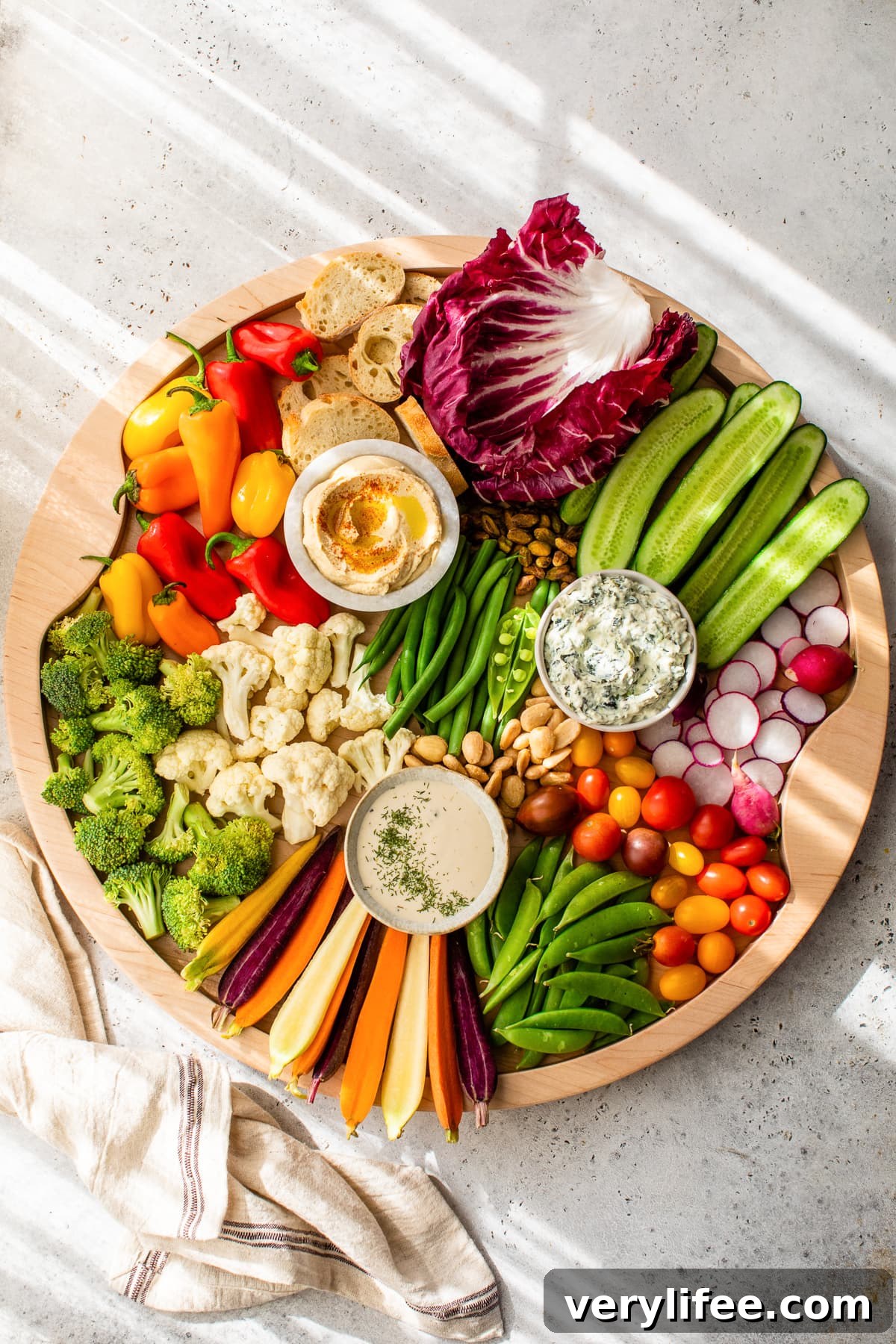
Move over meat and cheese — this veggie tray is a healthier, eye-catching, and easy-to-prepare option for your next gathering.
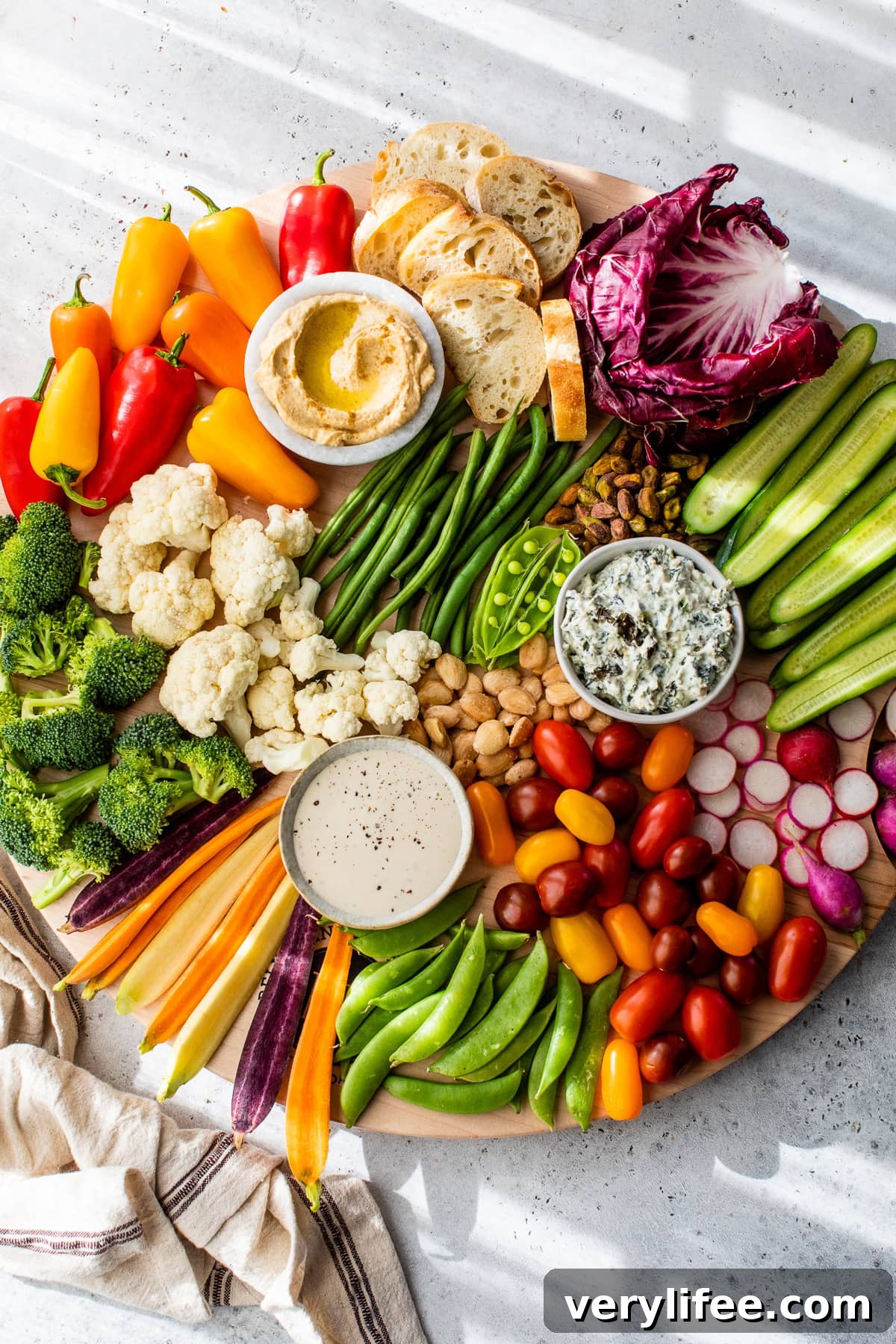
Vegetable Charcuterie Board
I love the convivial feel of a charcuterie board — sharing small bites while people chat. When you want a lighter, vegetable-forward option, a vegetable charcuterie board (or elevated veggie tray) is perfect. Most elements can be prepped ahead of time so you only need to assemble the board when guests arrive.
Why You’ll Love a Veggie Tray for Your Next Party
- Not your mom’s veggie tray. Instead of a plain plate of carrot sticks and ranch, this version uses the visual layout of a charcuterie board for a modern, stylish presentation.
- Customizable. Mix and match whatever is in season and fresh — follow the suggestions below or use your favorites.
- Make-ahead-friendly. Prep most ingredients in advance so assembly is quick and stress-free.
- Colorful and nutritious. A variety of colors makes the board attractive and provides a range of vitamins and nutrients.
What You’ll Need
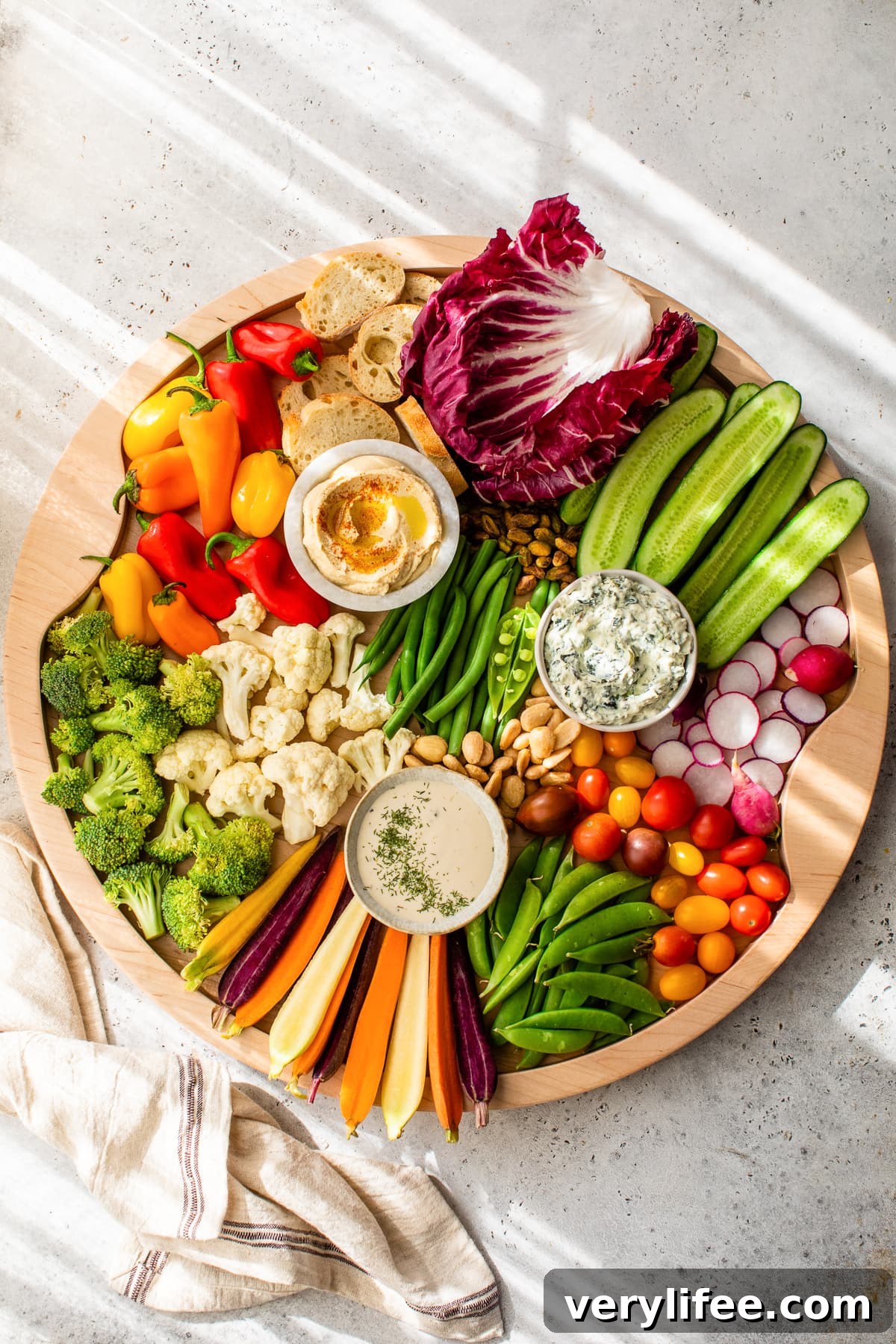
Scroll down to the recipe card below for printable instructions.
- Radicchio – Use leaves to create visual contrast; its bitter bite pairs well with acidic or creamy dips.
- Watermelon radishes – Sliced for color; ordinary radishes work too.
- Cherry tomatoes – Mix colors and leave some on the vine for a rustic look.
- Carrot sticks – Whole carrots cut into sticks or baby carrots are both great.
- Green beans – Or yellow beans for variety.
- Mini cucumbers – Also called Persian cucumbers; slice or halve for easy dipping.
- Snap peas – Sweet, crunchy, and kid-friendly.
- Broccoli and cauliflower florets – Use purple or orange cauliflower if available for extra color.
- Baguette slices or pita wedges – Add some bread or crackers for texture.
- Nuts – Pistachios, Marcona almonds, or any nuts you prefer for crunch.
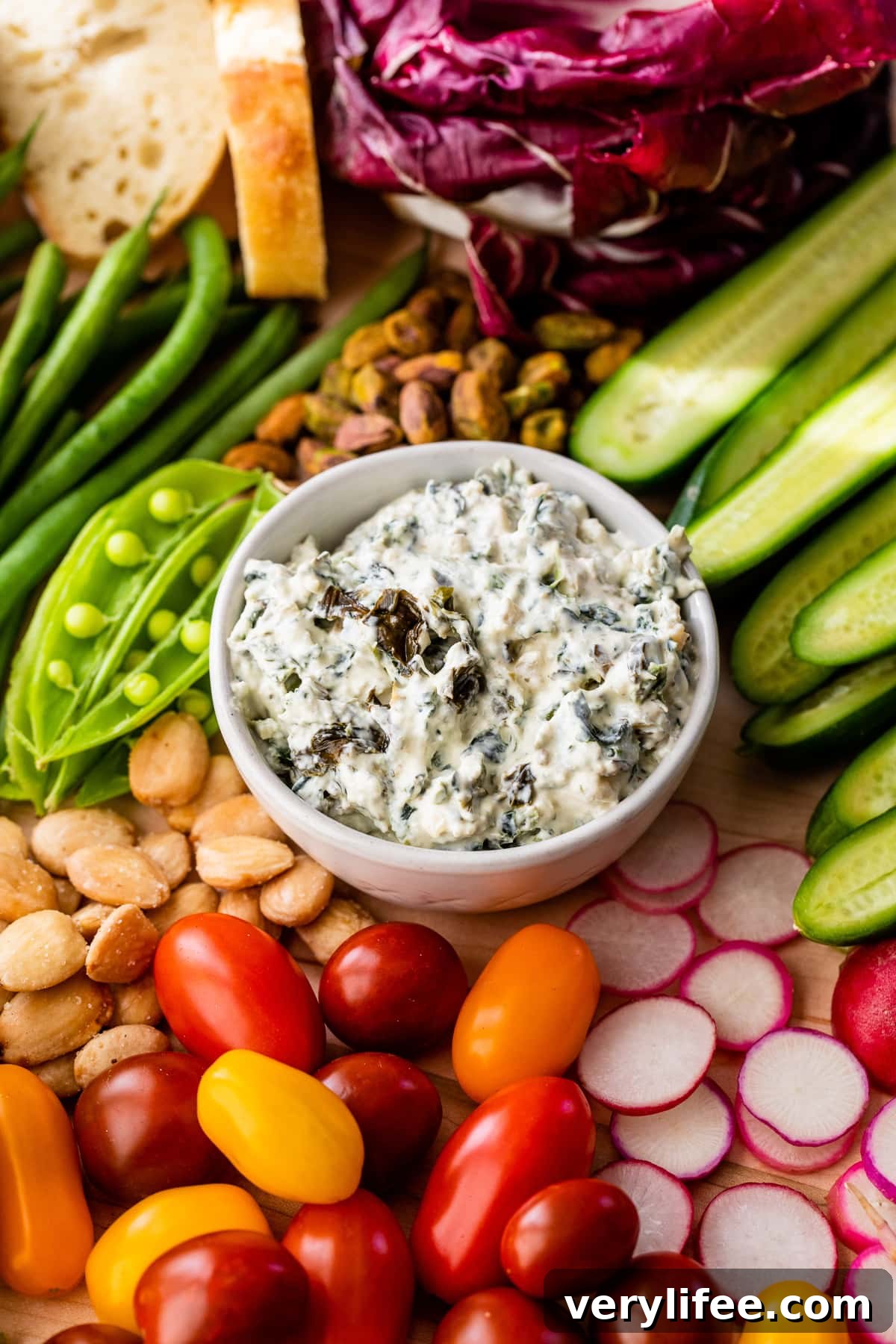
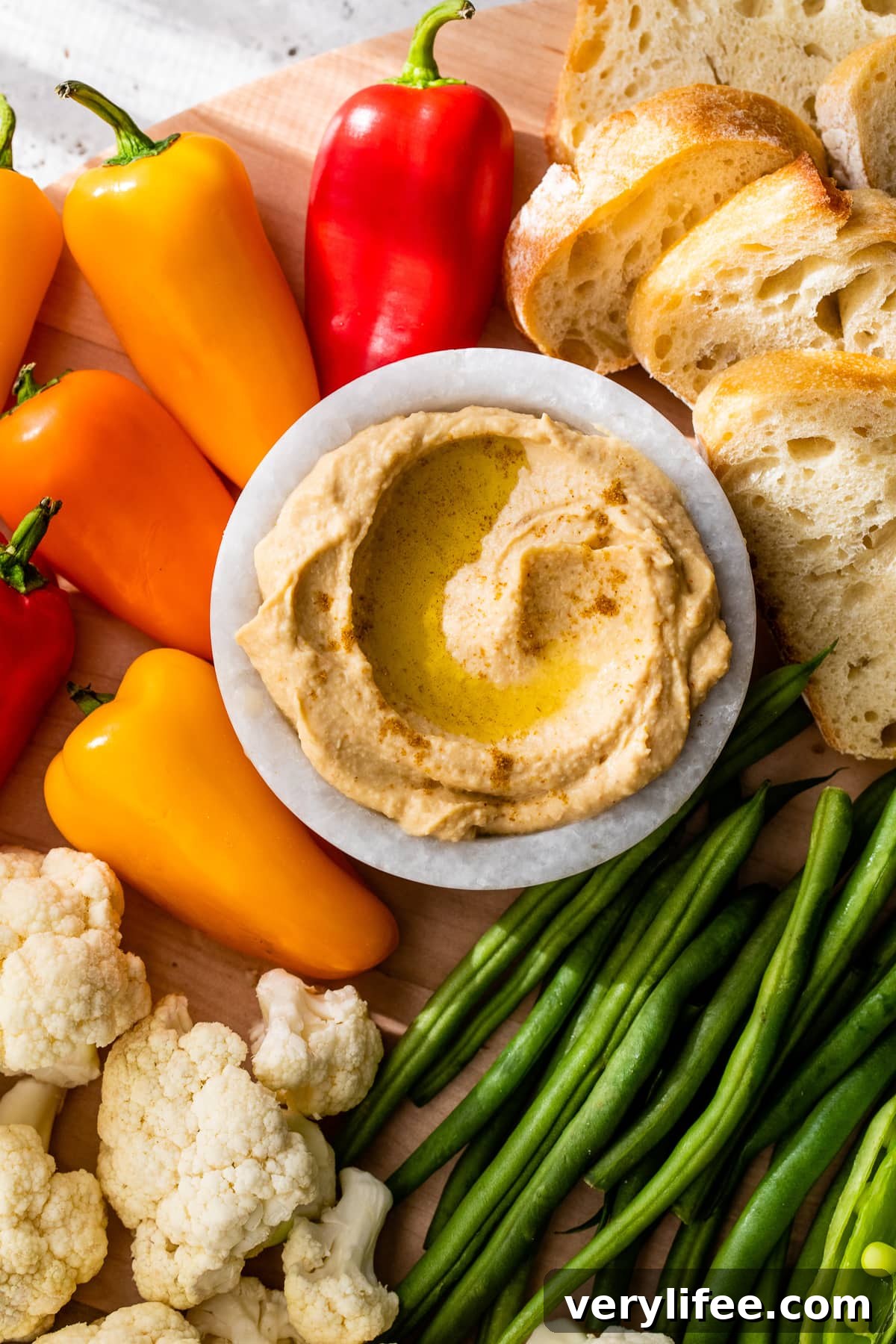
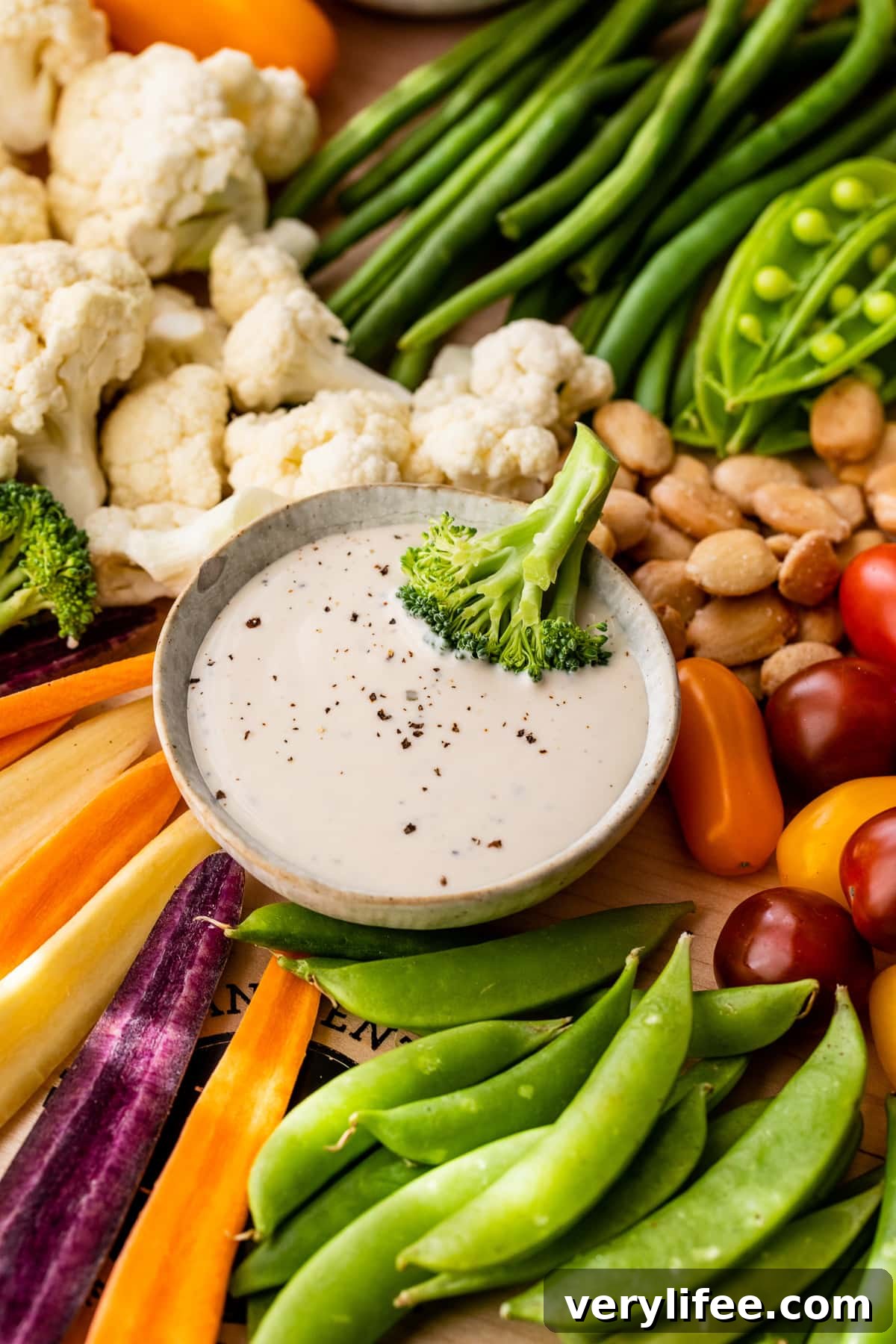
- Your favorite dips – Hummus, spinach dip, salsa, whipped feta, Greek yogurt–based dips, or any go-to smears.
How to Make a Veggie Tray
See the recipe card below for a concise, printable version of the steps.
- Place the dips first. Arrange small bowls of your favorite dips on the board — hummus, whipped feta, or a yogurt-based dip work well.
- Create a base with greens. Layer radicchio leaves or other large greens around the bowls to add height and color.
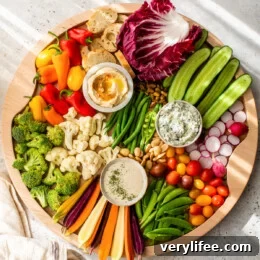
- Arrange the vegetables. Fill in the spaces with vegetables grouped by type and color to form visual sections, alternating textures and hues.
- Add finishing touches. Scatter nuts, baguette slices, pita wedges, and any pickled items for acidity and contrast.
- Serve immediately. Bring the tray to the table and encourage guests to sample a variety with the dips.
Tips for Success
- Use what’s in season. Fresh, seasonal vegetables are more flavorful and vibrant.
- A good variety matters. Aim for at least four different types of vegetables; a large board benefits from even more variety.
- Never skip a dip. At least one bowl is essential; for large gatherings, offer two or three dips for variety.
- Blanch for brighter color. If you prefer, blanch vegetables in boiling water for 1 minute then shock in ice water to enhance color and texture.
- Keep veggies crisp. Don’t cut them more than two hours before serving to retain freshness.
- Mix in unexpected elements. Add pickled vegetables, small amounts of cheese, or a bowl of flaky sea salt for finishing touches.
Proper Storage
Store leftovers wrapped or in airtight containers in the refrigerator for 2–3 days. Keep dips separate to preserve freshness and texture.
More Board Ideas
- How to make a charcuterie and cheese board
- Antipasto salad platter ideas
- An epic pickle board concept
- Smoked salmon appetizer platter
- Fall cobb salad board inspiration
Veggie Tray
Equipment
- Large serving board (20-inch recommended)
Ingredients
- Radicchio leaves
- Watermelon radishes, sliced
- Cherry tomatoes
- Carrot sticks or baby carrots
- Green beans
- Mini cucumbers, sliced
- Mini bell peppers
- Snap peas
- Broccoli florets
- Colorful cauliflower florets
- Baguette slices or pita wedges
- Nuts such as pistachios or Marcona almonds
- Assorted dips: hummus, spinach dip, whipped feta, salsa, or Greek yogurt–based dips
Instructions
- Place small bowls of dip on the board, spacing them to create focal points for the layout.
- Arrange a base of radicchio leaves or other large greens around the dips to add height and structure.
- Group vegetables by type and color, filling in the board so each section is easy to access.
- Add bread slices, nuts, and any pickled items or cheeses to round out the board.
- Serve immediately, or cover and refrigerate components separately until ready to serve.
Final Note
If you try this veggie tray, consider sharing feedback or a photo — it helps others discover and enjoy healthy entertaining ideas.