
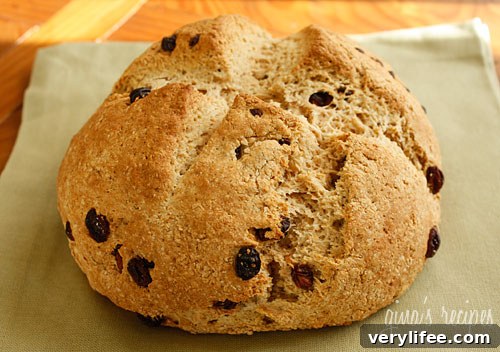
I love to enjoy Low Fat Irish Soda Bread warm from the oven with a low-fat spread and a steaming cup of tea. This simple loaf comes together quickly and is forgiving for bakers of all levels. Below you’ll find an easy, low-fat version of the classic Irish soda bread, plus helpful tips, serving suggestions, and storage advice to get the best results.
Low Fat Irish Soda Bread

This Low Fat Irish Soda Bread is an excellent choice for St. Patrick’s Day breakfast or any relaxed weekend morning. It’s quick to mix—no yeast or proofing required—and produces a hearty, slightly sweet loaf with raisins. If you prefer a savory side for dinner, omit the raisins and sugar and stir in a teaspoon or two of caraway seeds for traditional flavor. This bread pairs well with soups, roasted meats, or a classic corned beef and cabbage dinner.
Course: Breakfast, Brunch
Cuisine: American
Yield: 15 servings (about 15 slices)
Serving Size: 2 oz slice
Prep: 15 mins Cook: 40 mins Total: 55 mins
Calories per serving: 124.5 kcal
Ingredients
- 1 1/2 cups all purpose flour
- 1 1/2 cups whole wheat flour
- 1 1/2 tsp baking soda
- 1 tsp salt
- 4 tbsp sugar
- 1 1/2 cups 1% buttermilk
- 3 oz (about 2/3 cup) raisins
Instructions
- Preheat the oven to 375°F (190°C).
- In a large bowl, whisk together the all-purpose flour, whole wheat flour, baking soda, salt, and sugar.
- Slowly add the 1% buttermilk to the dry ingredients, stirring with a wooden spoon until a soft dough forms. The dough should be slightly sticky but manageable.
- Fold in the raisins and turn the dough onto a lightly floured surface. Knead gently for about 1 minute—just enough to bring the dough together.
- Shape the dough into a round loaf, flattening it slightly. Place it on a baking sheet lined with parchment paper or a silicone baking mat. Cover the loaf and let it rest for 30 minutes.
- Using a sharp knife, score an X about 1/2 inch deep across the top of the loaf. This traditional cross helps the bread bake evenly.
- Bake for about 40 minutes, or until the loaf is golden brown. To check doneness, insert a toothpick into the center—if it comes out clean, the bread is ready.
- Allow the bread to cool on a rack for 5–10 minutes before slicing. It’s best served warm but still delicious at room temperature.
Tips, Variations & Serving Suggestions
– For a savory loaf to serve with dinner, omit the sugar and raisins and add 1–2 teaspoons of caraway seeds or chopped fresh herbs (such as rosemary or thyme).
– If you don’t have buttermilk, make a quick substitute by stirring 1 1/2 tablespoons of white vinegar or lemon juice into 1 1/2 cups of low-fat milk; let it sit for 5–10 minutes before using.
– Handle the dough lightly—overworking will produce a tougher loaf. A short, gentle knead is all you need.
– Serve warm with low-fat spread, butter, or a smear of jam. It also pairs well with soups and stews, especially hearty vegetable or cream-based soups.
Storage
Store leftover slices wrapped in plastic or in an airtight container at room temperature for up to 2 days. For longer storage, freeze slices individually in airtight bags for up to 1 month; reheat gently in the oven or toaster.
Nutrition (per 2 oz slice)
Calories: 124.5 kcal, Carbohydrates: 27 g, Protein: 4 g, Fat: 0.5 g, Fiber: 1.5 g, Sugar: 8.5 g, Sodium: 307 mg, Cholesterol: 1 mg
Did you make this recipe?
Share a photo on social media and tag the recipe name to show how it turned out. Feedback and ratings help improve recipes and support creators who share them.