
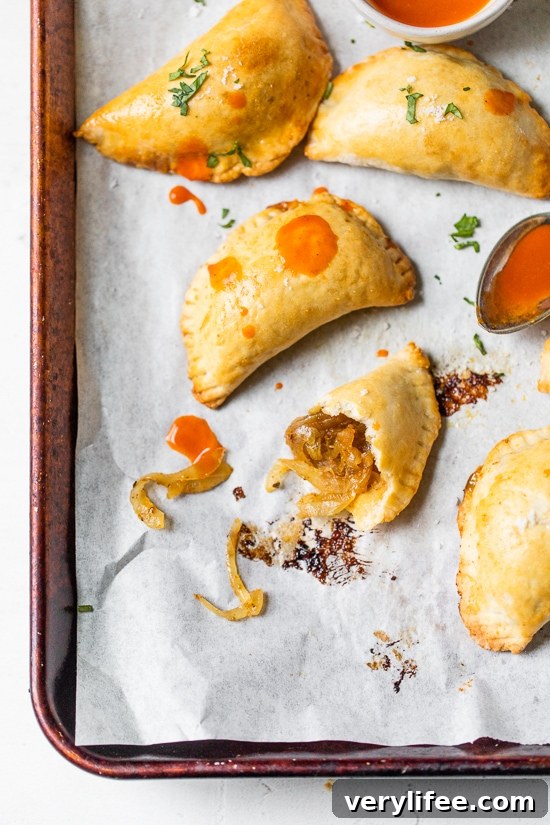
Chilean empanadas, also called pequenes, are a delicious vegetarian option filled with slowly caramelized onions and seasoned with warm Latin spices. These baked empanadas offer a tender, flaky crust and a sweet-savory filling that makes them an ideal holiday appetizer or party finger food.

Caramelized Onion Empanadas
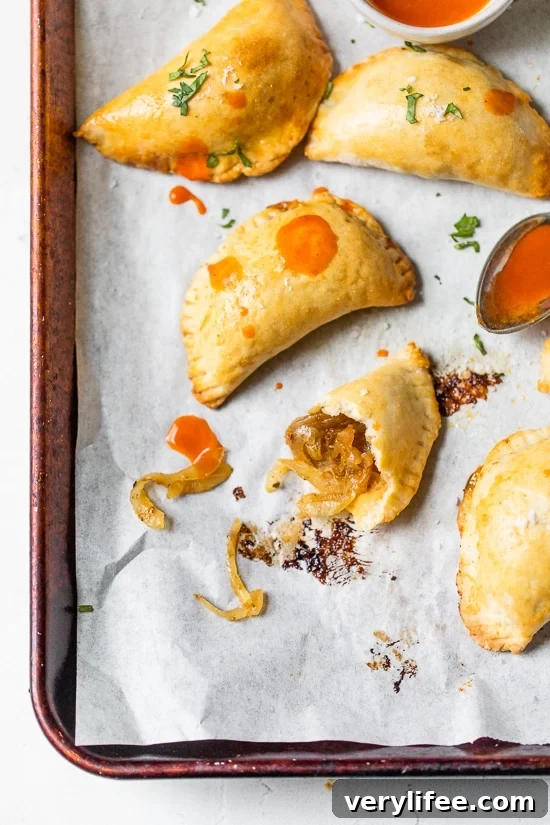
I’m a big fan of empanadas, and this vegetarian version—pequenes—stands out for its simplicity and depth of flavor. The filling relies on sweet, slowly cooked onions enhanced with spices like paprika, cumin, and oregano. The dough, enriched with a touch of lemon juice or vinegar, yields a more tender crust than typical meat empanada dough. These empanadas are baked, not fried, making them a lighter yet still satisfying appetizer for holidays or weeknight entertaining.
This particular recipe is adapted from The Chilean Kitchen cookbook by Pilar Hernandez and Eileen Smith. The cookbook showcases authentic Chilean recipes across the seasons; I first discovered Pilar’s work after meeting her on a trip and have appreciated her thoughtful approach to Chilean home cooking. Her pequenes recipe captured my attention with its balance of sweet caramelized onions and savory seasoning.
How do you keep empanadas from leaking?
Preventing leaks comes down to a few simple techniques:
- Don’t overfill: Use about two tablespoons of the onion filling per empanada to avoid excess moisture pushing through the seam.
- Seal well: Brush the edge of the dough with beaten egg or a little water, then press the edges together firmly. You can crimp with a fork or fold the edge for a decorative seal.
- Vent steam: Pierce a small hole or two in the top of each empanada so steam can escape while baking. This reduces the chance of the empanada bursting open.
Tips
Freezing: These empanadas freeze very well unbaked for up to three months. When baking from frozen, add a little extra time in the oven and check for a deep golden color.
Baking: For even browning, place empanadas on a parchment-lined baking sheet and rotate the pan halfway through baking. Brush with beaten egg before baking for a glossy finish.
Serving: Serve warm with your favorite hot sauce, aji, chimichurri, or a simple green salad. They make a great addition to holiday appetizer spreads, brunch buffets, or casual gatherings.
 The pequén is a classic Chilean vegetarian empanada that highlights caramelized onions. The lemon or vinegar in the dough helps produce a more tender crust; this subtle acid in the dough is an important detail that improves texture without changing flavor.
Every Latin American country has its own empanada tradition, and the Chilean pequén is a special vegetarian example. The filling is simple—just onions and a few seasonings—but slow cooking and careful seasoning create a satisfying depth of flavor that makes these empanadas memorable.
Gallery
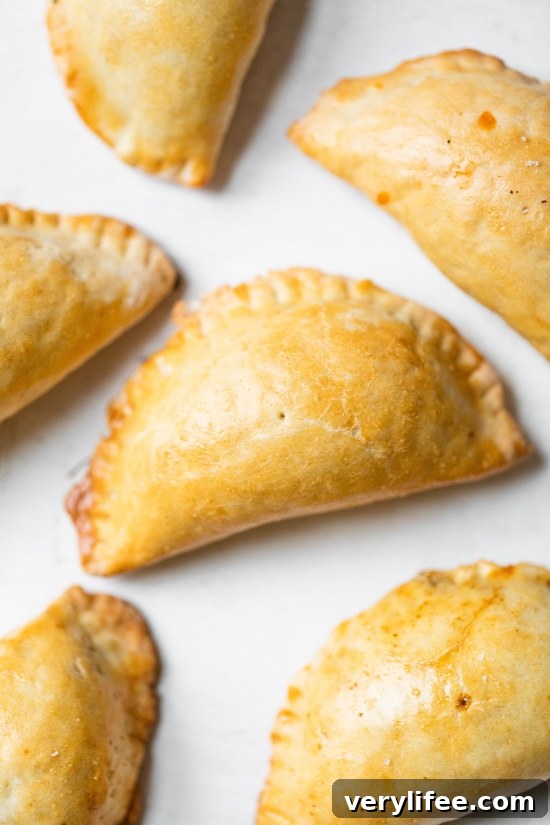
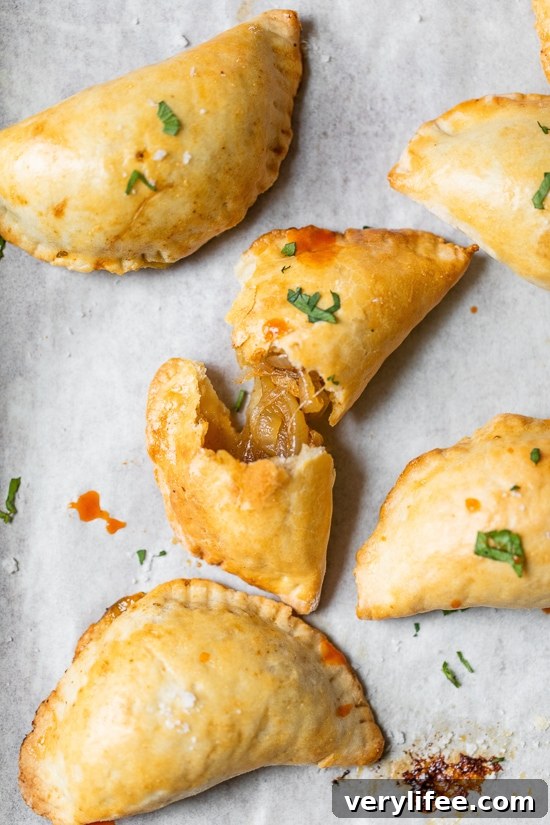
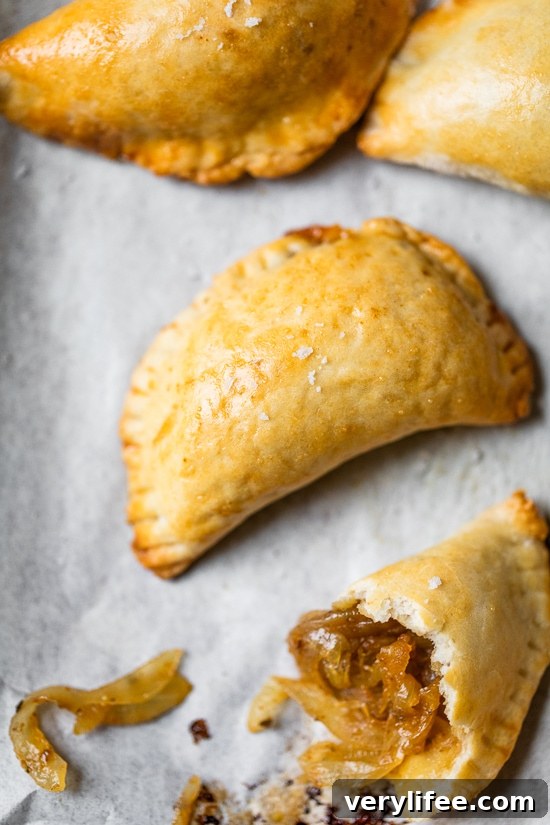
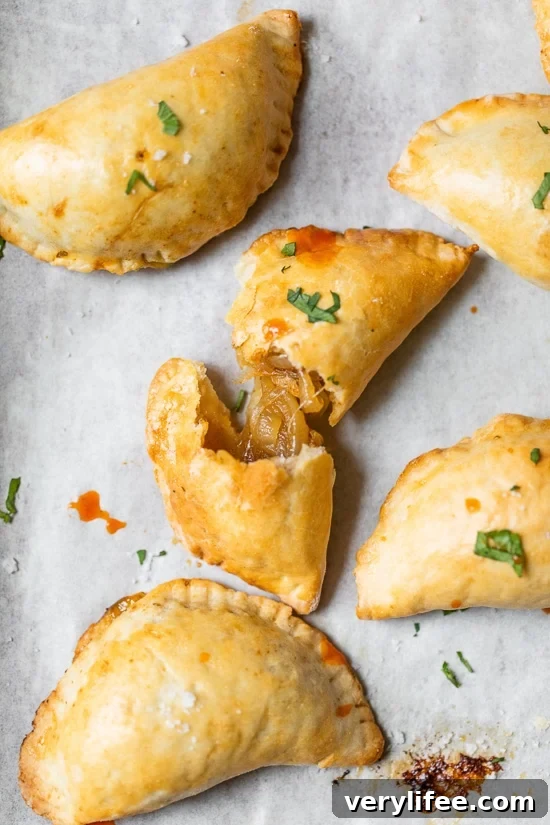
More Holiday Appetizer Recipes You’ll Love:
- Jamaican Beef Patties
- Air Fryer Bacon-Burger Bites
- Swedish Meatballs
- Stuffed Mushrooms with Broccoli Rabe and Sausage
- Pastrami Reuben Egg Rolls
Caramelized Onion Empanadas (Chilean PEQUENES)
Summary: These Chilean empanadas, known as pequenes, are filled with caramelized onions and seasoned with Latin spices—a perfect baked holiday appetizer.
Yield: 6 servings (about 12 empanadas)
Serving size: 2 empanadas
Prep: 25 mins • Cook: 50 mins • Total: 1 hr 15 mins
Ingredients
For the filling:
- 2 tablespoons vegetable oil
- 3 large or 5 medium yellow onions, cut in half lengthwise and sliced thinly
- 1 teaspoon sugar
- 1 teaspoon salt
- 1 teaspoon paprika or merkén
- Black pepper, to taste
- 1 teaspoon ground cumin
- 1 teaspoon dried Mexican oregano
- ½ teaspoon hot sauce
For the dough:
- 1¼ cups all-purpose flour
- 1½ teaspoons salt
- 1 teaspoon granulated sugar
- 2 tablespoons lard, shortening, or butter, cut into small cubes
- ¼ cup water
- ¼ cup skim milk (0% fat)
- 1 teaspoon lemon juice or apple cider vinegar
- 1 beaten egg, to seal and brush
Instructions
Make the filling:
- Heat 2 tablespoons of oil in a large saucepan over medium heat.
- Add the sliced onions, sugar, and salt.
- Cook, stirring occasionally, for about 30 minutes or until the onions are soft and lightly caramelized.
- Remove from heat and stir in the paprika (or merkén), black pepper, cumin, oregano, and hot sauce.
- Taste and adjust seasoning as needed.
Make the dough:
- In a food processor, combine the flour, salt, and sugar; pulse a couple of times.
- Add the lard or butter and pulse until the mixture looks uniform and crumbly.
- Mix the water, milk, and lemon juice in a measuring cup. With the processor running, add the liquid and stop as soon as the dough begins to come together.
- Turn the dough out onto a floured surface or silicone mat and knead for about 10 minutes until smooth and elastic.
- Cover and let rest for 30 minutes.
- Preheat the oven to 350°F (175°C). Line a baking sheet with parchment paper.
- Divide the dough into 12 equal portions. Roll each portion into a ball, then flatten and roll with a rolling pin to a 5-inch (about 12 cm) circle.
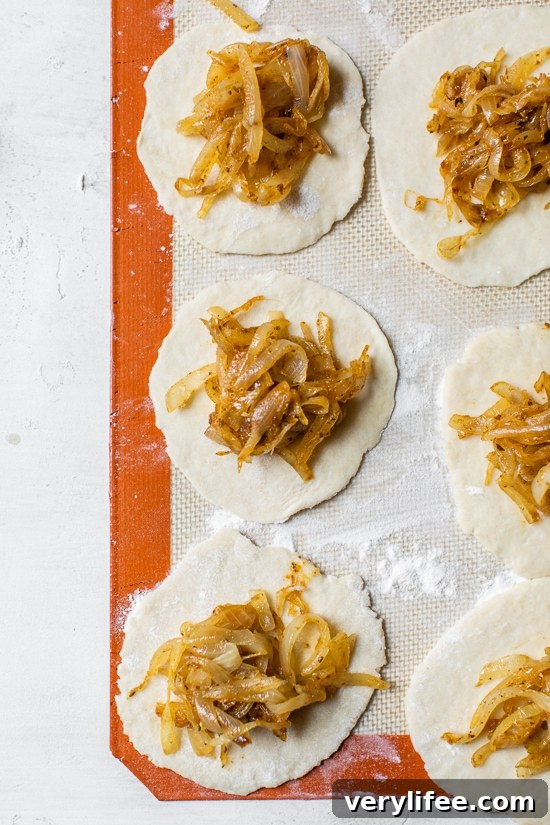
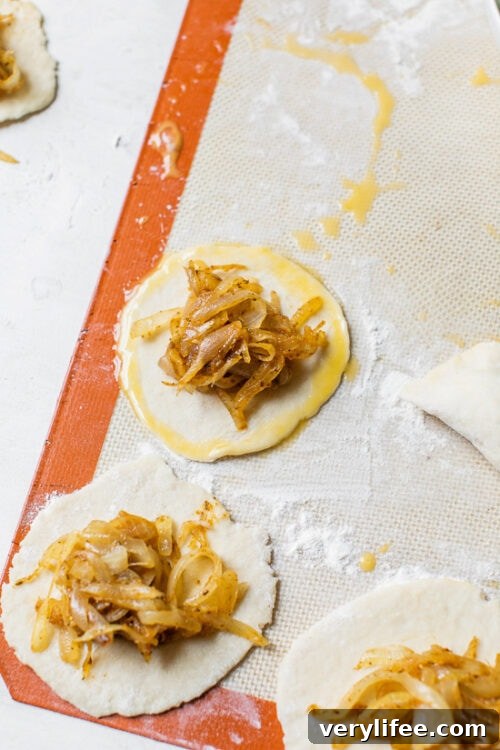
- Place about 2 tablespoons of the cooked onion filling in the center of each circle.
- Brush the rim of the dough with beaten egg, fold and seal the empanada, pressing the edge with a fork or folding decoratively. Place on the prepared baking sheet, leaving about an inch between them.
- Brush the tops with beaten egg and pierce a small hole or two in each to allow steam to escape.
- Bake for 25 to 30 minutes, or until golden brown. Let cool on a rack for 10 minutes before serving.
Nutrition (per serving)
Serving: 2 empanadas • Calories: 218 • Carbs: 29 g • Protein: 5 g • Fat: 9.5 g • Fiber: 3 g • Sugar: 6 g • Sodium: 497 mg
Storage
Store baked empanadas in an airtight container in the refrigerator for up to 3 days. Reheat in a 350°F oven until warmed through to preserve crispness. For longer storage, freeze unbaked empanadas for up to three months and bake from frozen, adding a few extra minutes to the baking time.
Last Step:
If you try this recipe, leave a rating and comment to share how it turned out—your feedback helps others and supports those who develop and share recipes.