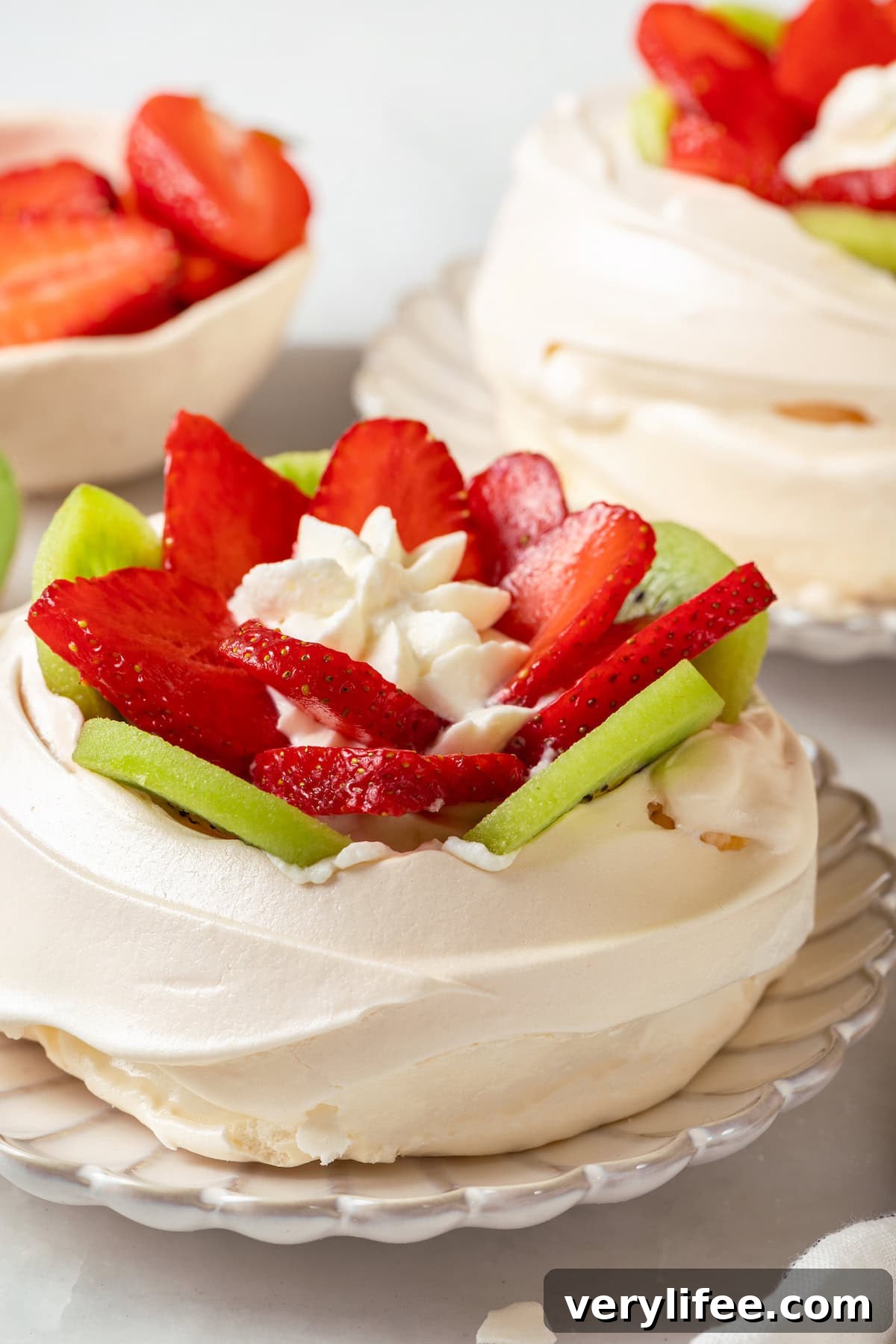
Pavlova is an elegant, airy dessert built from whipped egg whites and sugar that bakes into crisp shells with a soft, marshmallow-like interior. Topped with whipped cream and fresh fruit, it looks beautiful on a dessert table and is lighter than many traditional desserts—perfect when you want something sweet without feeling weighed down.
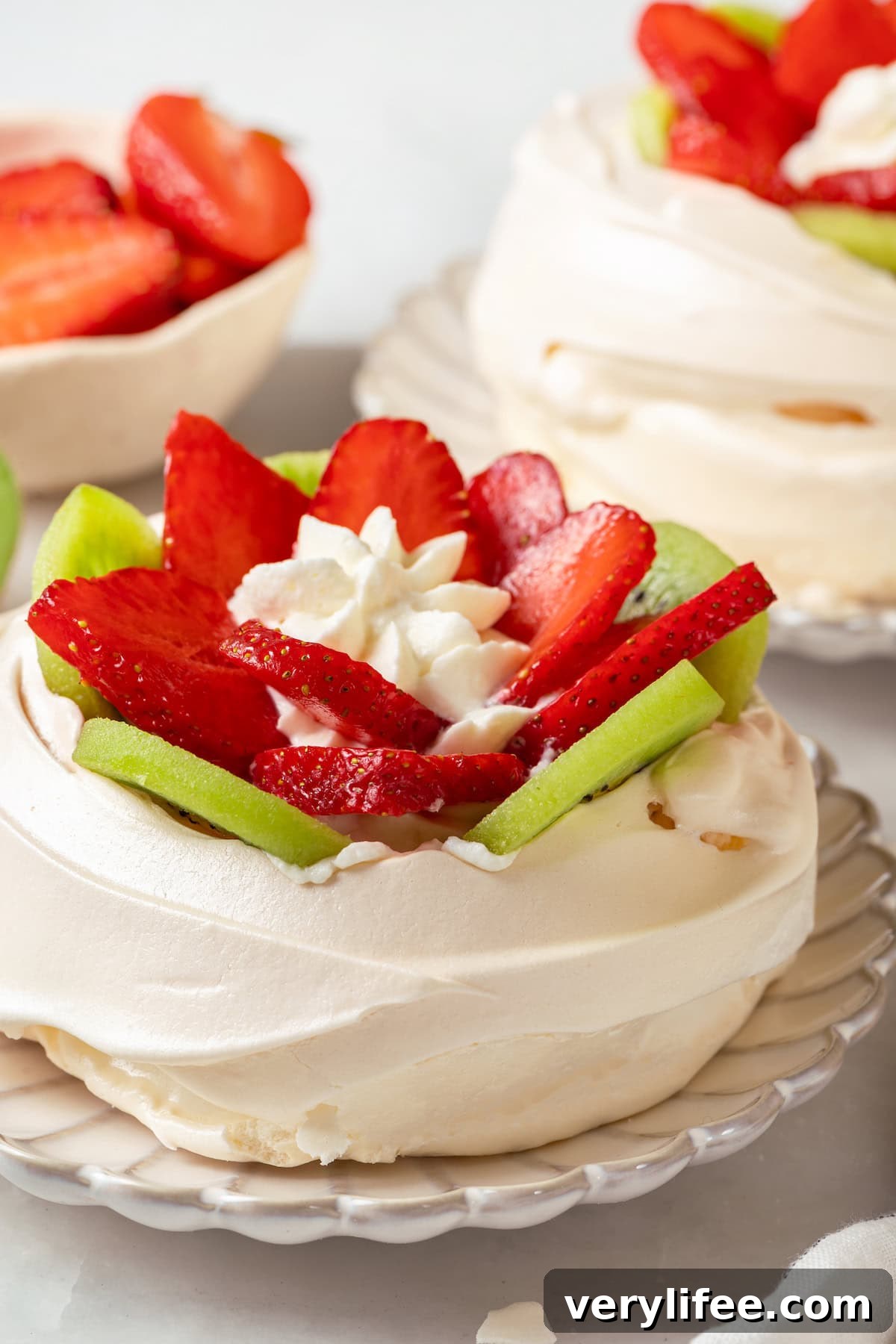
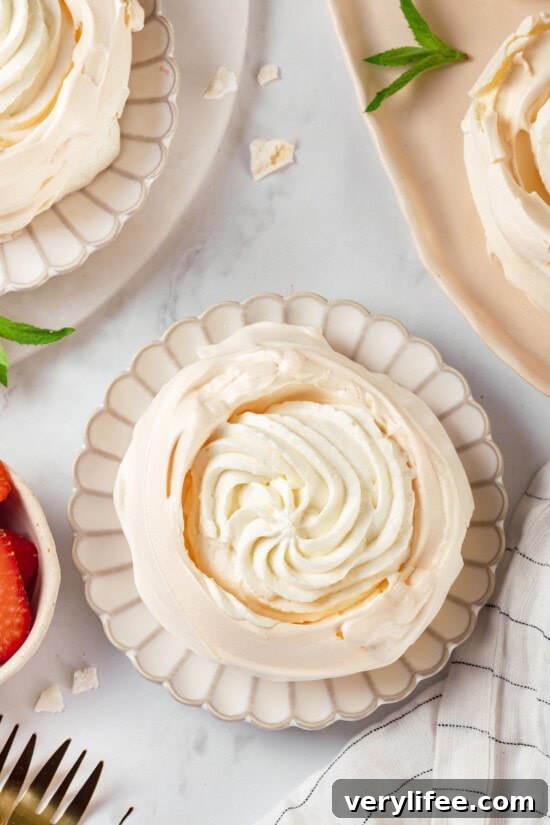
Named for the Russian ballerina Anna Pavlova and widely associated with Australia and New Zealand, pavlova is essentially a large, plated meringue topped with cream and fruit. Unlike small meringue cookies, pavlova shells are formed into nests or shallow bowls so they can hold a generous scoop of whipped cream and seasonal fruit. The contrast between a crisp outer shell and a soft interior is what makes this dessert so special.
Why You’ll Love This Pavlova Recipe
- Simple elegance. Pavlova makes an impressive centerpiece for a dinner party but is straightforward to prepare at home. Most of the time is passive baking and cooling.
- Customizable toppings. Strawberries and kiwi are classic, but you can use any fresh fruit that’s in season—berries, stone fruit, mango, or a citrus compote all work well.
- Light and airy. Because the meringue’s volume comes from whipped egg whites, pavlova feels delicate while still delivering plenty of flavor and texture.
What You’ll Need
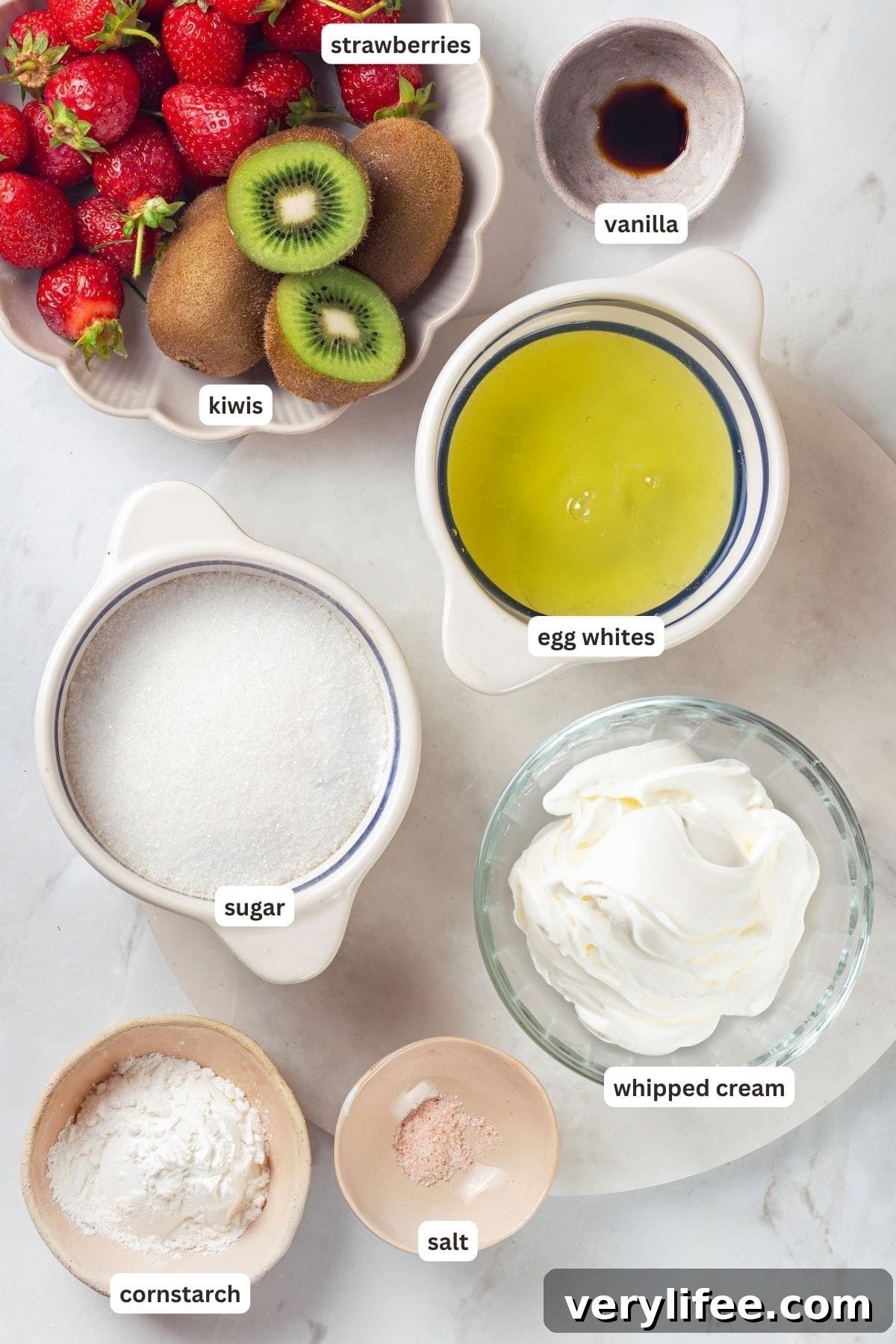
For reliable results, measure ingredients precisely and avoid modifying the meringue proportions. The toppings are flexible.
- Egg whites – room temperature helps them whip more easily.
- Cornstarch – stabilizes the meringue and helps produce the classic soft center.
- Salt – a pinch to balance sweetness.
- Granulated sugar – white sugar that dissolves into the egg whites to form a glossy meringue.
- Vanilla extract – optional for flavor; use clear vanilla if you want to keep the meringue very white.
- Fresh fruit – strawberries and kiwis were used here, but raspberries, blueberries, peaches or mango also pair beautifully.
- Whipped cream – freshly whipped cream has the best texture, but stabilized or ready-made whipped topping can be used.
How to Make Pavlova
Below is an overview of the main steps. Exact ingredient amounts and a complete recipe follows in the recipe section.
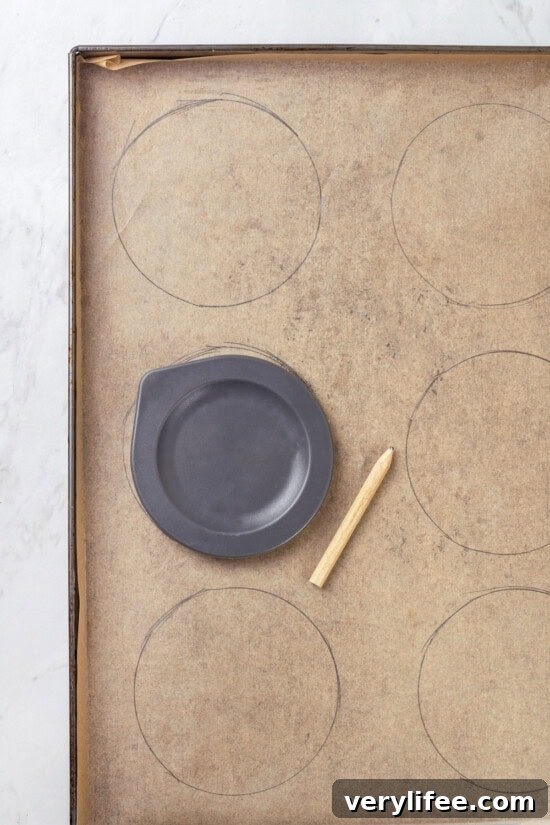
- Prepare. Preheat the oven and prepare a lined baking sheet. Trace circles on the paper so each pavlova is consistent in size.
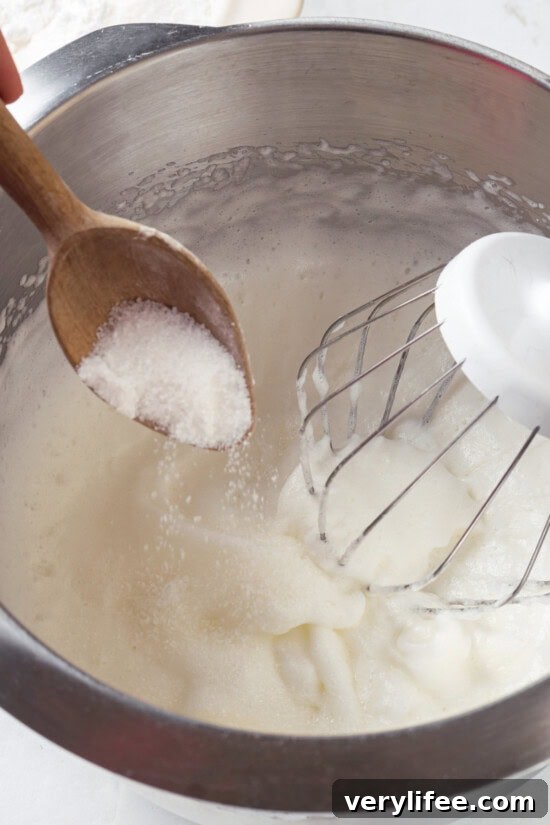
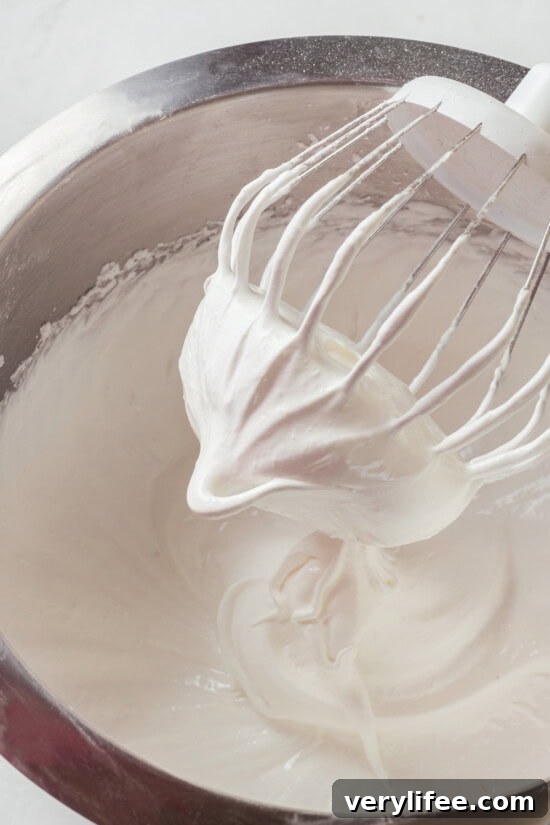
- Make the meringue. Whip egg whites with cornstarch and salt until foamy. Add sugar slowly, one tablespoon at a time, until the mixture is thick and glossy, then fold in vanilla.
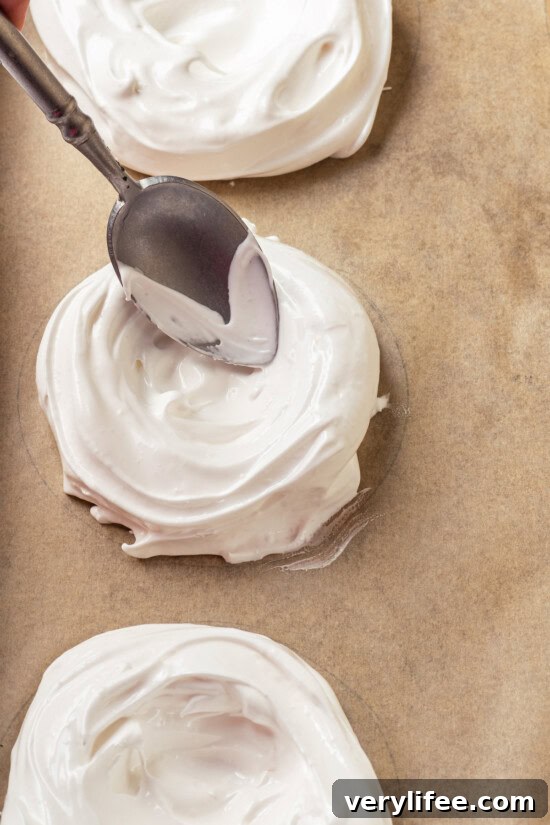
- Form nests. Portion the meringue inside the traced circles and shape shallow nests with a spoon or spatula.
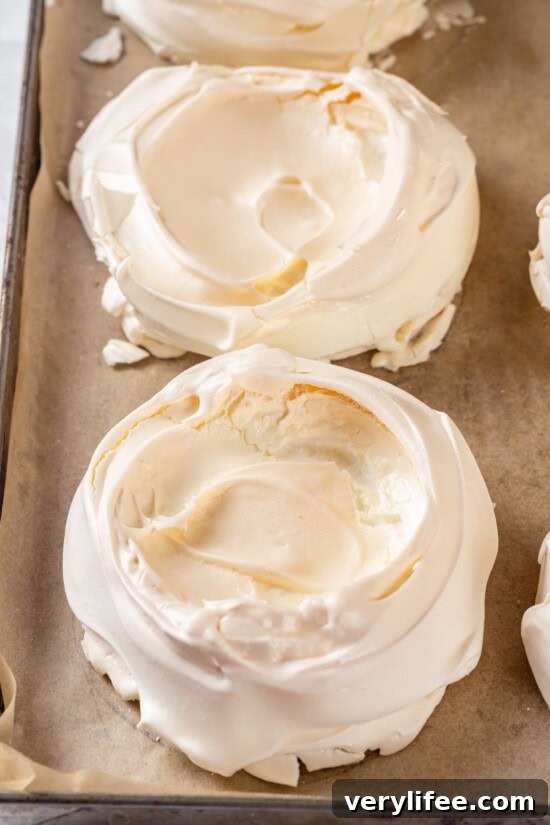
- Bake and cool. Bake at a lower temperature to dry the meringues evenly, then turn the oven off and let them cool inside the closed oven for several hours so they dry completely without cracking.
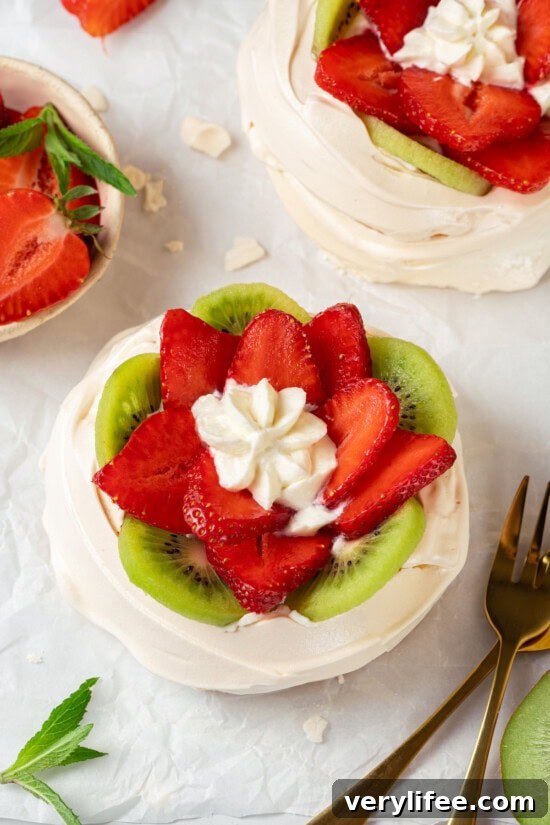
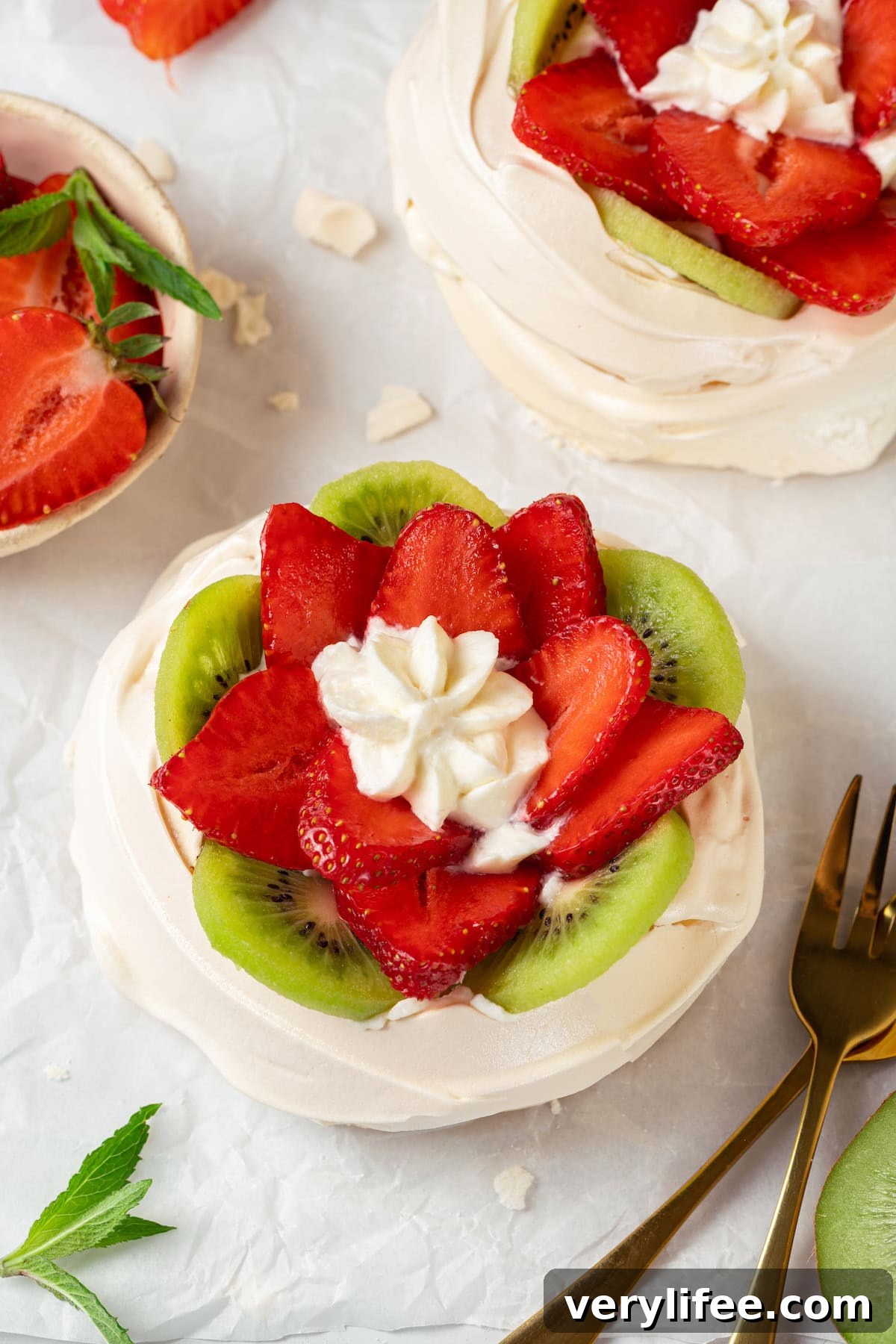
- Assemble and serve. Top each meringue with whipped cream and arrange fresh fruit right before serving for the best texture.
Tips for Success
- Use clean, dry equipment. Bowls and beaters must be free of grease or moisture; even a small residue can prevent egg whites from whipping properly.
- Add sugar slowly. Gradual addition allows the sugar to dissolve and produces a smooth, glossy meringue. Test by rubbing a bit between your fingers—if you feel grit, keep beating.
- Avoid humid days. Pavlova dries best in low-humidity conditions. If your kitchen is humid, the shells may remain sticky or become chewy instead of crisp.
- Handle gently. Shape the nests without overworking the meringue to preserve the air you whipped in.
- Cool slowly. Letting the meringues cool in the turned-off oven prevents sudden temperature changes that cause cracks.
More Topping Ideas
- Stone fruits. Sliced peaches, plums, nectarines or cherries are lovely when ripe and juicy.
- Tropical fruits. Mango or passionfruit add bright, tropical notes; passionfruit pulp drizzled over the cream is particularly aromatic.
- Citrus and curd. Lemon curd or a thin layer of lime curd adds an appealing tart contrast to the sweet meringue.
- Chocolate accents. A light drizzle of melted dark chocolate over the meringue before adding cream gives a sophisticated touch.
- Mixed berries. A combination of strawberries, blueberries, raspberries and blackberries provides color and varied texture.
Proper Storage
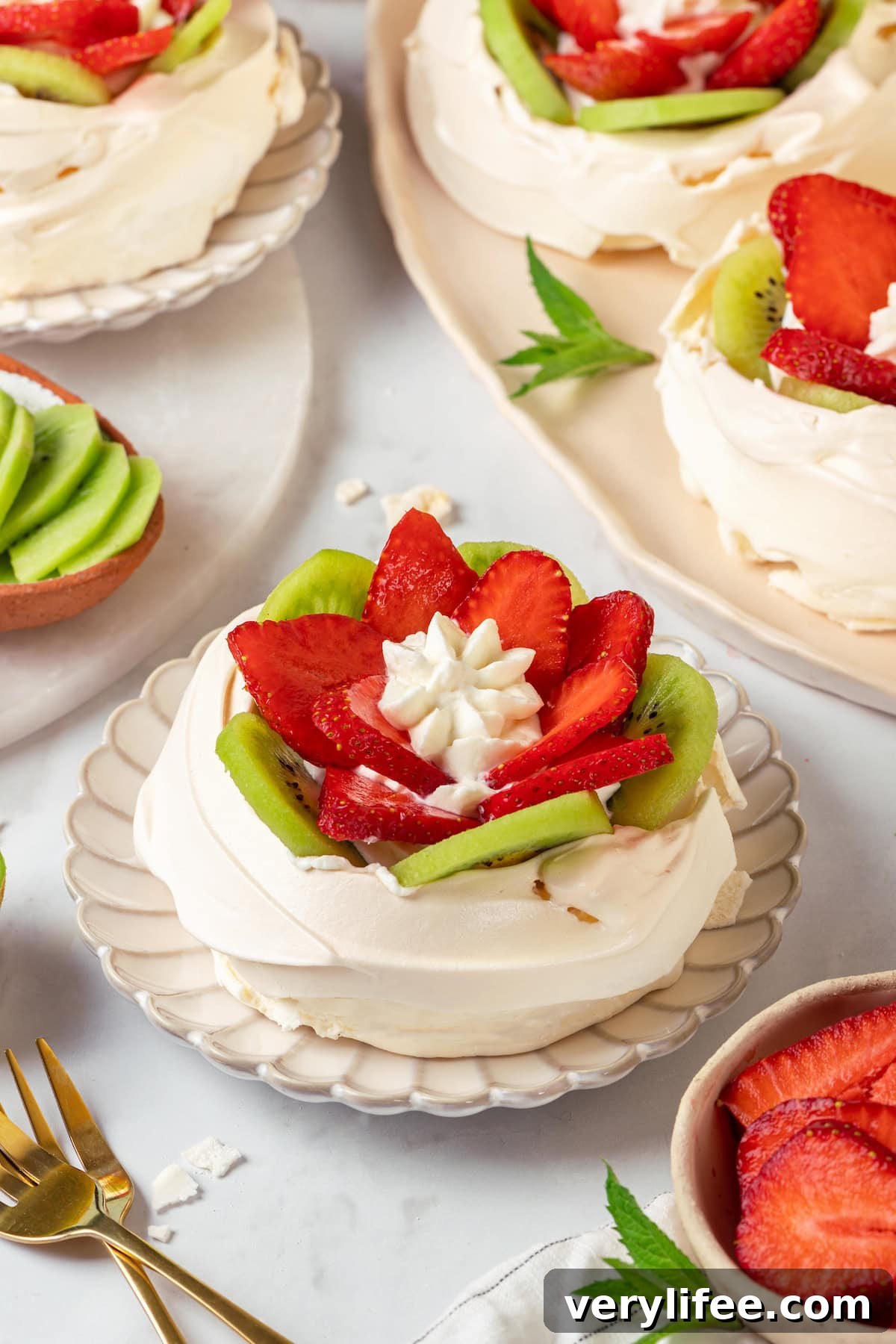
Assembled pavlova is best eaten soon after assembly—ideally within a few hours—because the whipped cream and fruit release moisture that softens the crisp shell. For advance preparation, store unfilled meringue shells in an airtight container at room temperature away from humidity for up to two weeks. For longer storage, freeze unfilled shells in a single layer with parchment between layers for up to two months; thaw at room temperature before filling.
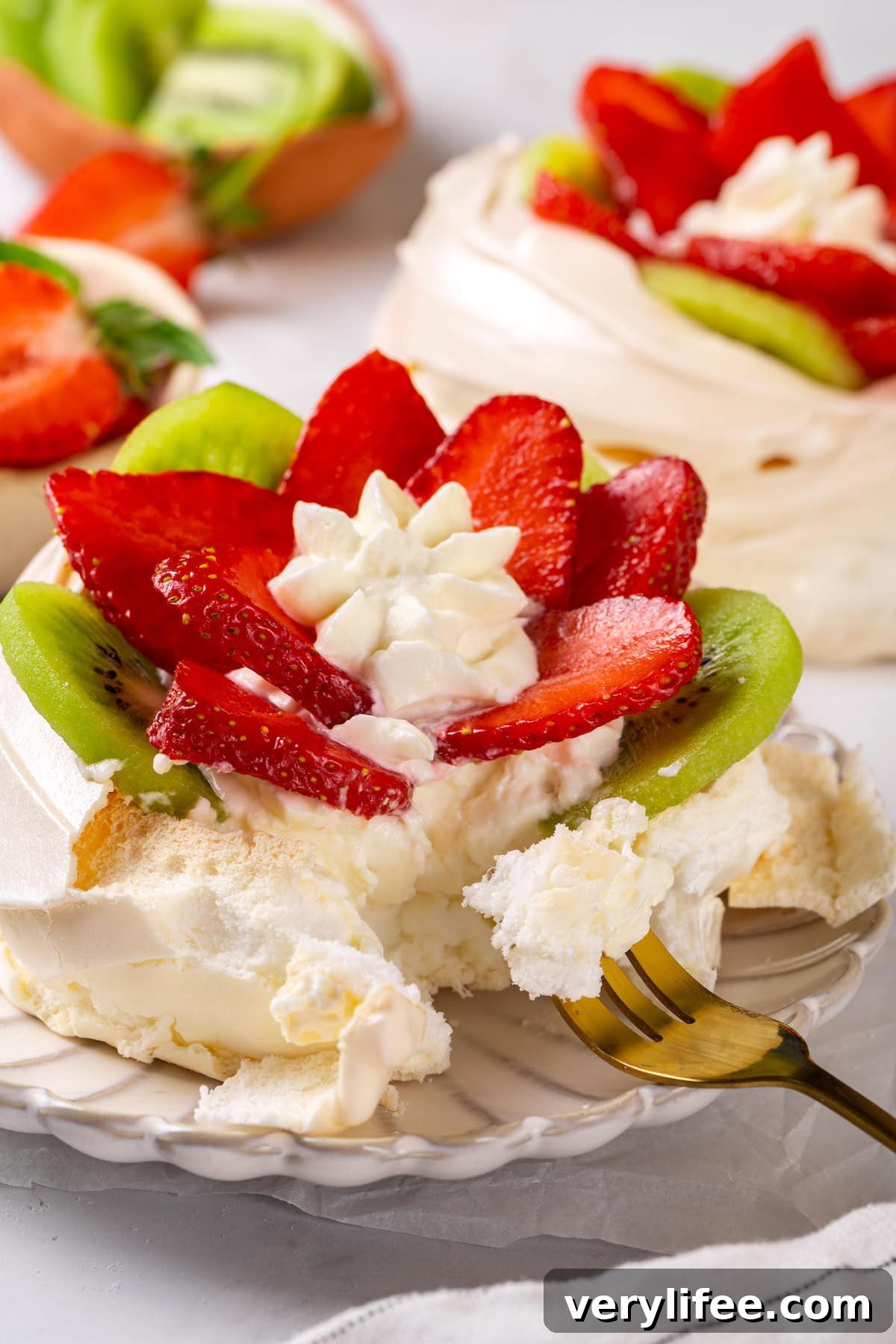
Recipe: Strawberry–Kiwi Pavlovas (Makes 6)
Ingredients
- 4 large egg whites, room temperature
- 2 teaspoons cornstarch
- 1/4 teaspoon salt
- 1 cup granulated sugar
- 1 teaspoon vanilla extract
- 1 pint fresh strawberries, sliced
- 3 kiwis, peeled and sliced
- 1 1/2 cups whipped cream (or to taste)
Instructions
- Preheat oven to 350°F (175°C). Line a large baking sheet with parchment paper and trace six 4-inch circles as guides. Turn the paper over so the drawn side is face-down and tape it in place.
- In a clean, dry mixing bowl, beat the egg whites with cornstarch and salt on high speed until foamy.
- With the mixer running, add the sugar slowly, one tablespoon at a time, until the meringue is thick, glossy and holds stiff peaks. Add the vanilla and beat briefly to combine.
- Divide the meringue evenly among the six circles. Using the back of a spoon, shape each portion into a shallow nest with a slightly raised rim about 1 inch high.
- Place the baking sheet in the oven and immediately reduce the temperature to 300°F (150°C). Bake for 1 hour.
- Turn the oven off and allow the meringues to cool completely in the closed oven for at least 4 hours or until dry to the touch and easily lifted from the paper.
- To assemble, place a dollop (about 1/4 cup) of whipped cream in each cooled meringue nest and top with sliced strawberries and kiwis. Serve promptly.
- Unfilled meringue shells can be stored at room temperature in an airtight container for up to two weeks or frozen for up to two months. Thaw before filling.
Nutrition (per pavlova)
Calories: ~222 kcal • Carbohydrates: 51 g • Protein: 3.5 g • Fat: 0.5 g • Fiber: 3 g • Sugar: 38 g • Sodium: 50 mg
Other Fruit Desserts to Try
- Apple cobbler
- Peaches and cream popsicles
- Strawberry Swiss roll
- Cherry custard
- Blueberry galette