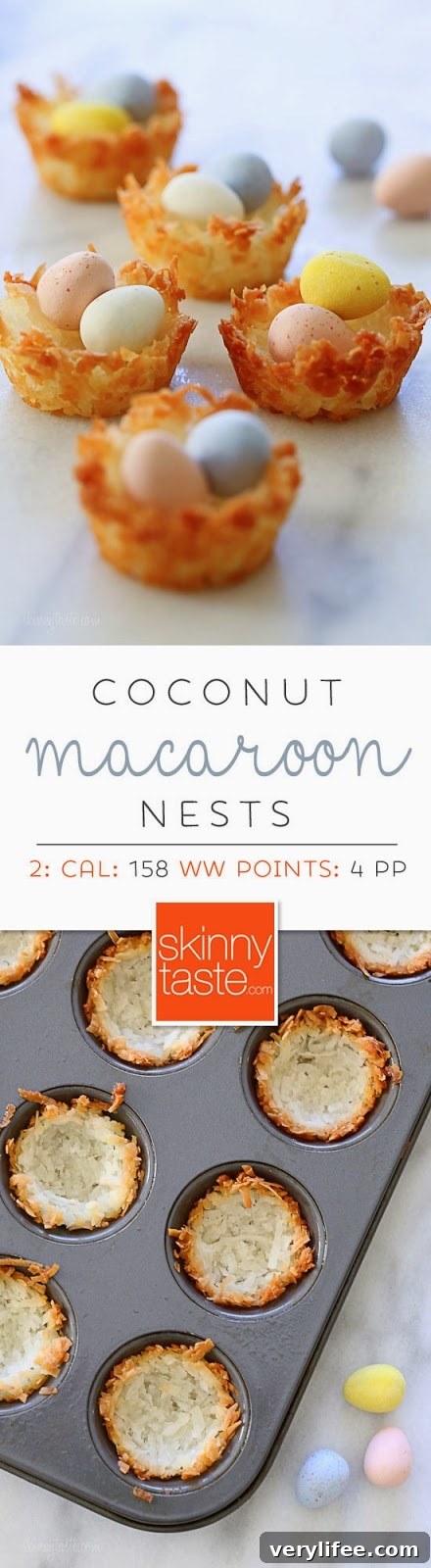
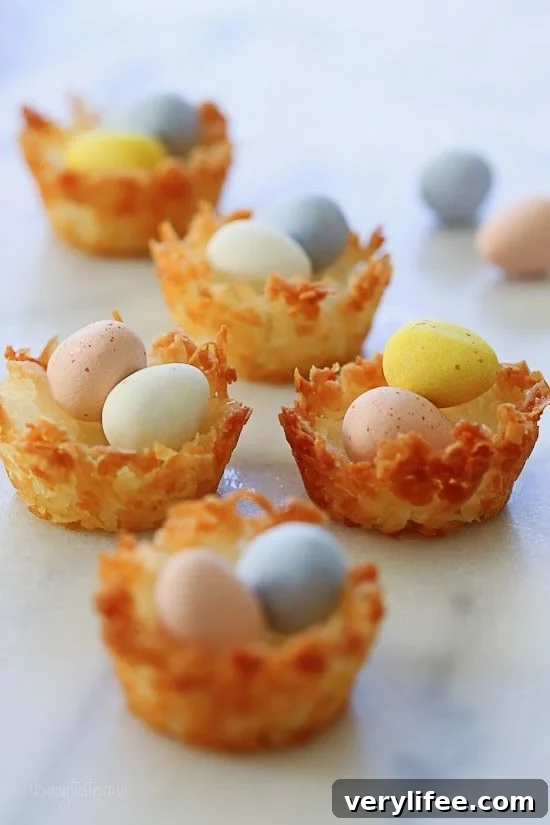
If you enjoy seasonal baking, these coconut macaroon nests are a fun and approachable recipe to add to your Easter dessert lineup. They’re naturally gluten-free, kid-friendly to make, and versatile enough to dress up with your favorite mini candies. Other spring favorites to consider alongside these nests include Easter egg cake balls, hot cross buns, coconut cupcakes, and a moist carrot cake with cream cheese frosting.
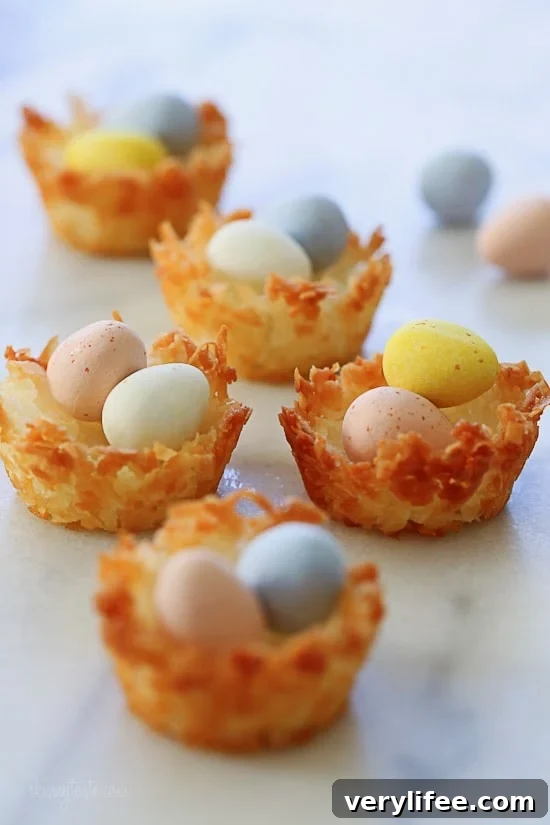
These nests were inspired by a magazine idea but adapted from a tried-and-true coconut macaroon base. Instead of baking the mixture directly on a cookie sheet, you shape each portion into a nest inside a nonstick mini muffin tin. The result is a charming, edible “nest” that holds two or three mini chocolate eggs — ideal for holiday presentation or classroom treats.
What makes a macaroon a macaroon?
A macaroon is a chewy cookie whose primary ingredients include shredded or flaked coconut and often egg whites and sugar. Unlike almond-based confections, coconut macaroons get their texture and flavor from sweetened or unsweetened coconut flakes combined with a binding liquid such as egg white. This gives macaroons their signature moist, slightly sticky interior and golden exterior when baked.
What is the difference between a macaroon and a macaron?
Macaroons and macarons are frequently confused because of their similar names, but they are very different. Coconut macaroons are dense, chewy cookies made with coconut. French macarons are delicate, meringue-based sandwich cookies made from ground almonds, sugar, and egg whites, typically filled with buttercream, ganache, or jam. Texture, technique, and flavor profiles distinguish them clearly.
Do coconut macaroons need to be refrigerated?
For short-term storage — a day or two — keep the macaroons in an airtight container at room temperature and they will remain fresh. For longer storage, up to two weeks, refrigeration will help retain moisture and prevent them from drying out. Bring refrigerated macaroons to room temperature before serving for the best chew and flavor.
Coconut Macaroon Nests
Summary: Easy gluten-free coconut macaroons shaped into little nests and filled with mini chocolate eggs — a quick and festive dessert for Easter and spring gatherings.

Yield: 18 nests • Serving Size: 2 nests
Prep: 20 mins • Cook: 40 mins • Total: 1 hr
Calories: 158 • Carbs: 20 g • Protein: 3 g • Fat: 8 g
Ingredients
- 3/4 cup egg whites (from about 5 large eggs)
- 6 tbsp granulated sugar
- 10 oz sweetened coconut flakes (about one standard package)
- 1/2 tsp almond extract
- 1/4 tsp vanilla extract
- Pinch of salt
- Nonstick cooking spray
- Mini chocolate eggs (about 72 total; 2 per nest)
Instructions
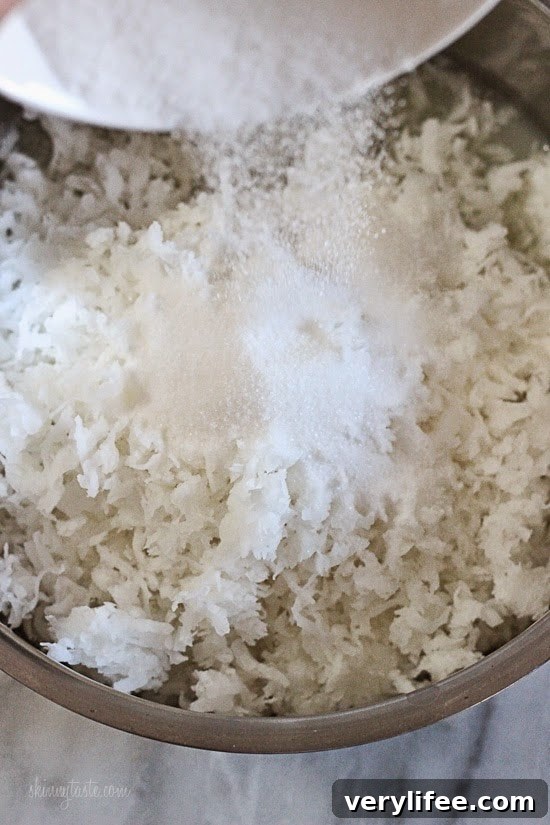
- In a heavy saucepan, combine the egg whites, sugar, and coconut flakes. Cook over medium-low heat, stirring frequently, until the mixture comes together and becomes sticky and moist — about 10 to 12 minutes. Avoid overheating; the mixture should not dry out.
- Remove the pan from the heat and stir in the almond and vanilla extracts, plus a pinch of salt. Mix thoroughly to distribute the flavor.
- Let the mixture cool for about 10 minutes until warm but manageable to handle.
- Preheat your oven to 300°F (150°C). Lightly spray a nonstick mini muffin tin with cooking spray.
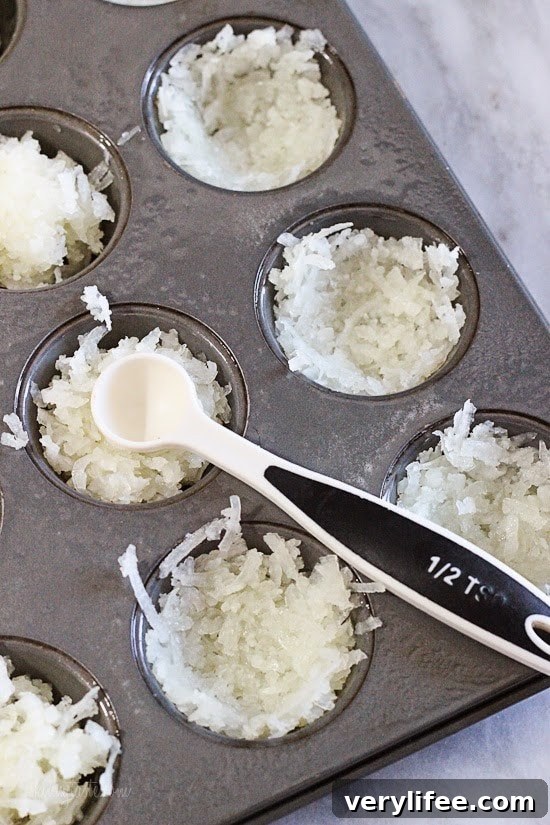
- Using a heaping tablespoon of the coconut mixture for each nest, drop portions into the prepared mini muffin cups. Press the center down and shape the sides up with the back of the spoon to form a shallow well for the eggs.
- Bake for 22 to 25 minutes, or until the edges are golden and the tops are lightly browned.
- Allow the nests to cool in the pan for about 10 minutes, then gently remove them and transfer to a cooling rack. Once fully cooled, place two or three mini chocolate eggs in each nest.
Tips and Variations
- For a less-sweet version, use unsweetened coconut and increase the sugar slightly to taste, or substitute part of the sugar with a natural sweetener you prefer.
- If you want chewier nests, remove them from the oven at the lower end of the baking time and let them finish setting while cooling.
- Almond extract intensifies the nutty aroma — omit it if you prefer a strictly coconut-vanilla profile.
- Try different fillings: chocolate eggs, jelly beans, or small marshmallows all work well for creative presentations.
- These nests are great to make with children: shaping the nests in the mini muffin tin is an easy and fun activity for little hands.
Storage
Store cooled nests in an airtight container at room temperature for up to 48 hours. For longer storage up to two weeks, refrigerate and bring back to room temperature before serving. To freeze, place nests in a single layer on a tray until solid, then transfer to a freezer-safe container; thaw in the refrigerator overnight.
Nutrition
Per serving (2 nests): approximately 158 calories, 20 g carbohydrates, 3 g protein, 8 g fat, 1 g fiber, 19 g sugar. Values are estimates and will vary with specific brand ingredients and portion sizes.
Final note
If you try this recipe, consider leaving a comment or rating where you found it so others can discover and enjoy it too. These coconut macaroon nests make a simple, festive addition to Easter dessert tables and spring bake sales.