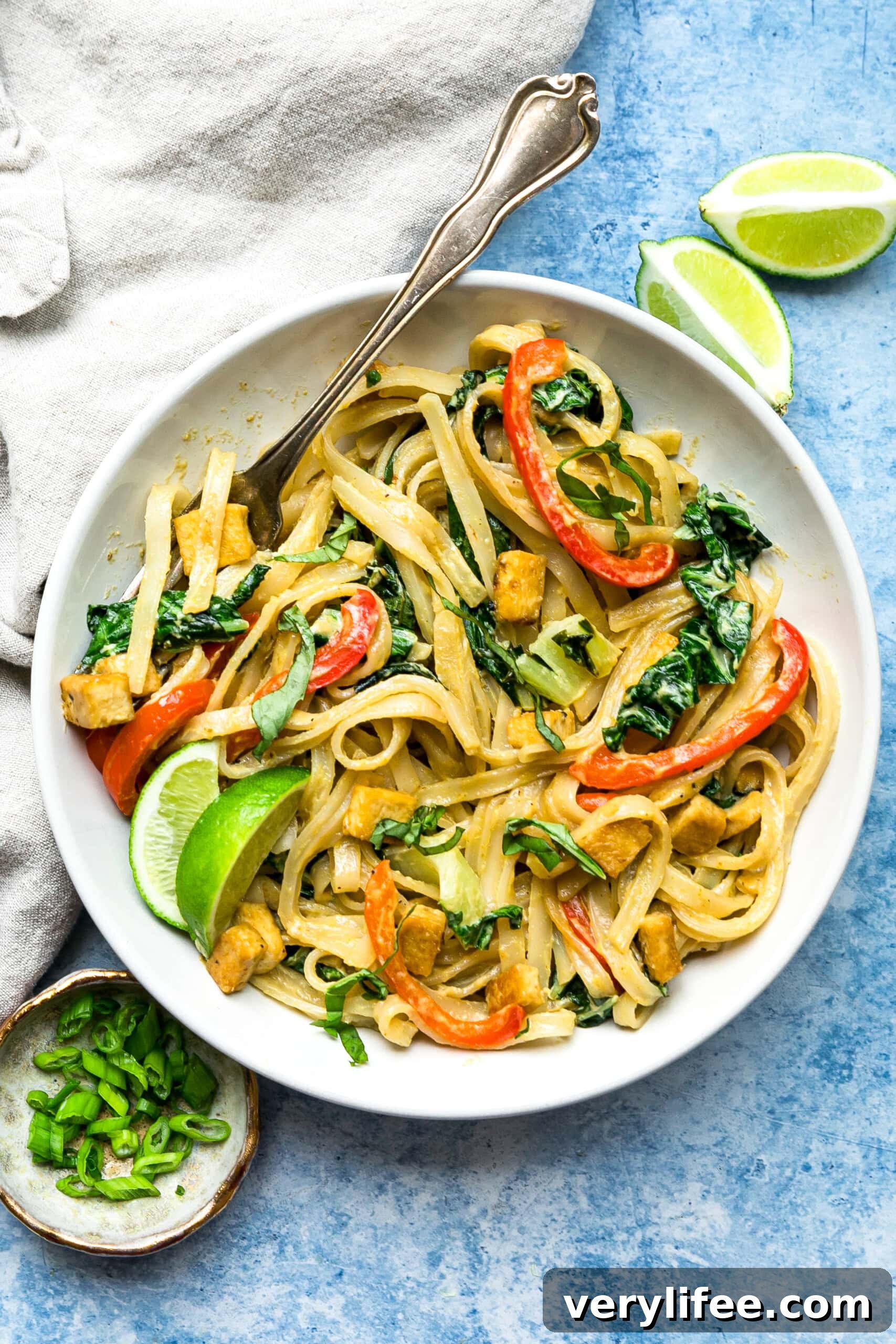
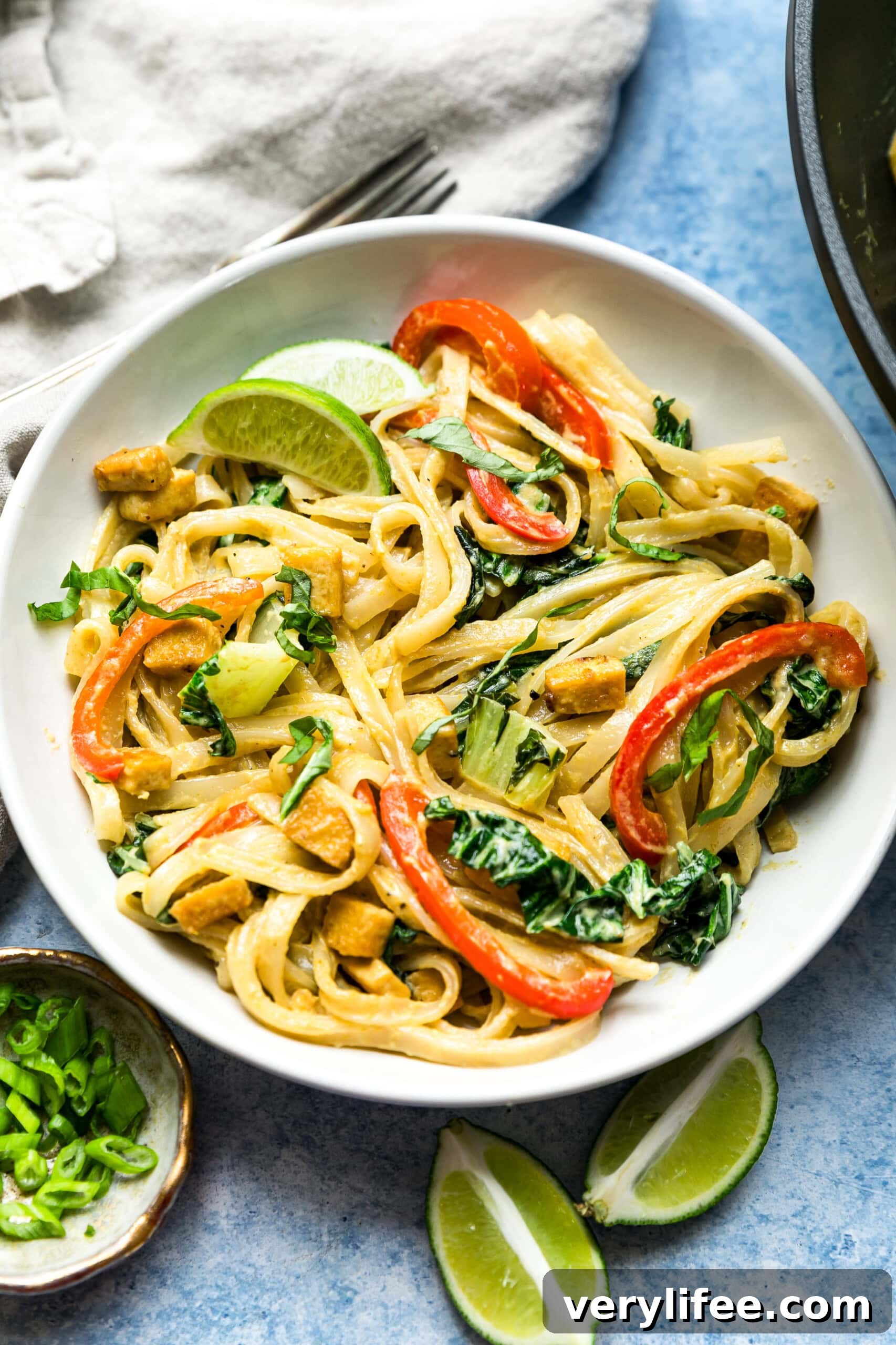
This simple Thai-inspired Green Curry Noodle recipe pairs a creamy coconut sauce with tofu, Thai green curry paste, and fresh vegetables. It’s vegan, gluten-free, dairy-free, and well suited to anti-inflammatory eating plans while delivering satisfying protein from tofu.
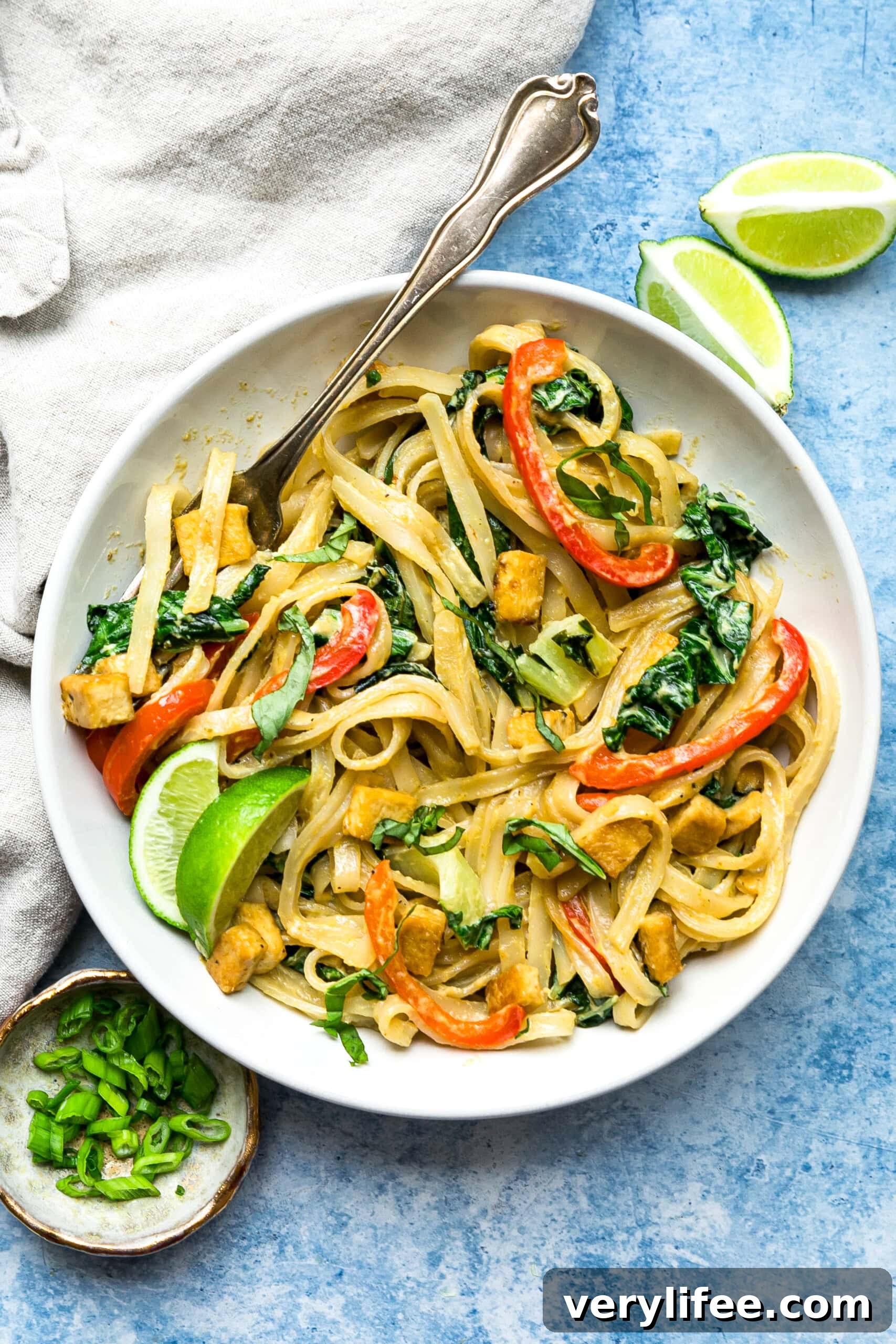
Thai Green Curry Noodles
These vegan Green Curry Noodle Bowls are comforting, flavorful, and easy to make at home. The sauce is creamy from light coconut milk and brightened with lime juice, while jarred Thai green curry paste speeds preparation without sacrificing authentic flavor. Tofu provides the protein, and simple vegetables like bell pepper and baby bok choy add color and nutrients. This recipe is a great option for weeknight dinners or meal prep and works well as a gluten-free and dairy-free main.
Ingredients
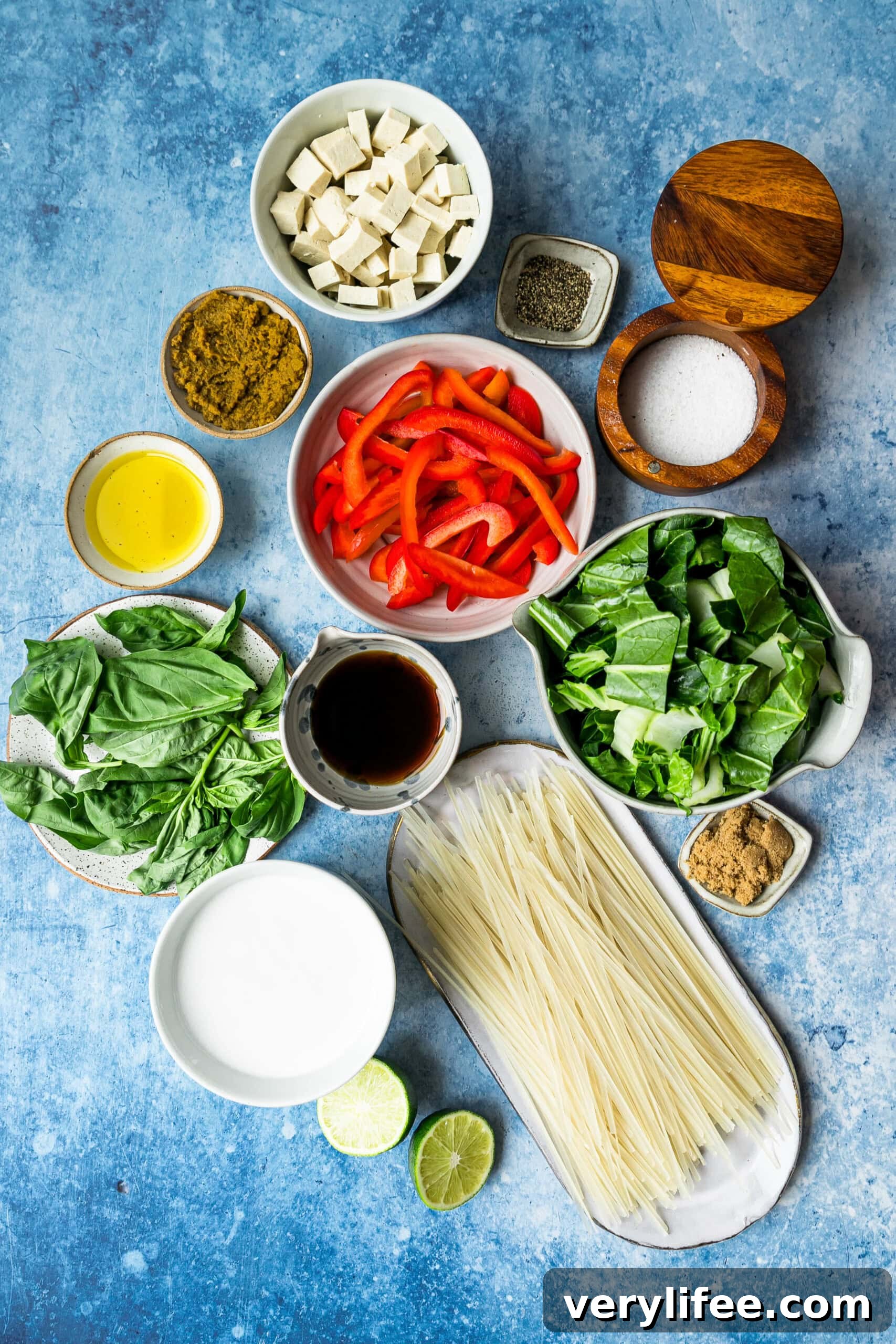
- Noodles: 6 ounces flat rice noodles (linguini-style rice noodles recommended).
- Tofu: 16 ounces firm or extra-firm tofu, drained and cubed.
- Vegetables: 1 red bell pepper, thinly sliced; 12 ounces baby bok choy, stems sliced and leaves kept whole.
- Oil: 1 teaspoon neutral oil (vegetable, avocado, or similar) for sautéing.
- Seasoning: Kosher salt and fresh black pepper to taste.
- Thai green curry paste: 3 tablespoons (jarred green curry paste is a convenient, flavorful shortcut).
- Light coconut milk: 1 1/4 cups canned light coconut milk for a creamy sauce.
- Lime juice: Juice of 1 lime (about 2 to 3 tablespoons), plus extra wedges for serving.
- Fish sauce: 1 1/2 tablespoons (use a vegan/vegetarian alternative if preferred; check labels if needed).
- Light brown sugar: 1 tablespoon to balance the heat and acidity.
- Basil: 1/2 cup fresh basil leaves, stirred in at the end for freshness and aroma.
Complete recipe quantities and steps are provided below.
How to Make Green Curry Noodles
- Soak the rice noodles: Place the rice noodles in a large bowl and cover with very hot tap water. Stir to prevent clumping and let them soak for about 25 minutes, then drain.
- Prepare the tofu: Cut the tofu into 1/2-inch cubes. Lay the cubes on a layer of paper towels, cover with more towels, and let drain for 10 to 15 minutes while you prepare the vegetables.
- Prep the vegetables: Remove the core from the bell pepper and thinly slice it. Trim bok choy ends, slice the stems, and keep the leaves whole.
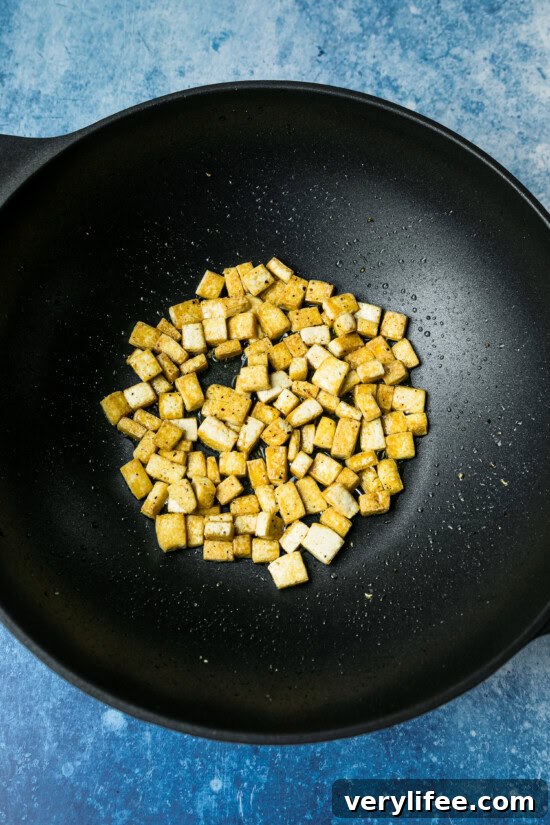
- Cook the tofu: Heat the oil in a large nonstick skillet or wok over medium heat until shimmering. Add the tofu, season with salt and pepper, and cook, tossing occasionally, until the cubes are golden on most sides (about 5 minutes).
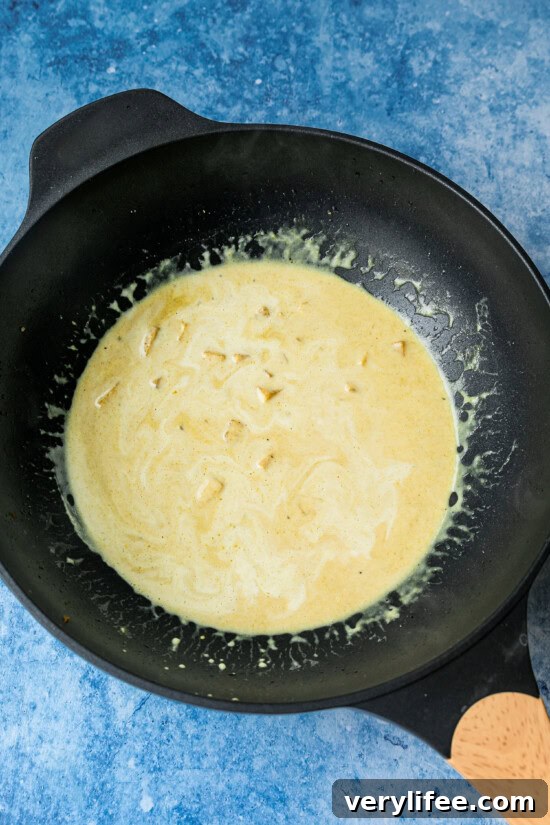
- Add the curry paste: Make a small well in the center of the skillet, add the green curry paste, and fry while stirring for just a few seconds until fragrant. Be cautious as the paste may spit when it hits the hot oil.
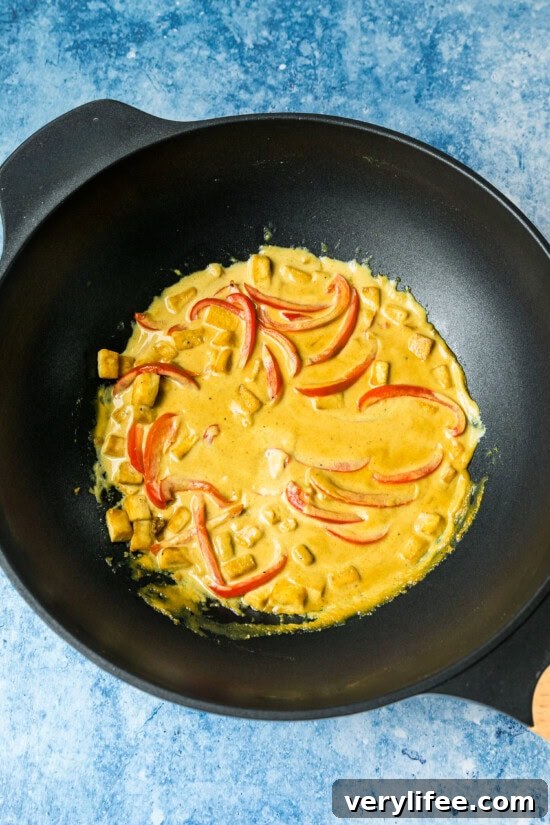
- Build the sauce: Pour in the light coconut milk and stir to combine. Add the lime juice, fish sauce (or your preferred substitute), and brown sugar. Bring the sauce to a gentle simmer.
- Cook the vegetables: Add the red bell pepper strips and simmer until crisp-tender, about 4 to 5 minutes.
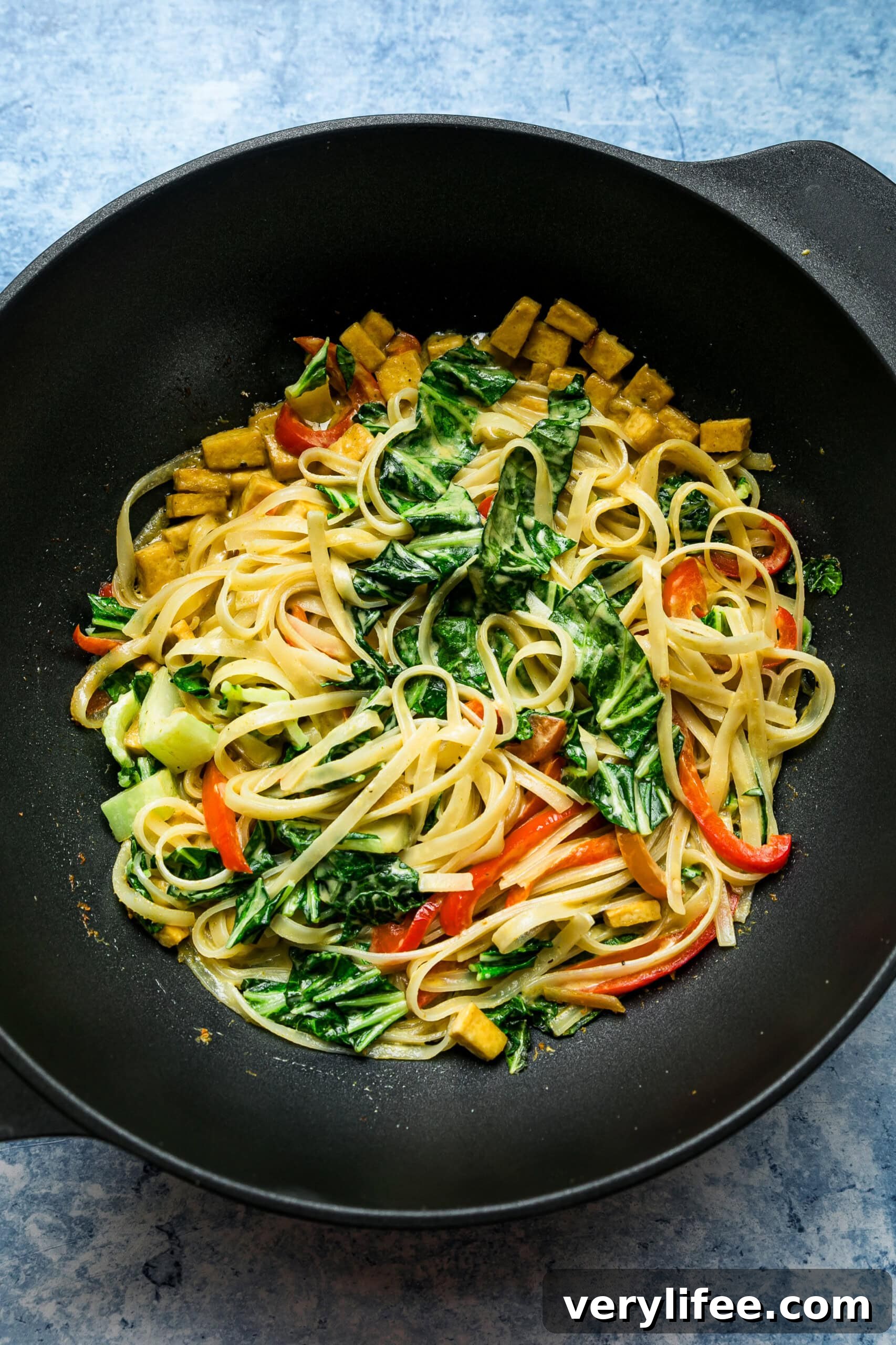
- Finish with noodles and greens: Add the drained noodles and the bok choy to the skillet. Cook, tossing and stirring often to ensure even cooking and to prevent clumping, until the noodles are tender, about 5 minutes. Stir in the fresh basil leaves just before serving.
Variations and Substitutions
- Noodles: If rice noodles aren’t available, use linguine or any long pasta as a substitute.
- Serve with rice: The curry also works well over steamed white or brown rice instead of noodles.
- Protein swap: Replace tofu with diced chicken breast or shrimp if you are not keeping the dish vegan.
- Vegetable swaps: Use onions, mushrooms, snow peas, or other seasonal vegetables in place of the bell pepper or bok choy.
- Heat: Increase or decrease curry paste to taste; add sriracha or sliced chiles for extra spice.
- Herbs: Fresh cilantro or mint can be used instead of basil for a different aromatic profile.
What to Serve With Green Curry Noodles
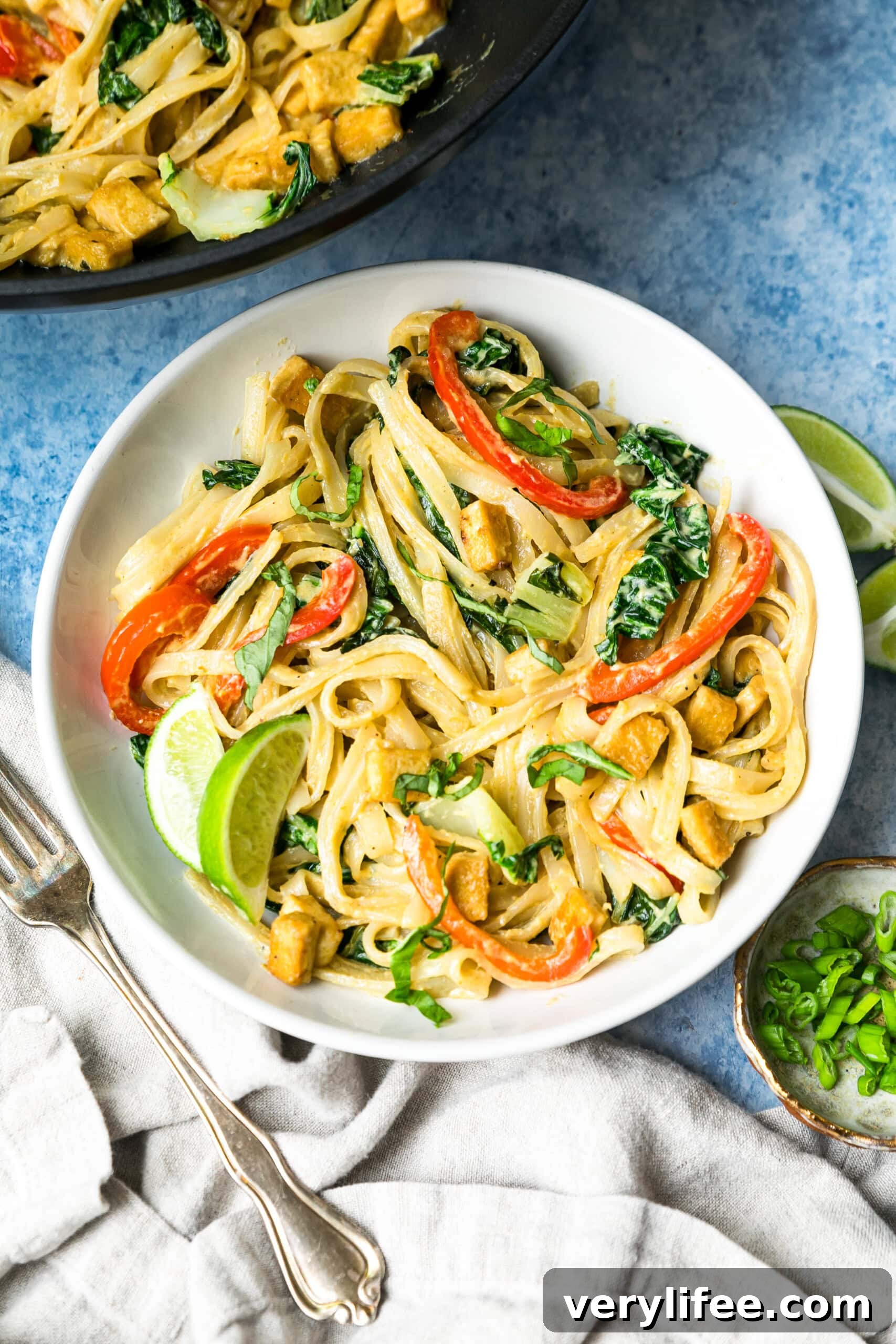
This recipe is a complete meal on its own, with tofu and vegetables providing a balanced plate. For a crisp counterpoint, serve an Asian-style slaw or a simple cucumber salad on the side. Fresh lime wedges and extra basil enhance flavor at the table.
Storage
Store leftovers in an airtight container in the refrigerator for up to 4 days. Reheat gently in the microwave or on the stove until warmed through. This dish can also be frozen for up to 3 months; thaw overnight in the fridge before reheating. Note: texture of noodles may soften after freezing and thawing.
Green Curry FAQs
Both pastes combine chilies with aromatics, herbs, and spices. Red curry paste typically uses dried red chilies for a deeper red color, while green curry paste is made with fresh green chilies and often includes ingredients like lemongrass, garlic, and lime for a brighter, herbaceous flavor.
Green curry is often the spiciest Thai curry variety, but heat levels vary by brand and homemade recipes. Adjust the amount of curry paste to suit your tolerance, or serve with a cooling side and lime wedges.
This version offers a balanced meal with plant-based protein from tofu and vitamins from vegetables. It’s naturally gluten-free when rice noodles are used and dairy-free thanks to coconut milk. Light coconut milk reduces total fat compared with full-fat coconut milk while still providing creaminess.
Recipe Details
- Yield: 4 servings
- Prep time: 25 minutes
- Cook time: 15 minutes
- Total time: 40 minutes
- Estimated nutrition (per serving): Calories: 346; Protein: 15 g; Carbohydrates: 47.5 g; Fat: 10.5 g; Fiber: 3 g. (Values are estimates and will vary by exact ingredients and brands used.)
Notes
- Patting the tofu dry before cooking helps it brown and absorb the curry flavors.
- Fry the curry paste briefly in the hot oil to release its aromatics before adding coconut milk.
- Stir the noodles often after adding them to the sauce to prevent sticking and to allow even absorption of flavor.