
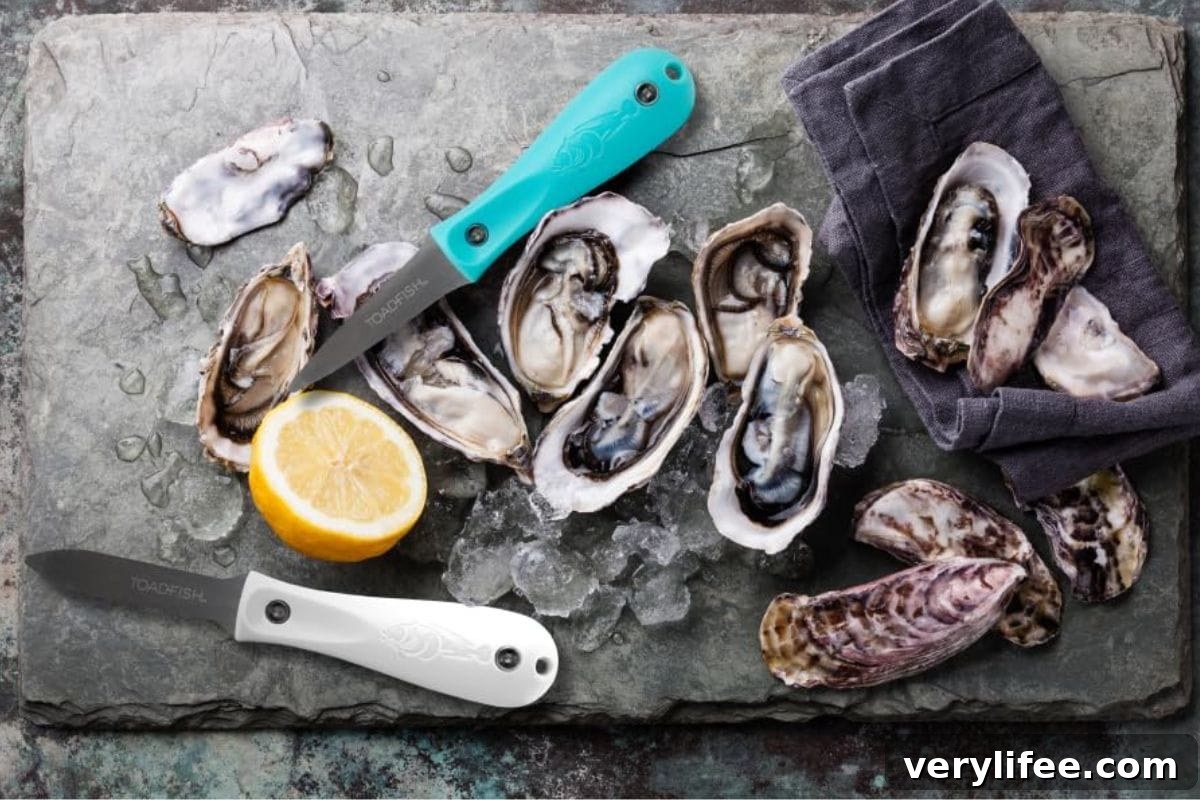
I love oysters—whether raw and freshly shucked or cooked into a favorite recipe like Oysters Rockefeller. To enjoy them safely and efficiently, you need a proper oyster knife. Designed specifically for shucking, these knives make the job easier and reduce the risk of injury. Below are my top picks and a practical guide to choosing and using the best oyster knives on the market.
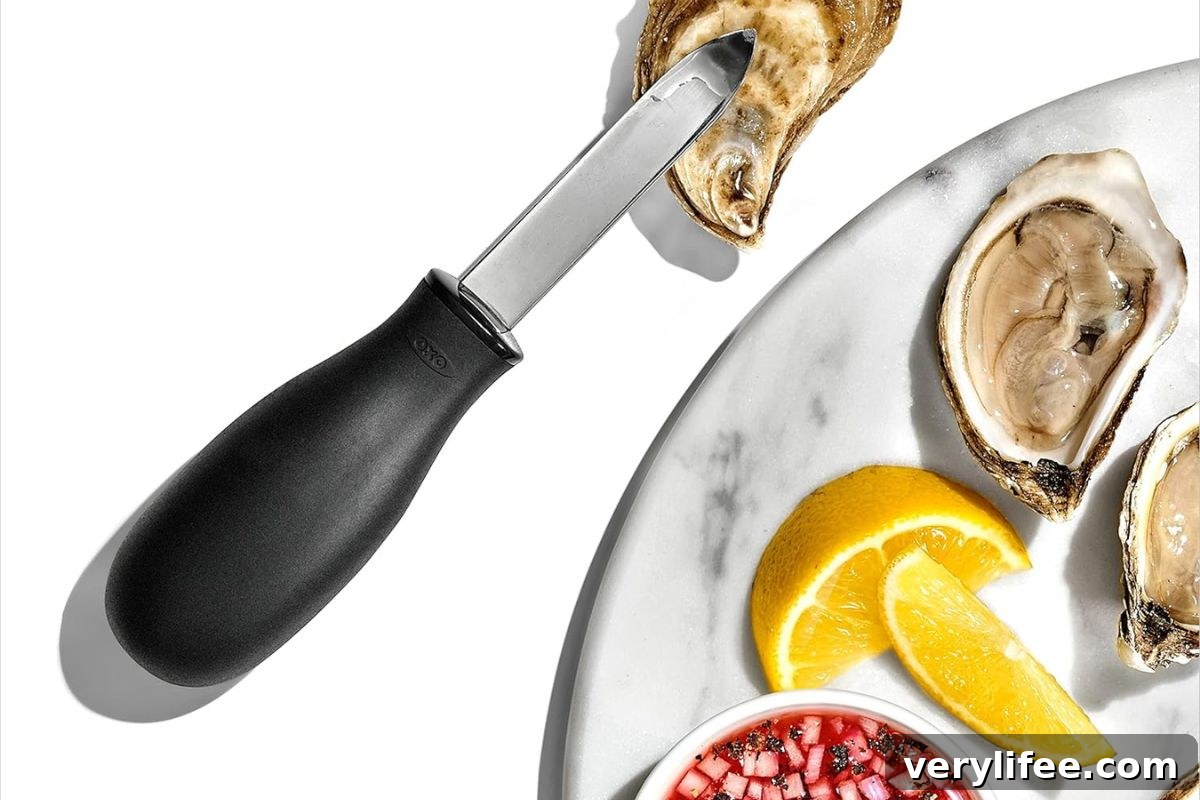
I look for a few key features when choosing an oyster knife: a sturdy blade with the right tip shape, a comfortable, non-slip handle, and overall durability. Depending on your needs—budget, frequent shucking, or a preference for a classic wooden handle—there’s an option below that will serve you well.
My Top Picks
- What’s in My Kitchen: R Murphy / Ramelson New Haven Oyster Knife Shucker — $38
- Best Budget: OXO Good Grips Stainless Steel Non-Slip Oyster Knife — $11.99
- Best Splurge: Made In Oyster Shucker — $49
- Best Handle: Swissmar Shucker Paddy Universal Oyster Knife — $19.95
Reviews of the Best Oyster Knives
1. What’s in My Kitchen: R Murphy / Ramelson New Haven Oyster Knife Shucker
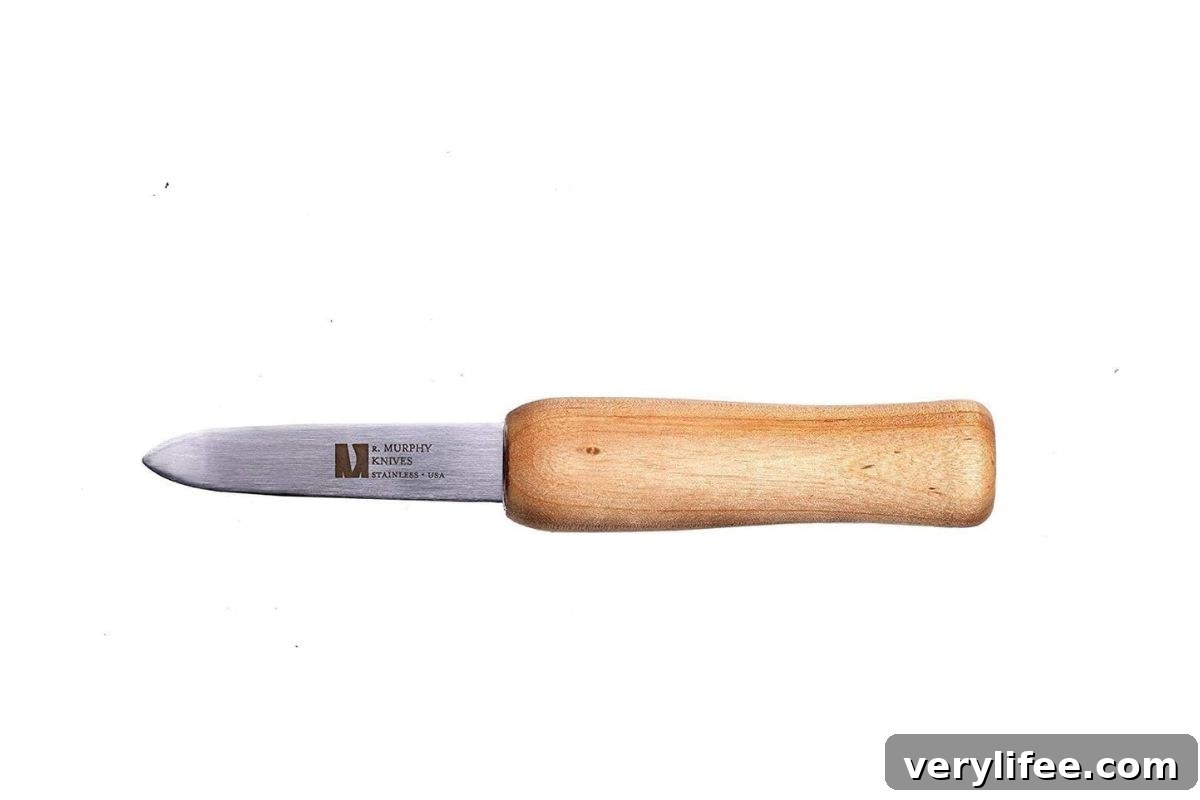
This is my go-to oyster knife. It’s comfortable, durable, and well-balanced—suitable for both beginners and pros. The handle is made from recycled plastic, which is a nice eco-friendly touch. The bent tip helps access the hinge without forcing the blade into the shell.
The Specs:
- Blade length: 2.58 inches
- Blade: High-carbon stainless steel
- Handle: Recycled plastic
Pros: affordable, comfortable grip, bent tip for hinge access.
Cons: hand-wash only.
Notes: This model is frequently recommended by culinary sources for its balance of price and performance.
2. Best Budget: OXO Good Grips Stainless Steel Non-Slip Oyster Knife
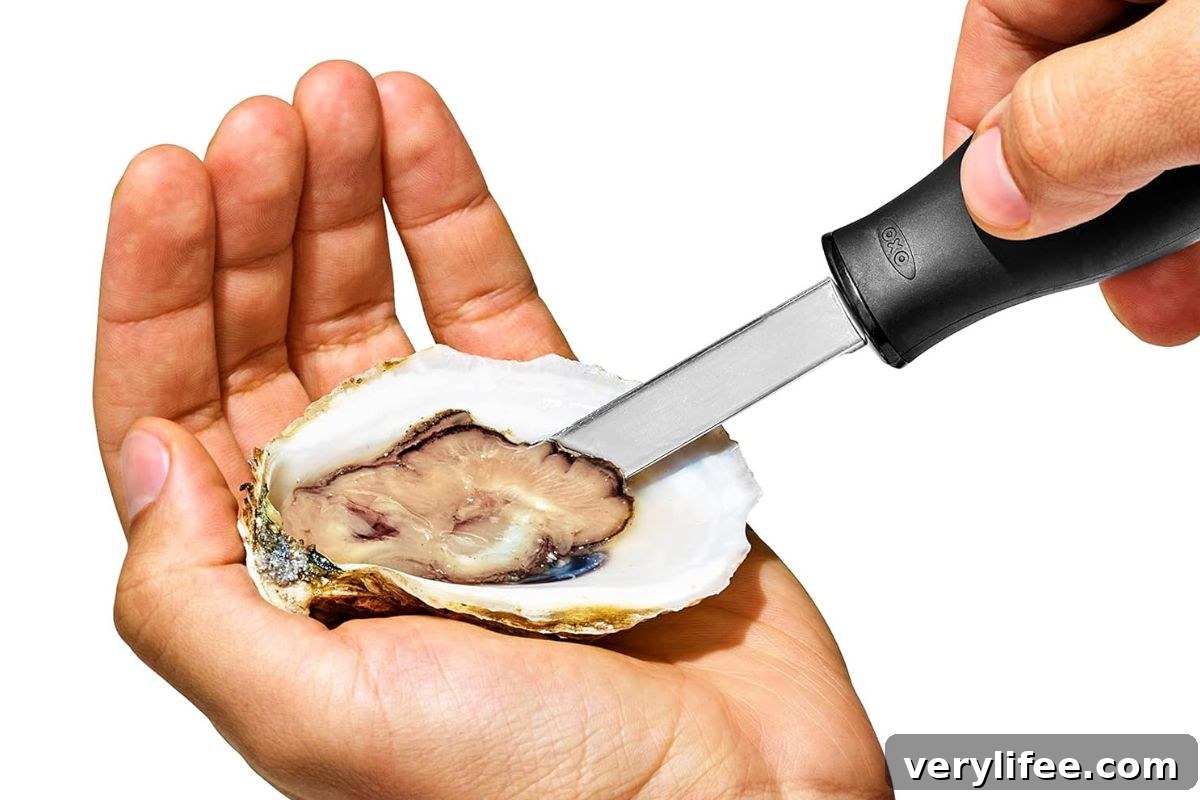
If you want a reliable, low-cost oyster knife, the OXO Good Grips model is a smart choice. The non-slip handle is comfortable and secure, and the bent tip helps open oysters with minimal effort. It’s an excellent option for casual shuckers, though heavy frequent use may cause blade warping over time.
The Specs:
- Blade length: 2.75 inches
- Blade: Stainless steel
- Handle: Non-slip plastic
Pros: very affordable, good grip, bent tip for hinge access.
Cons: short handle for some users; blade may warp after repeated heavy use.
Notes: This knife is widely praised for value and comfort and has strong user ratings for home use.
3. Best Splurge: Made In Oyster Shucker
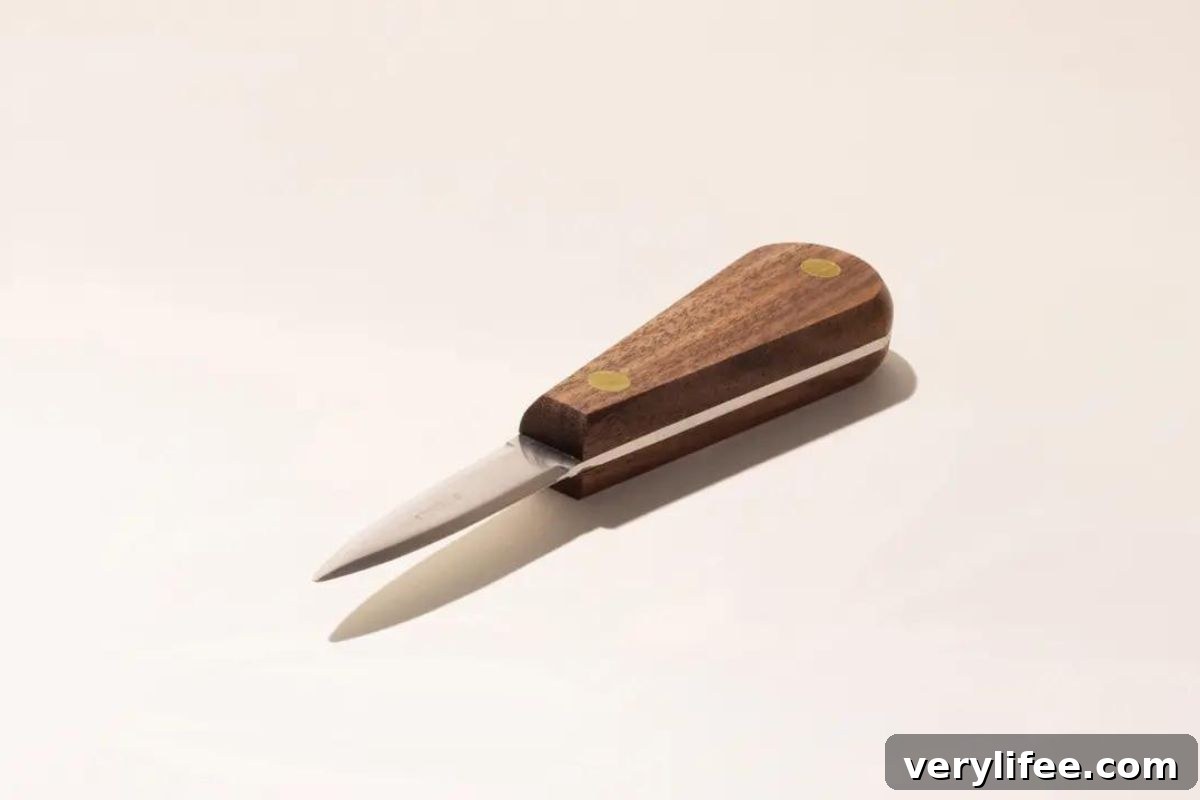
For frequent shuckers who value craftsmanship, the Made In Oyster Shucker offers a beautiful walnut handle and a high-carbon stainless blade built to last. It’s a hand-wash-only piece with an elevated look that performs well in regular use.
The Specs:
- Blade length: 2.63 inches
- Blade: 420HC high-carbon stainless steel
- Handle: Walnut
Pros: durable, comfortable grip, timeless appearance.
Cons: higher price point; hand-wash only.
4. Best Handle: Swissmar Shucker Paddy Universal Oyster Knife
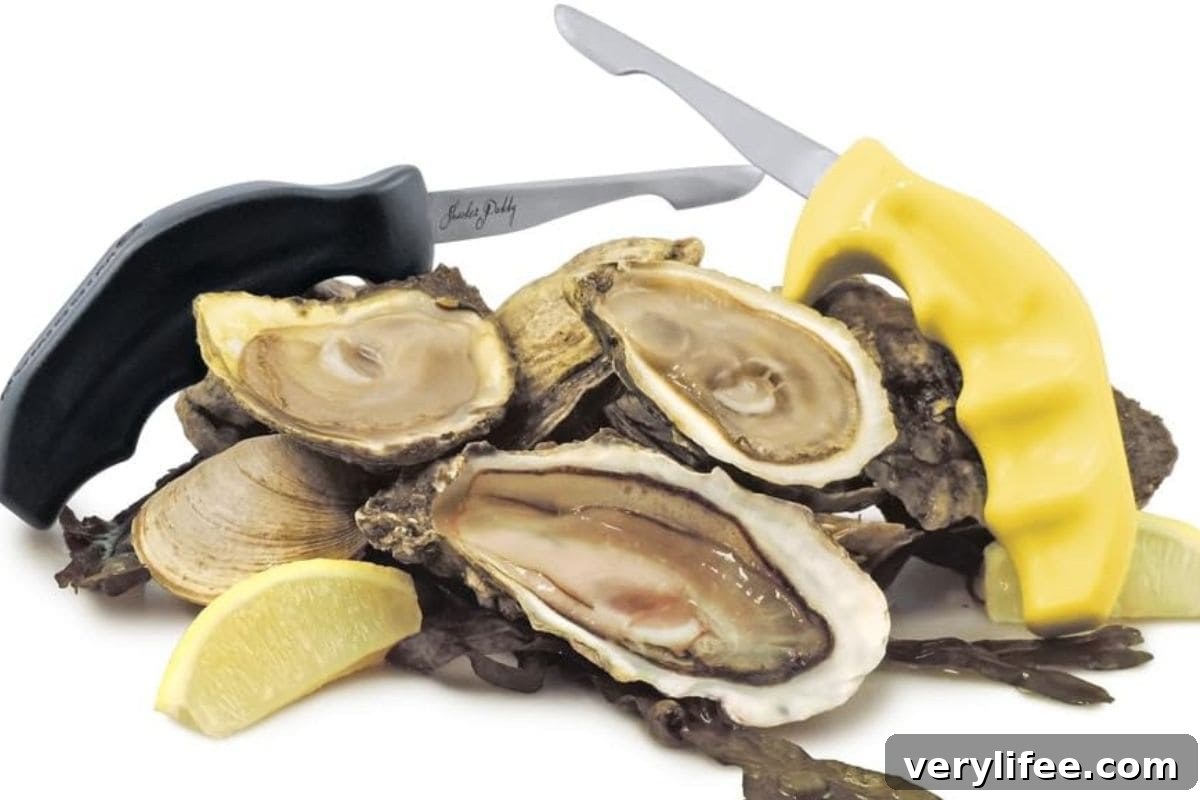
Designed by a champion shucker, the Swissmar Shucker Paddy features an ergonomic pistol-style grip that provides excellent control. The handle shape may take a session or two to get used to, but once you do, it speeds up shucking and reduces hand fatigue. The knife is dishwasher-safe and versatile for other shellfish.
The Specs:
- Blade length: 2 inches
- Blade: Stainless steel
- Handle: Plastic (pistol grip)
Pros: well-designed handle, easy hinge access, dishwasher-safe.
Cons: handle shape requires adjustment for some users.
Other Oyster Knives to Consider
Mercer Culinary Boston Style Oyster Knife
This classic restaurant-style knife has a straight 3-inch blade with a rounded tip for safety. It is affordable, reliable, and common in professional kitchens.
Toadfish Oyster Shucker’s Bundle
A premium set that includes two complementary oyster knives (one bent-tip for beginners and one for advanced users) plus a cut-resistant shucking towel. It’s a great gift set or starter kit for someone serious about oysters.
Williams Sonoma x Billy Reid Oyster Knife
A stylish option with an Acacia wood handle and a copper-plated end cap. It’s a hand-wash-only knife with a refined look for entertaining.
Why You Can Trust Me
I’m Gina, the author and recipe developer behind Skinnytaste. I develop recipes that balance flavor and health, and I’ve worked with seafood extensively—everything from salmon and shrimp to seasonal shellfish. I use my own oyster knife for recipes like Oysters Rockefeller and have tested many of the knives listed here. For models I haven’t personally used, I consulted reputable culinary sources and user feedback to ensure these recommendations reflect both performance and value.
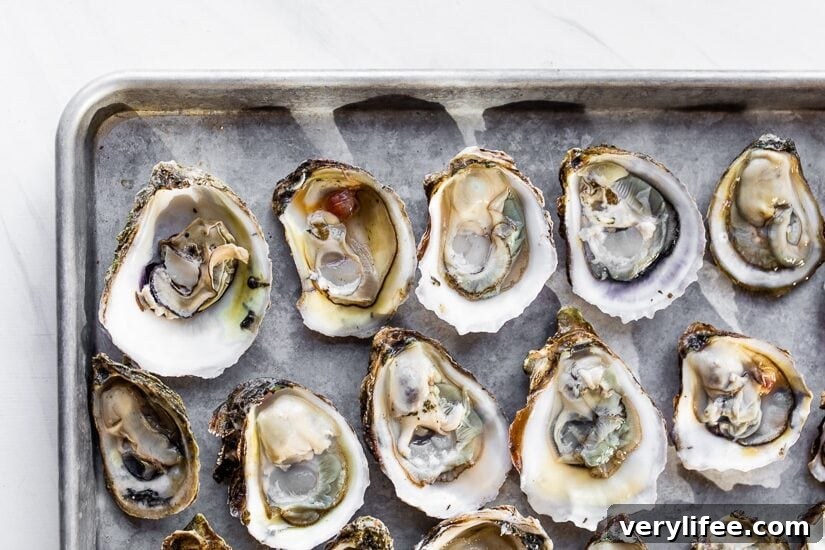
Everything to Know Before Buying an Oyster Knife
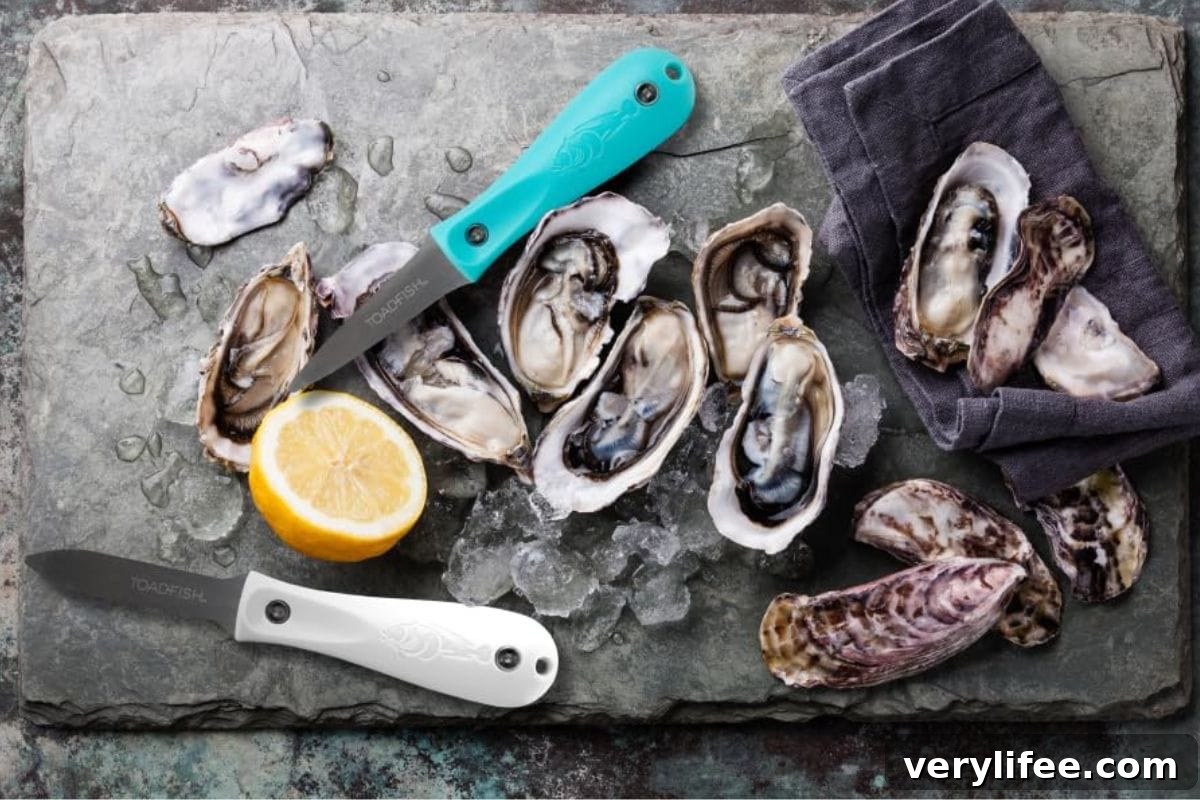
What to Consider Before Buying an Oyster Knife
Two main factors determine the best knife for you:
- Blade type: Bent-tip blades are best for beginners because they make it easier to access and twist the hinge. Straight-tip blades are popular with experienced shuckers for more precise work.
- Handle material: Plastic handles are typically dishwasher-safe and lower maintenance. Wooden handles look beautiful and offer a classic feel but require hand washing and occasional care.
How to Shuck Oysters
Follow these steps for safer, cleaner shucking:
- Prepare a station with an oyster knife, a folded tea towel, and oysters on ice to keep them fresh.
- Fold the towel into thirds and place the oyster belly-side down on the towel, leaving the hinge exposed.
- Cover and hold the oyster firmly with the towel to protect your hand.
- Insert the knife tip into the hinge, then twist the knife to pry the shell open.
- Run the knife along the top shell to sever the muscle, discard the top shell, then cleanse the blade on the towel.
- Slide the knife under the oyster to detach it fully from the bottom shell, then serve.
Can You Open Oysters Without an Oyster Knife?
While an experienced shucker might manage with a paring knife or another strong blade, using a dedicated oyster knife is safest. Oyster knives are short, stout, and designed to withstand the twisting and leverage needed to open shells without breaking the blade or slipping.
Clam Knife vs. Oyster Knife
Clam knives are longer, thinner, and have a more rounded tip for prying open clams, while oyster knives are shorter, thicker, and often have a pointed or bent tip for accessing the hinge. Due to these differences, they’re not ideal substitutes for one another.
Are Oysters Alive When You Eat Them?
Raw oysters served on ice are typically still alive or very recently harvested, which keeps them fresh and flavorful. Cooked oyster dishes, like Oysters Rockefeller, are prepared with heat and are no longer alive when eaten.
The Best Seafood Recipes

- Oysters Rockefeller
- Fish Florentine
- Salmon Coconut Curry with Spinach and Chickpeas
- Garlic Shrimp
- Blackened Air Fryer Salmon Bites
Prices and availability noted in original product listings were accurate at the time of publication.