
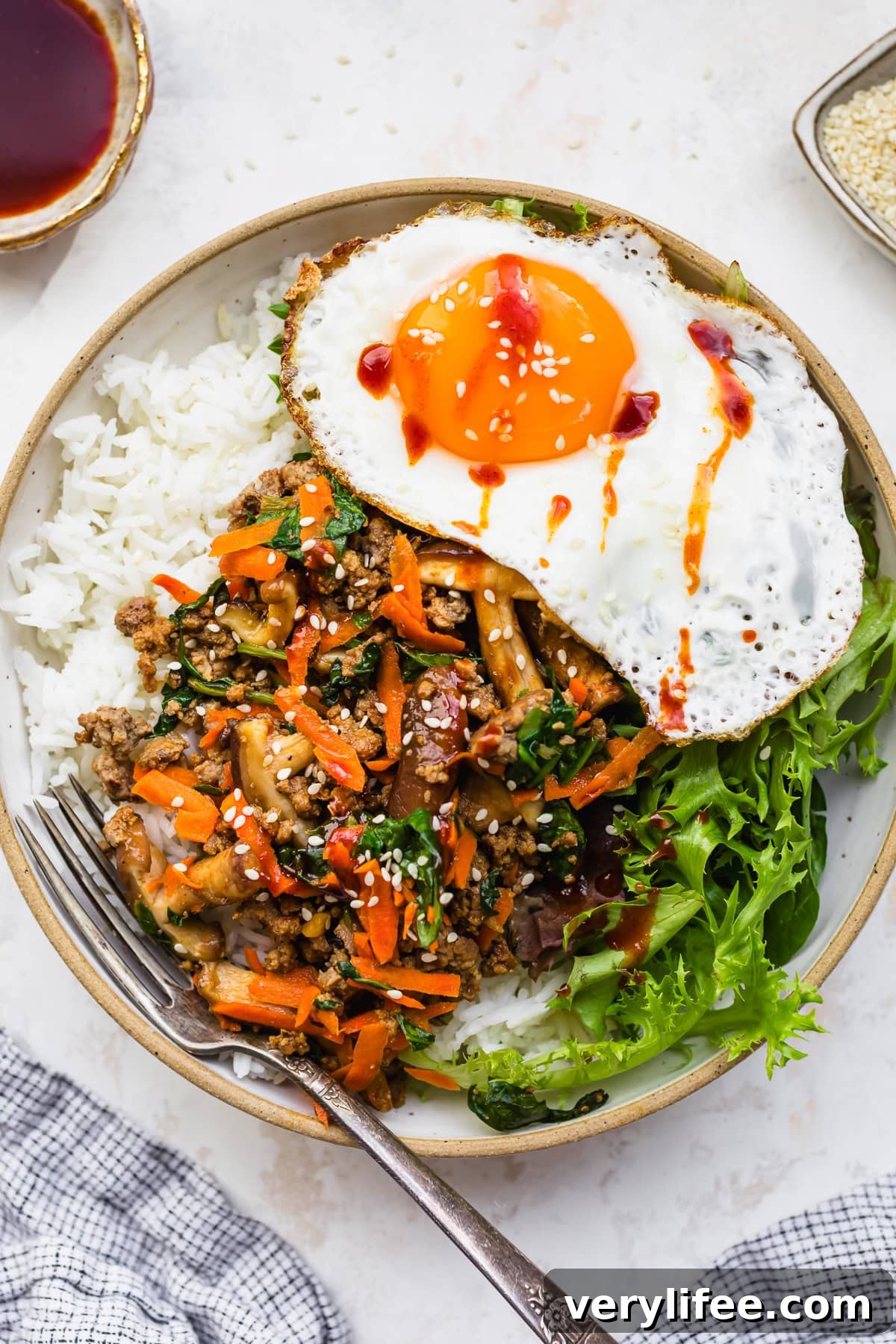
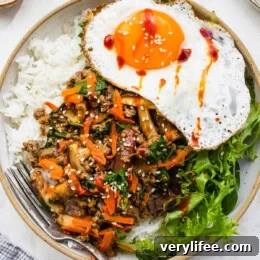
Ground Beef Bibimbap is a quick, Korean-inspired bowl made with seasoned ground beef and sautéed vegetables cooked in a single skillet. Spoon it over hot rice, top with a fried egg, and enjoy a comforting, flavorful meal in under 30 minutes.
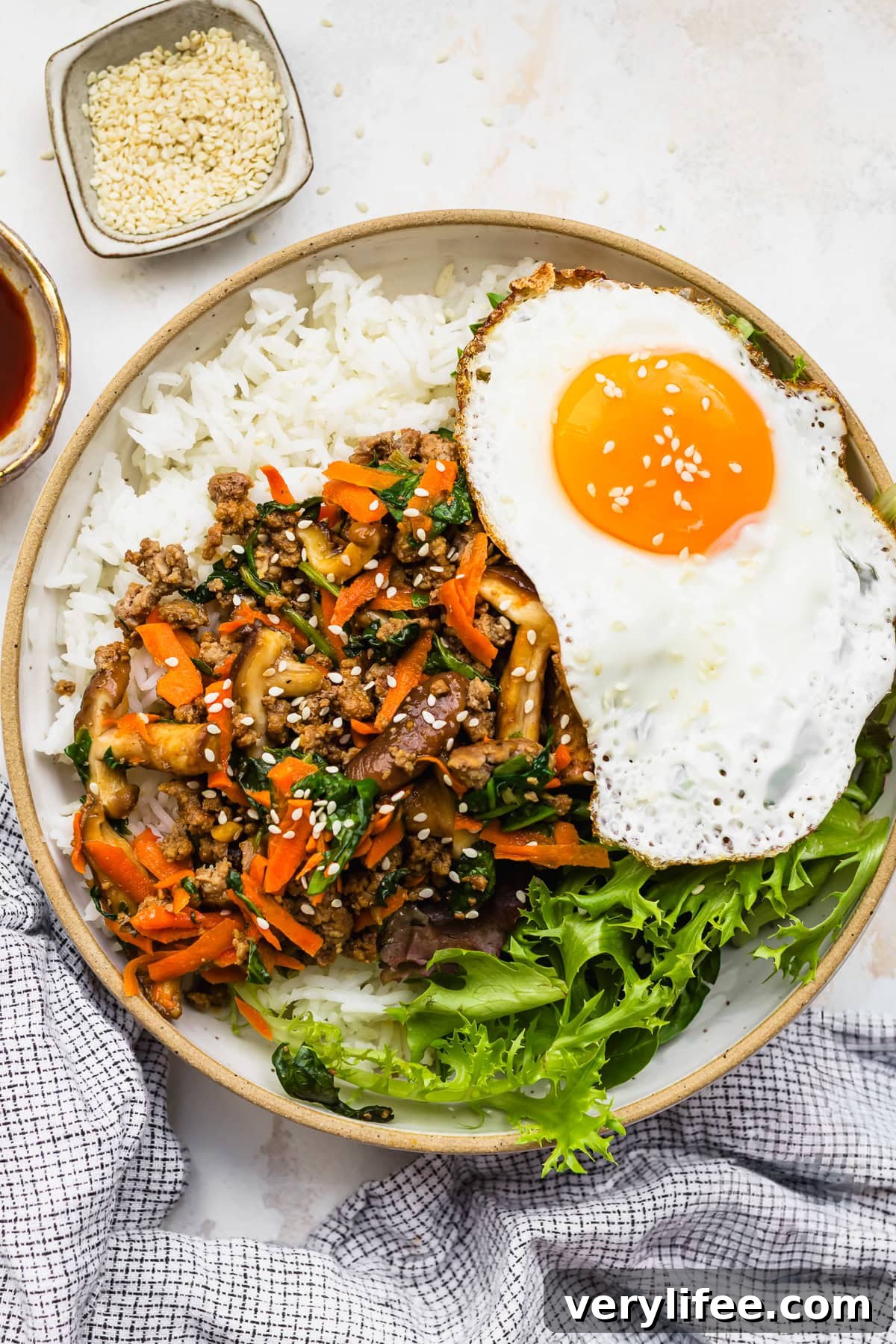
Easy Bibimbap Recipe
This simplified ground beef bibimbap captures the spirit of the classic Korean rice bowl in a fast, one-skillet version. If you like speedy ground beef stir-fries you’ll appreciate how quickly the protein and vegetables come together in a savory-sweet gochujang sauce. It’s an affordable, family-friendly dinner that’s easy to customize—serve over rice with a fried egg and a sprinkle of sesame seeds.
Why You’ll Love This Easy Bibimbap

I lived near Koreatown in New York City for a time and quickly developed a taste for bibimbap: the mix of sizzling vegetables, savory meat, and a runny egg folded into warm rice is irresistible. This home-friendly version delivers those same flavors without the fuss, and it’s ideal for weeknights when you want something satisfying and fast.
- Budget-friendly: Ground beef is economical and cooks quickly.
- One-skillet meal: Beef and vegetables cook together fast for easy cleanup.
- Korean-inspired flavor: A simple savory-sweet sauce gives bold flavor.
- Faster than takeout: Uses common supermarket ingredients and comes together in about 30 minutes.
- Customizable: Adjust the spice level, swap proteins, or use whatever vegetables you have on hand.

Ingredients You’ll Need
Below are the main ingredients for this ground beef bibimbap. Refer to the recipe measurements in the ingredients list later for exact amounts.
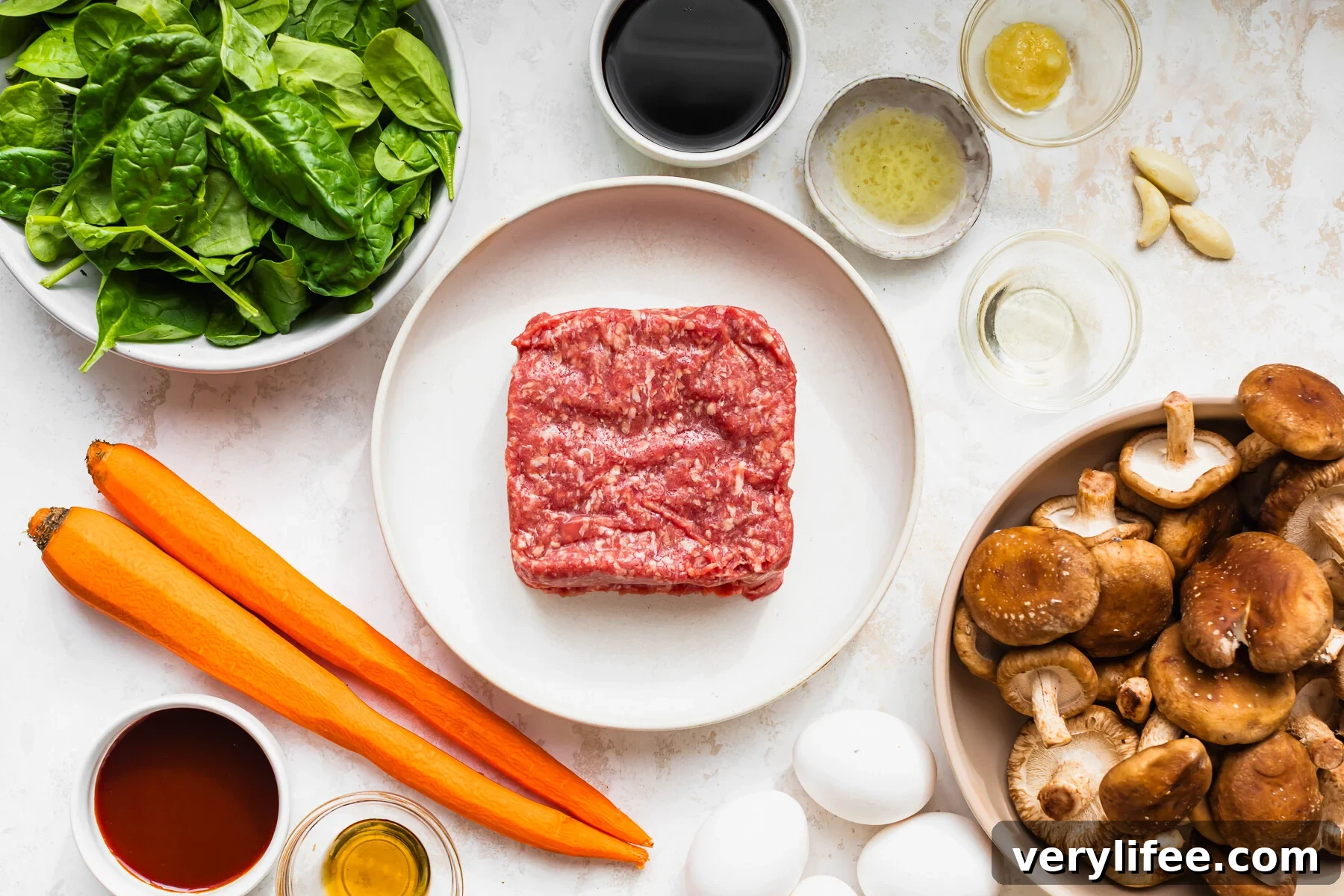
- Gochujang: A Korean red pepper paste that is sweet, spicy, and savory—traditional in bibimbap.
- Toasted sesame oil: Adds a warm, nutty finish.
- Low-sodium soy sauce: Balances saltiness while allowing control of sodium.
- Rice vinegar: Brightens and balances the sauce.
- Lean ground beef (90/10) or ground bison: Cooks quickly and is economical.
- Avocado oil: Ideal for frying eggs at higher heat.
- Vegetables: Shiitake mushrooms, grated carrots, and chopped baby spinach add texture, color, and nutrients.
- Aromatics: Fresh garlic and grated ginger build depth of flavor.
- Large eggs: A runny yolk blends into the rice and sauce for richness.
- To serve: Cooked rice (white or brown), mixed greens, and sesame seeds for garnish.
How to Make Ground Beef Bibimbap
This recipe is very straightforward. Prepare the sauce first, cook the beef, add the vegetables, and finish with eggs for topping. The full ingredient list and step-by-step instructions follow below.

- Make the bibimbap sauce: Whisk together gochujang, toasted sesame oil, soy sauce, and rice vinegar until smooth. Set aside.
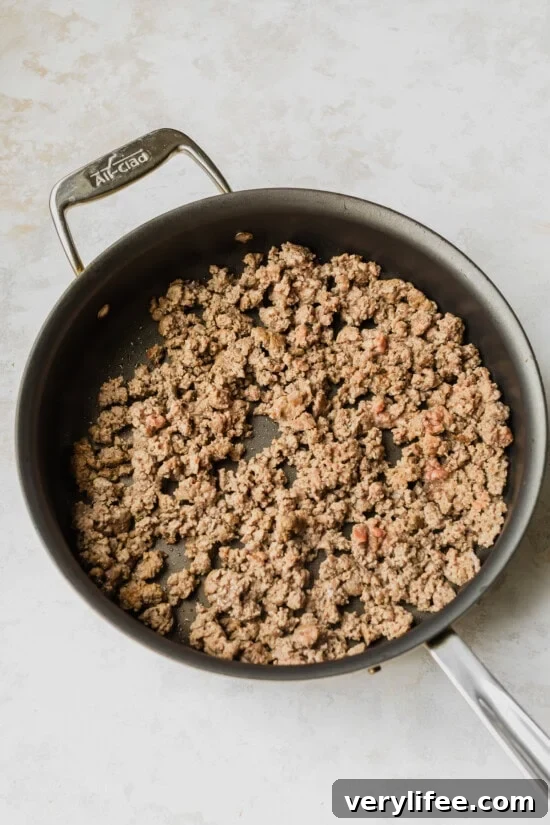
- Cook the ground beef: Heat a large skillet over medium-high heat. Add the ground beef and break it into small pieces. Cook, stirring occasionally, until mostly cooked through (about 5 minutes). Drain excess liquid.
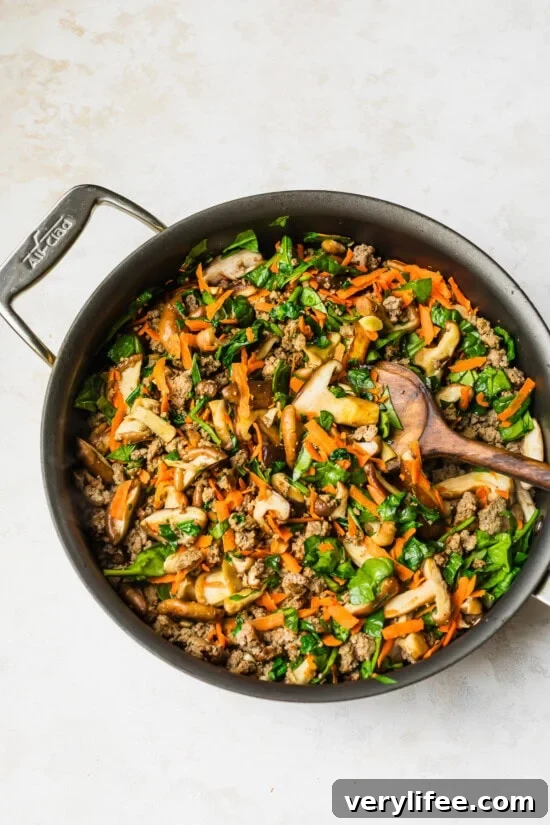
- Add mushrooms and aromatics: Stir in sliced shiitake mushrooms, chopped garlic, and grated ginger. Cook until the mushrooms release their liquid, about 5 minutes.
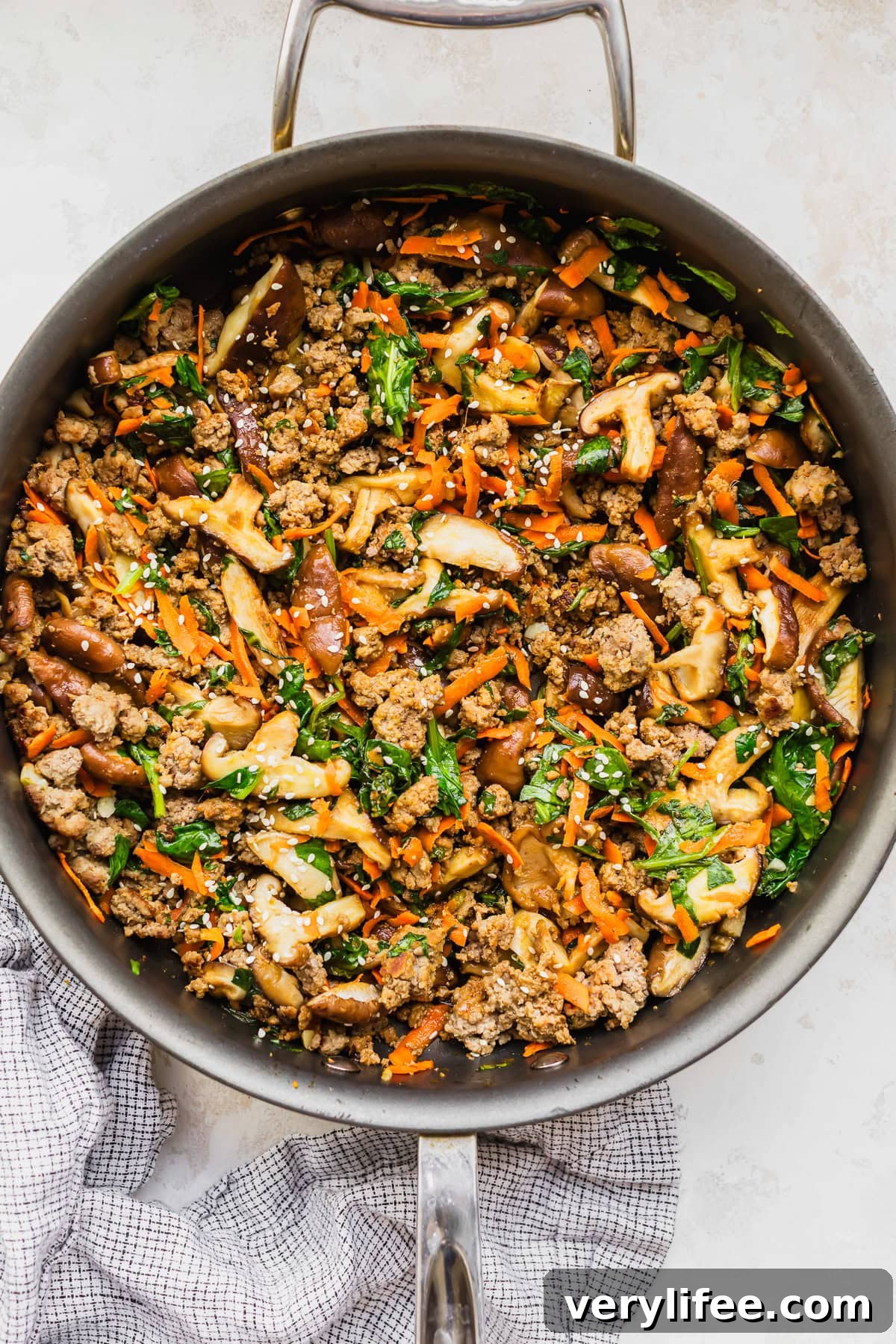
- Add carrots and spinach: Stir in grated carrot and chopped spinach. Cook until the spinach wilts, about 2–3 minutes. Add the prepared gochujang sauce and toss to combine. Remove from heat.
- Fry the eggs: In a separate nonstick skillet, heat a little avocado oil over medium-low heat. Crack in the eggs and cook covered until the whites are set but yolks remain soft, about 4–6 minutes.
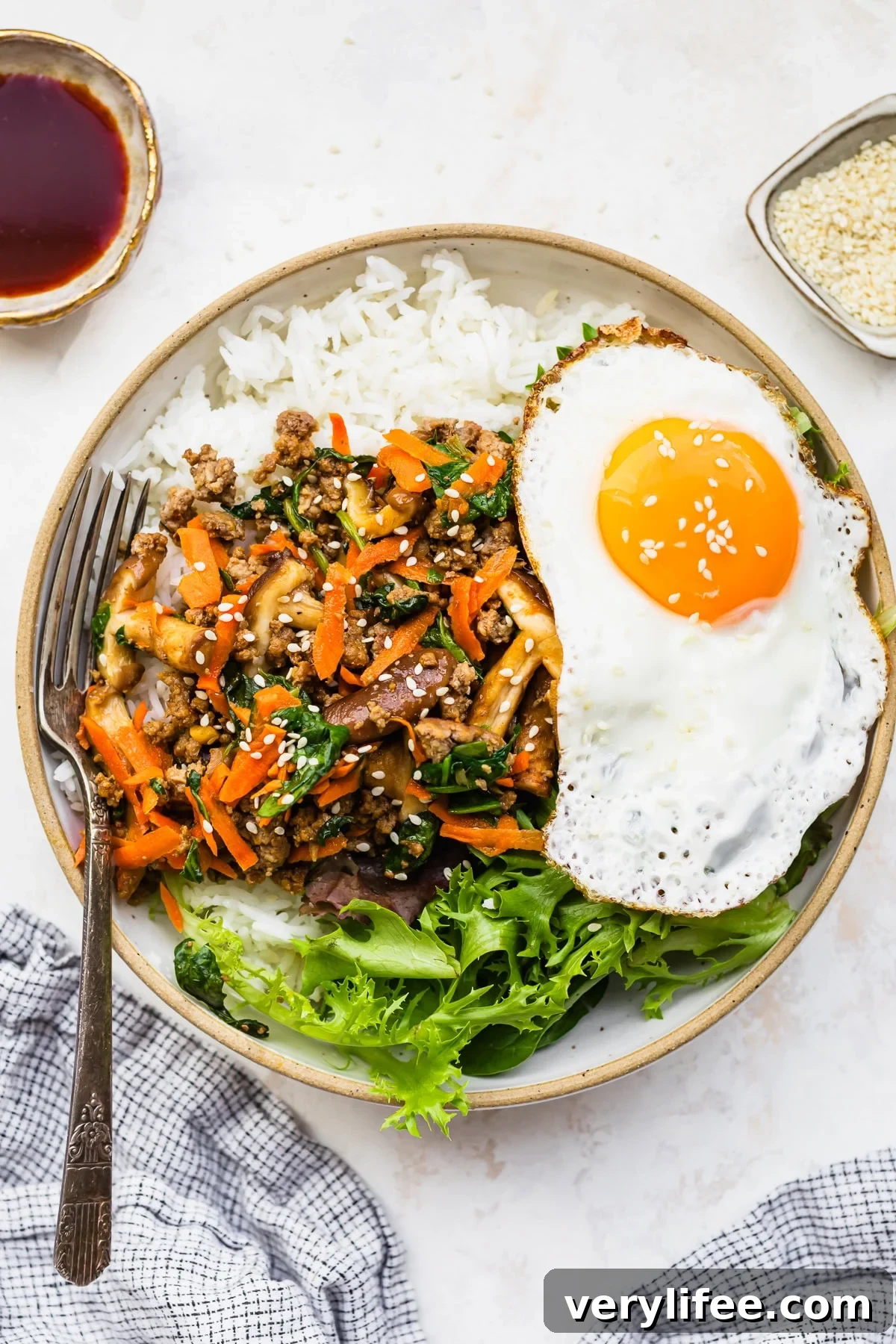
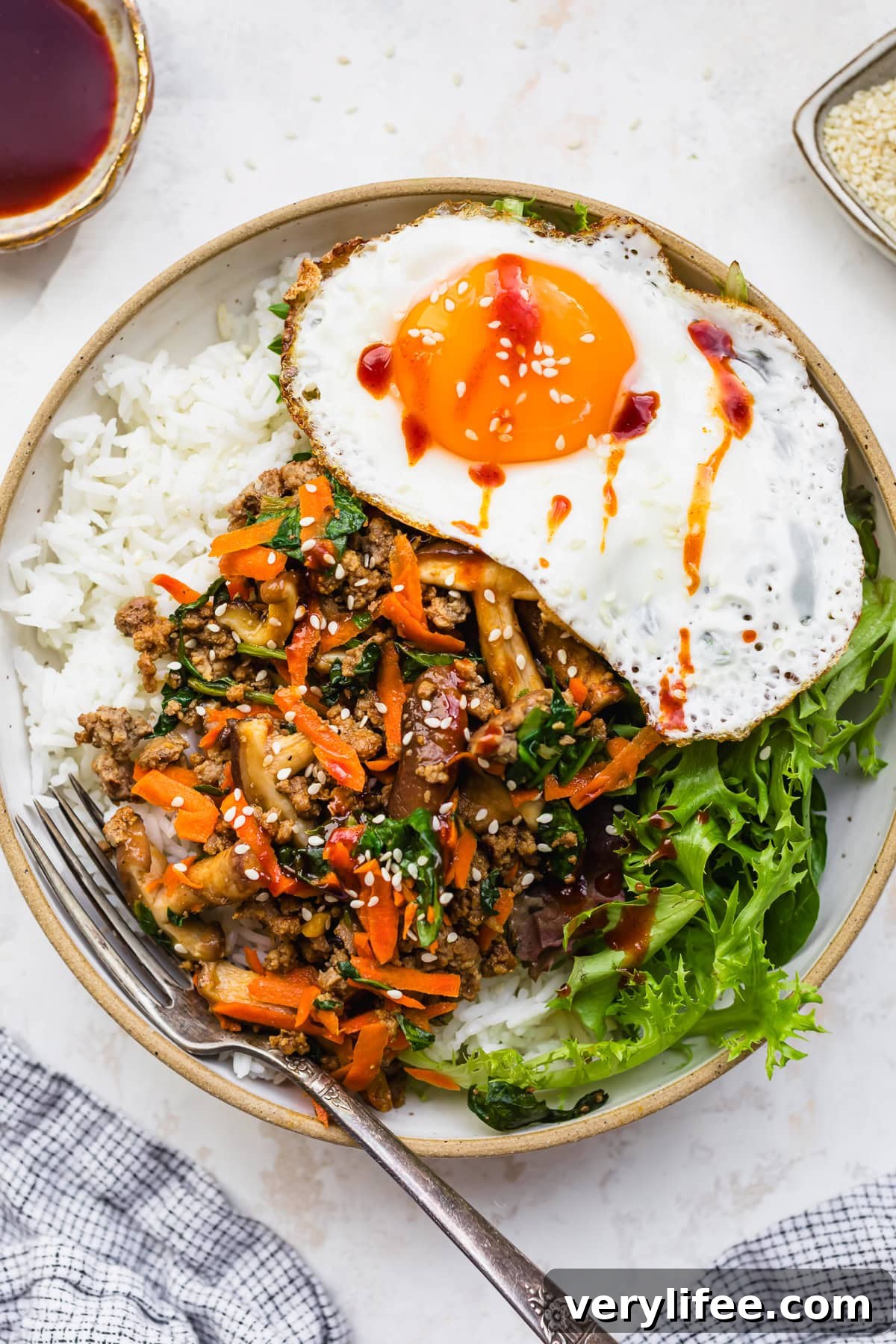
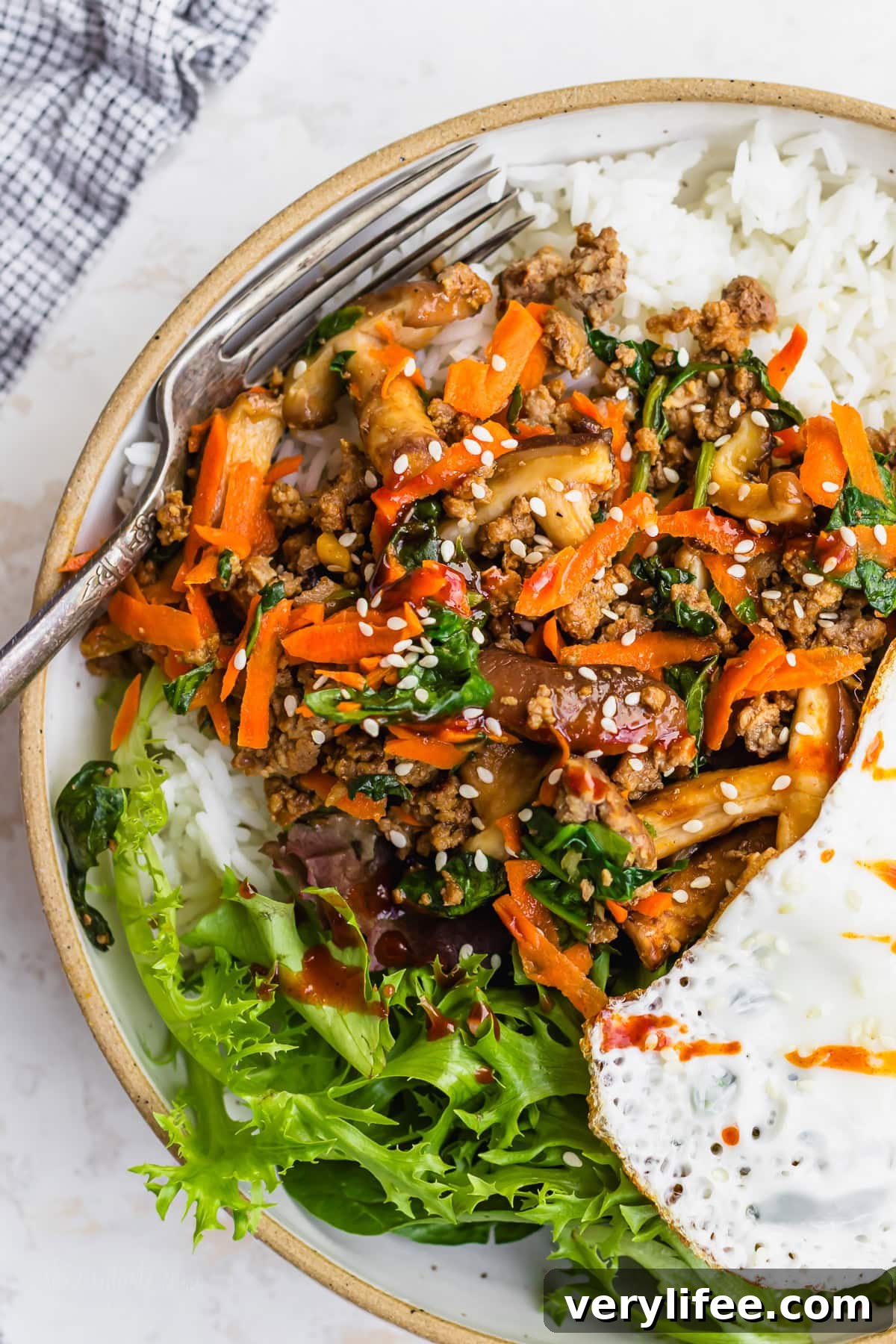
- Assemble the bowls: Divide warm rice and mixed greens among four bowls. Top each with the beef and vegetable mixture, a fried egg, and a sprinkle of sesame seeds. Serve extra gochujang on the side if desired.
Variations
- Gluten-free: Use tamari or coconut aminos instead of soy sauce and confirm your gochujang is gluten-free.
- Alternate proteins: Substitute lean ground turkey or chicken for the beef.
- Vegetarian: Omit the meat and use extra-firm tofu or double up on vegetables like bell peppers, edamame, or cucumber.
- Mushroom alternatives: If shiitakes aren’t available, baby bellas work well.
- Leafy greens: Swap spinach for chopped kale or Swiss chard if you prefer.
- Low-carb option: Replace rice with cauliflower rice or serve the mixture over mixed greens only.
Ground Beef Bibimbap — Recipe Summary
Yield: 4 servings
Prep: 10 mins Cook: 20 mins Total: 30 mins
Calories: 508.5 kcal per bowl • Protein: 38 g • Carbs: 52.5 g • Fat: 15.5 g
Course: Dinner, Main Dish, Meal Prep • Cuisine: Korean-inspired
Equipment
- Large skillet
- Nonstick skillet for frying eggs
Ingredients (serves 4)
- 2 tablespoons gochujang, plus more for serving
- 1 teaspoon toasted sesame oil
- 3 tablespoons low-sodium soy sauce
- 1 tablespoon rice vinegar
- 1 pound lean ground beef (or ground bison, turkey, etc.)
- 1 teaspoon avocado oil
- 8 ounces shiitake mushrooms, sliced
- 3 cloves garlic, chopped
- 1 teaspoon grated ginger
- 1 cup grated or pre-shredded carrot
- 5 ounces baby spinach, roughly chopped
- 4 large eggs
- Sesame seeds, for garnish
- 3 cups cooked white or brown rice, for serving
- Mixed greens, for serving
Instructions
- Combine 2 tablespoons gochujang, 1 teaspoon toasted sesame oil, 3 tablespoons soy sauce, and 1 tablespoon rice vinegar in a small bowl and whisk until smooth. Set aside.
- Heat a large skillet over medium-high heat. Add the ground beef and break into small pieces. Cook about 5 minutes until mostly done. Drain any excess liquid.
- Add sliced mushrooms, chopped garlic, and grated ginger to the skillet. Cook until mushrooms release their liquid, about 5 minutes.
- Stir in the grated carrot and chopped spinach. Cook until the spinach wilts, about 2–3 minutes. Stir in the prepared gochujang sauce and remove the skillet from heat.
- In a separate nonstick skillet, heat 1 teaspoon avocado oil over medium-low heat. Crack in the eggs and cook covered until whites are set and yolks remain soft, about 4–6 minutes.
- To assemble, divide rice and mixed greens among four bowls. Top with the beef and vegetable mixture, a fried egg, and a sprinkle of sesame seeds. Serve extra gochujang on the side.
Notes
- The sauce yields a little over 1/4 cup.
- The cooked meat and vegetable mixture makes about 4 heaping cups.
- Great for meal prep. If prepping ahead, consider using soft-boiled eggs instead of freshly fried eggs to maintain texture.
Storage
- Refrigerate: Store the meat and vegetable mixture in an airtight container for up to 4 days. Keep rice and mixed greens separate. Fry only the eggs you plan to eat immediately.
- Freeze: Freeze the meat and veggies for up to 3 months. Cooked rice can be frozen in individual portions with the beef and sauce for quick meals later.
- Reheat: Thaw overnight in the refrigerator if frozen, then microwave until hot. Add fresh mixed greens and a freshly fried egg when serving for best texture.
FAQ
Bibimbap, meaning “mixed rice,” is a popular Korean rice bowl topped with seasoned beef, vegetables, and a runny fried egg. While some versions use sliced steak, this recipe uses ground beef for convenience and affordability.
Bulgogi refers to thinly sliced, marinated Korean BBQ beef. Bibimbap is a rice bowl that can include bulgogi or other proteins along with assorted vegetables and a sauce.
Yes. Pack rice and the beef mixture together and keep mixed greens separate. Reheat the rice and beef, then add the greens. Fried eggs are best fresh, but soft-boiled eggs can be prepared ahead for meal prep.
Eggs are best when fresh, but you can prepare extra fried eggs and store them with the rice and beef. Texture may change slightly when reheated; soft-boiled eggs are a good alternative for meal prep.