
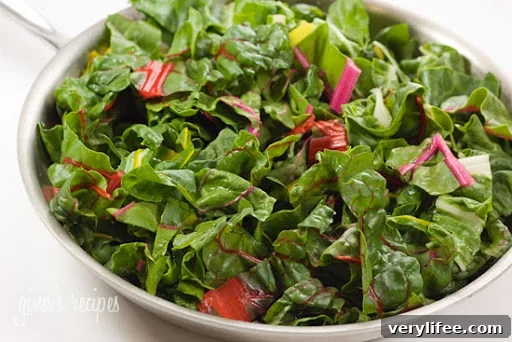
I love leafy greens, and Swiss chard is one of my favorites. The vibrant stalks of rainbow chard are not only beautiful at the market but also add color and flavor to the plate. Preparing Swiss chard is quick and easy: sauté the stalks a little longer than the leaves, add garlic and olive oil, season to taste, and you have a flavorful, nutritious side dish in minutes.
Rainbow Swiss Chard
Rating: 5 from 1 vote
Course: Side Dish | Cuisine: American
Yield: 4 servings
Ingredients
- 1 pound rainbow Swiss chard, washed and thoroughly dried
- 2 cloves garlic, smashed and chopped
- 1/2 teaspoon red pepper flakes (optional)
- 2 teaspoons olive oil
- Salt and freshly ground black pepper, to taste
Instructions
- Heat the olive oil in a sauté pan over medium heat.
- Smash the garlic with the side of a knife, chop it roughly, and add it to the pan.
- If using, add the red pepper flakes and sauté the garlic briefly until it turns golden and fragrant—be careful not to burn it.
- Chop the chard stems into small pieces and add them to the pan. Stir to coat the stems with oil and garlic.
- Add a splash of water (a tablespoon or two) and cover the pan to help soften the stems. Cook for about 4–5 minutes, or until the stems begin to become tender.
- Roughly chop the leaves and add them to the pan. Stir and sauté until the leaves are just wilted, stirring frequently so everything cooks evenly.
- Season with salt and freshly ground black pepper to taste. Serve warm as a simple, colorful side dish.
Last Step
If you try this recipe, please leave a rating and a comment to share how it turned out for you. Feedback helps others discover the recipe and supports creators who publish free, high-quality content.
Notes, Tips, and Serving Suggestions
Swiss chard is an easy, versatile green that benefits from simple preparation to let its natural flavor shine. Here are a few practical tips to get the best results:
- Trim and separate: Slice the stems and leaves separately. The stems are thicker and need a few extra minutes of cooking, while the leaves wilt quickly.
- Dry thoroughly: After washing, dry the chard well. Excess moisture can cause splattering when the vegetables hit the hot oil and can dilute the sautéed flavor.
- Adjust the heat: Keep the pan at medium heat so the garlic becomes golden but not bitter. If the garlic browns too fast, lower the heat and remove the pan from the burner briefly.
- Flavor variations: Add a squeeze of lemon juice or a splash of balsamic vinegar at the end for brightness. A sprinkle of toasted pine nuts, a few shavings of Parmesan, or a scattering of chopped fresh herbs (parsley, basil, or dill) works beautifully.
- Make it heartier: Toss in cooked chickpeas, white beans, or a handful of olives for extra texture and protein to turn this side into a light main course.
Storage
Leftovers will keep in an airtight container in the refrigerator for 3–4 days. Reheat gently on the stovetop over low heat or microwave briefly. Avoid overcooking when reheating to preserve texture and color.
Why Swiss Chard?
Swiss chard is a vibrant, versatile green that cooks quickly and pairs well with a variety of flavors. Whether you buy rainbow chard for its colorful stems or the plain green variety for a steady weekday side, this preparation highlights the vegetable’s natural taste without complex steps.