
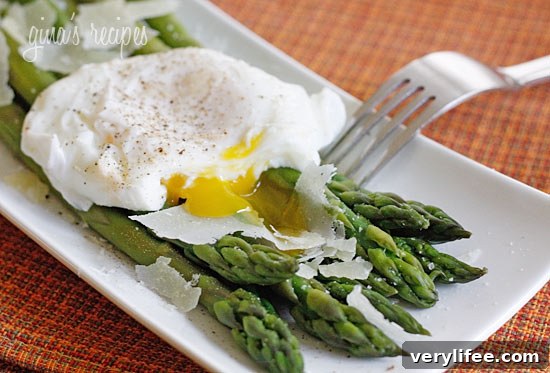
Steamed Asparagus with Poached Eggs

Simple, elegant, and full of fresh flavor—steamed asparagus topped with gently poached eggs makes an excellent breakfast, brunch, or light lunch. With just a few quality ingredients—fresh asparagus, large eggs, kosher salt, freshly ground pepper, and shaved Pecorino or Parmigiano-Reggiano—you can put together a satisfying dish in under an hour. Serve with whole grain toast or crusty bread for dipping in the runny yolk.
Why this recipe works
Steaming asparagus preserves its bright color, crisp-tender texture, and delicate flavor better than boiling. Poaching eggs produces silky whites and a soft, spoonable yolk that pairs beautifully with the vegetal notes of asparagus. The combination is lean, nutrient-dense, and quick to prepare, especially if you keep your pantry stocked with a good hard cheese and fine kosher salt.
Recipe Information
- Yield: 4 servings
- Serving size: 1 egg with asparagus
- Total time: 45 minutes
- Calories (per serving): 114 kcal
- Protein: 10.5 g
- Carbohydrates: 7 g
- Fat: 6 g
- Fiber: 3 g
Ingredients
- 2 bunches medium asparagus, tough ends trimmed (about 36 medium spears)
- 4 large eggs
- Kosher salt, to taste
- Freshly ground black pepper, to taste
- 2 tablespoons Parmigiano-Reggiano or Pecorino Romano, freshly shaved
Instructions
- Prepare the asparagus: Rinse and trim the woody ends from the asparagus spears. If the spears are very thick, peel the lower third to ensure even tenderness.
- Steam: Place asparagus in a steamer basket set over gently simmering water. Cover and steam until the spears are tender-crisp, about 4–7 minutes depending on thickness. The asparagus should be bright green and just cooked through.
- Shock the asparagus: Transfer the steamed asparagus to a bowl of ice water or run under cool water to stop the cooking and preserve color. Drain well and pat dry. Divide the asparagus evenly among four plates.
- Poach the eggs: Poach eggs to your preferred doneness. You can use an egg poacher or poach directly in simmering water. For stovetop poaching without a poacher: bring a wide, shallow pan of water to a gentle simmer, add a splash of vinegar if desired, create a gentle whirlpool, and slide in each cracked egg. Cook 3–4 minutes for a soft yolk or longer for firmer yolks. Remove eggs with a slotted spoon and drain briefly on paper towel.
- Assemble: Place one poached egg over each portion of asparagus. Season with kosher salt and freshly ground black pepper to taste. Finish with shaved Parmigiano-Reggiano or Pecorino Romano.
- Serve: Serve immediately while the eggs are warm. Offer whole grain toast or a slice of crusty bread for dipping into the yolk.
Tips and variations
- If you prefer a richer finish, drizzle a teaspoon of good extra-virgin olive oil over each plate or a small pat of butter on the hot asparagus before topping with the egg.
- For a smoky twist, briefly grill the asparagus instead of steaming to add char and depth of flavor.
- Add a squeeze of fresh lemon juice or a few lemon zest strips for brightness, especially when asparagus is in peak season.
- Swap the hard cheese for shaved aged Gouda or Comté for a different flavor profile.
- To feed more people, multiply the ingredients and poach eggs in batches so each egg is freshly cooked and served warm.
Storage and reheating
This dish is best served immediately. If you have leftover steamed asparagus, store it in an airtight container in the refrigerator for up to 2 days. Reheat gently in a microwave or on the stovetop with a splash of water, then poach fresh eggs to serve. Poached eggs do not reheat well, so prepare them just before serving.
Nutrition note
This recipe is a balanced source of protein and fiber while remaining low in calories per serving. Choosing a modest amount of cheese and a small drizzle of olive oil keeps the dish light but satisfying. Adjust portion sizes and toppings according to your dietary needs.
Enjoyed this recipe?
If you try this Steamed Asparagus with Poached Eggs, take a photo and share it with friends or keep it for your personal recipe collection. Small adjustments—like swapping cheeses, adding herbs, or pairing with toast—make this recipe versatile for any meal of the day.