
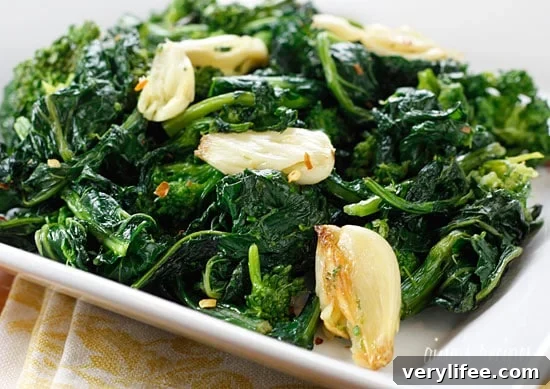
Broccoli rabe roasted with smashed garlic, olive oil, and a touch of crushed red pepper for gentle heat. This simple preparation brings out the vegetable’s nutty character while taming its natural bitterness. Serve it as a flavorful side, toss it with pasta, add it to sandwiches or wraps, or pair it with sausage or roasted chicken for a complete meal.
Roasted Broccoli Rabe with Garlic
Roasted broccoli rabe becomes tender and slightly caramelized in the oven. Blanching first reduces bitterness, and roasting with garlic and olive oil adds savory depth and a crisp finish. A pinch of red pepper flakes is optional but recommended for balance.
Prep: 5 mins · Cook: 25 mins · Total: 30 mins
Yield: 4 servings · Serving Size: 1/4 of recipe
Calories: 72.4 kcal per serving · Protein: 1.2 g · Carbs: 1.7 g · Fat: 7 g · Fiber: 0.8 g
About Broccoli Rabe (Rapini)
Broccoli rabe, also called rapini, is a leafy green common in Italian and Chinese cuisines. It offers a slightly bitter, nutty flavor and is high in vitamins A, C, and K as well as minerals like potassium, calcium, and iron. The vegetable shrinks considerably during cooking, so plan for a large bunch if you want generous portions.
How to Reduce Bitterness
The easiest way to reduce broccoli rabe’s bitterness is to blanch it briefly in salted boiling water for about one minute. Immediately drain it well so excess water doesn’t steam and dilute the roasting process. Blanching softens the stems and brightens the green color while preserving nutrients. After draining, toss the rabe with olive oil, smashed garlic, salt, pepper, and optional red pepper flakes before roasting to develop roasted flavors and mild caramelization.
Ingredients
- 1 large bunch broccoli rabe (rapini), tough stems removed
- 4–5 cloves garlic, smashed
- 2 tbsp olive oil
- Salt and freshly ground black pepper, to taste
- Pinch crushed red pepper flakes (optional)
Instructions
- Preheat the oven to 400°F (200°C).
- Bring a large pot of salted water to a boil.
- Add the broccoli rabe and blanch for about 1 minute, until leaves are bright green and stems begin to tenderize.
- Drain the broccoli rabe thoroughly in a colander and shake off excess water. Pat dry if needed so it roasts rather than steams.
- Transfer the drained broccoli rabe to a baking dish. Add the smashed garlic, olive oil, salt, pepper, and the crushed red pepper flakes if using. Toss everything so the rabe is evenly coated.
- Spread the rabe in a single layer or slightly mounded in the dish, and roast in the preheated oven for 15–20 minutes, turning once if needed, until the edges are crisped and the garlic is fragrant and golden.
- Remove from the oven and taste for seasoning. Adjust salt and pepper, and serve warm.
Serving Suggestions and Variations
This roasted broccoli rabe is versatile:
- Toss with pasta and grated Pecorino Romano for a classic Italian-style dish.
- Add sliced Italian sausage or grilled chicken for protein and serve atop polenta or rice.
- Combine with roasted potatoes or use as a filling for sandwiches and wraps with melted provolone or fontina.
- Squeeze a little lemon juice over the rabe just before serving to brighten flavors and further counter any remaining bitterness.
Tips for Best Results
- Trim any very tough lower stems; the thinner stems and leaves cook quickly and become tender.
- Do not over-blanch—one minute is typically enough to reduce bitterness while keeping texture.
- Dry the greens well after blanching so roasting yields crisp edges and concentrated flavor.
- Adjust garlic and red pepper to your taste. Roasting mellows garlic’s sharpness and deepens its sweetness.
Nutrition
Per serving (1/4 of recipe): Calories 72.4 kcal; Carbohydrates 1.7 g; Protein 1.2 g; Fat 7 g; Saturated Fat 1 g; Sodium 14.5 mg; Fiber 0.8 g; Sugar 0.3 g.
Final Note
Roasted broccoli rabe with garlic is a quick, nutrient-rich side that pairs well with many meals. Its bold green flavor becomes more balanced and mellow with blanching and roasting, making it approachable even for those who shy away from bitter greens. Experiment with toppings or additions to make it your own.