
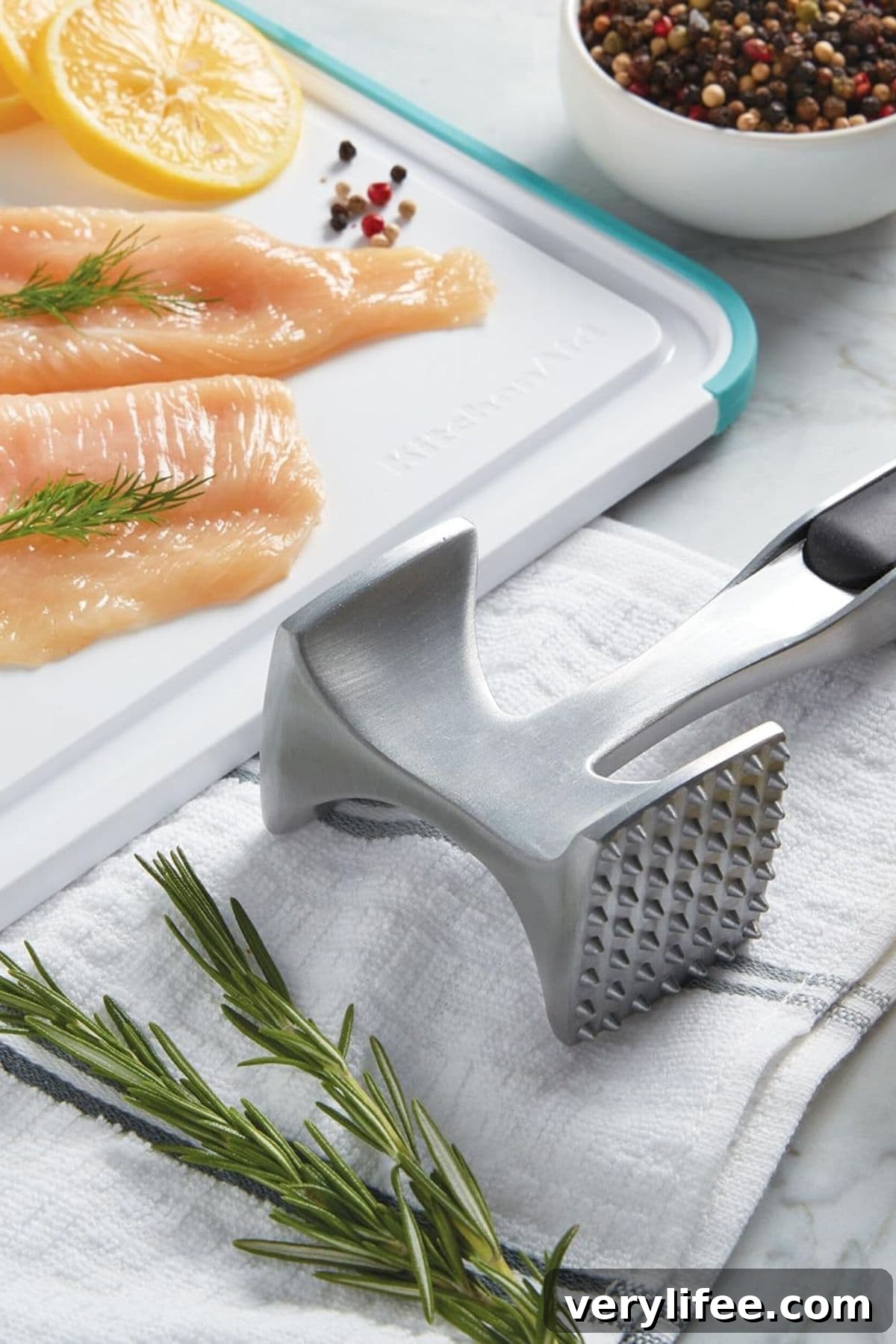
It’s always disappointing to spend time on a favorite recipe only to have the meat come out tough and chewy. That’s why a reliable meat tenderizer is one of the most useful tools in my kitchen. A good tenderizer breaks down connective tissue and protein bonds in tougher cuts, improving texture and making meat easier to cut, chew, and more receptive to marinades. It also helps level pieces for even cooking when you need consistent thickness.
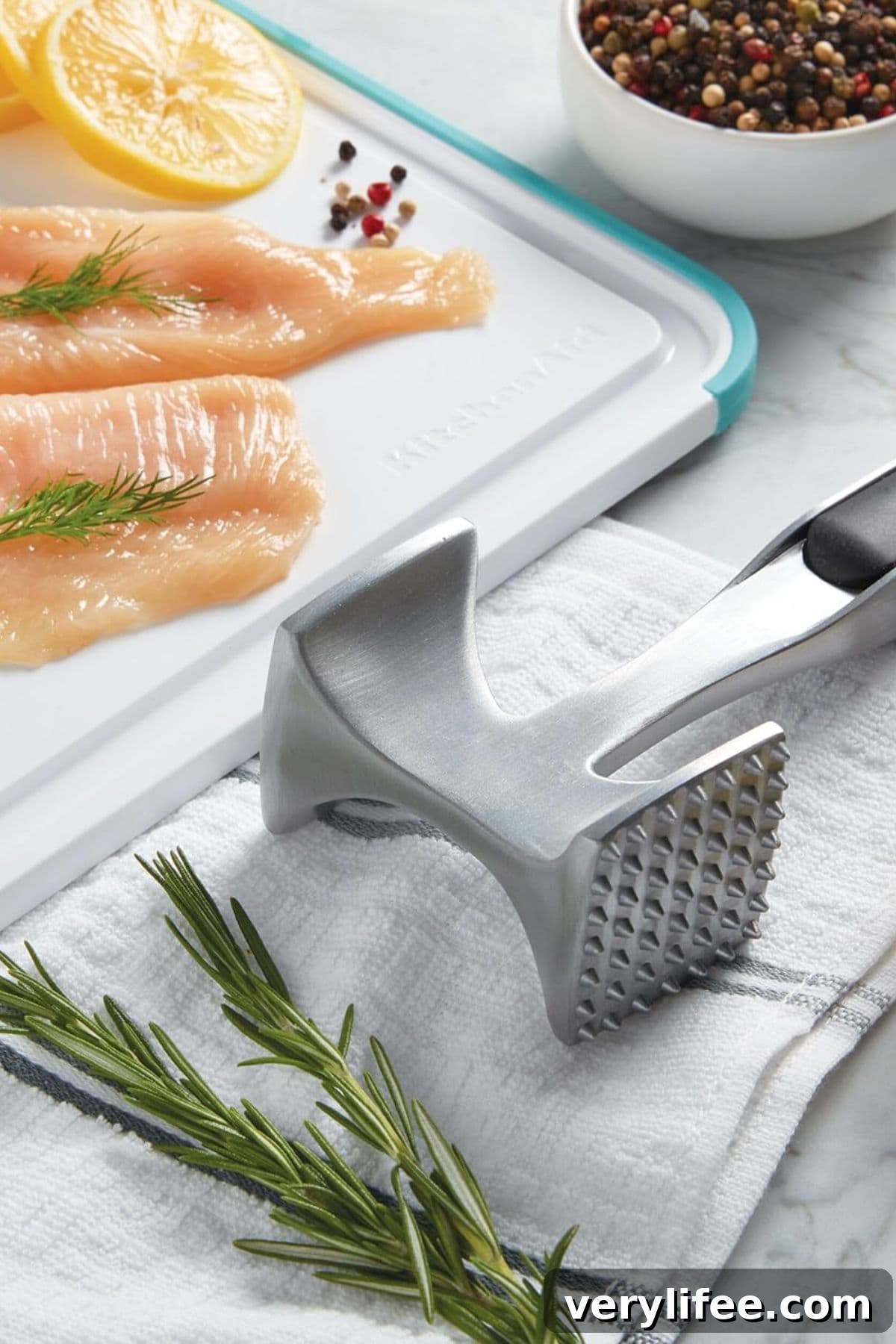
Below I’ve gathered my top picks for meat tenderizers, including bladed models for marinating and mallet styles for pounding meat thin. I’ve used several of these tools myself and relied on user feedback and trusted reviews for the rest. Read on to find the best option for your kitchen and cooking style.
My Top Picks
- What’s in My Kitchen: OXO Good Grips Bladed Meat Tenderizer — $22.95
- Best Mallet: KitchenAid Gourmet Meat Tenderizer — $13.99
- Best Budget: OXO Good Grips Meat Tenderizer — $11.99
- Best for Marinades: Jaccard 48-Blade Meat Tenderizer — $21.39
Reviews of the Best Meat Tenderizers
1. What’s in My Kitchen: OXO Good Grips Bladed Meat Tenderizer
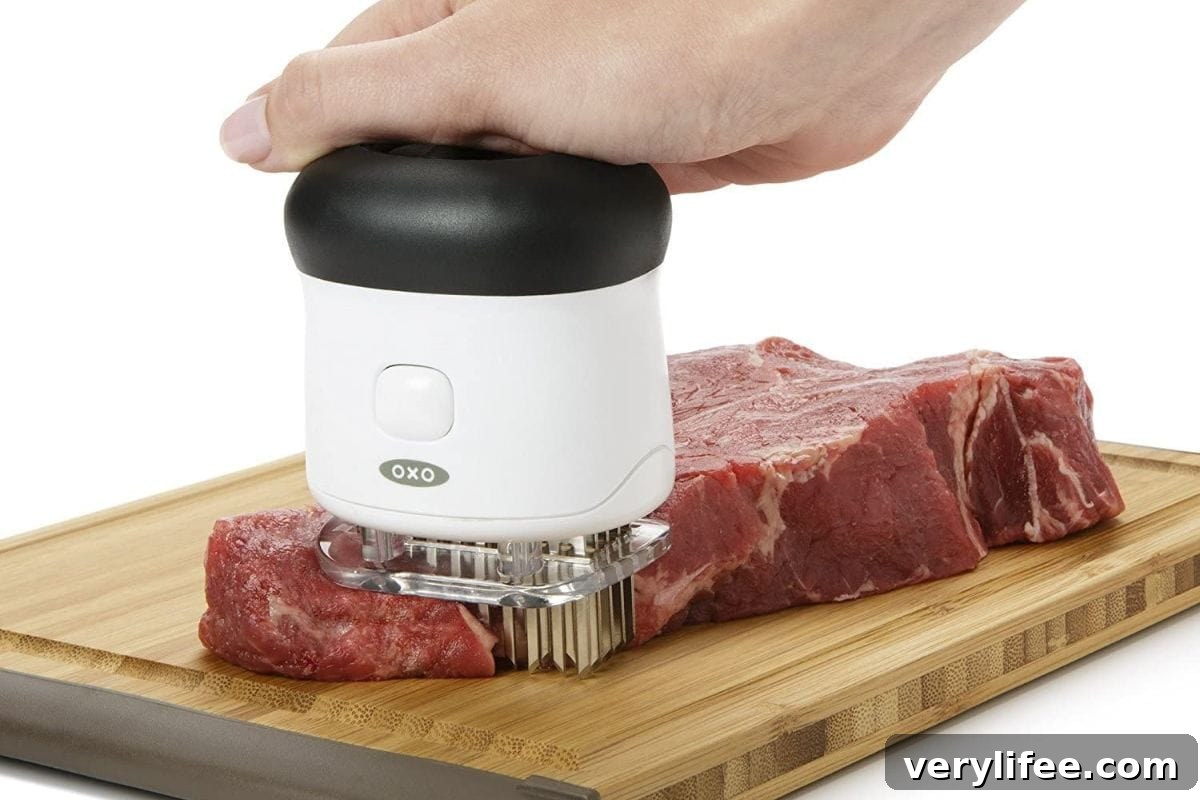
I reach for the OXO bladed tenderizer when I need to quickly break down especially tough steaks or prepare meat for a deep marinade. It has multiple sharp, angled blades that slice into protein to loosen fibers without flattening the cut. The non-slip handle gives control and there’s a locking mechanism for safe storage. Cleaning is straightforward—this model is top-rack dishwasher safe, which helps with the narrow areas around the blades.
This tool excels at creating uniform tenderness and improving marinade penetration, but it’s not designed for pounding out thick cuts the way a mallet would be.
The Specs
- Type: Bladed
- Dimensions: 2.8 x 4 inches
- Dishwasher-Safe: Yes, top-rack only
- Material: Stainless steel
Pros:
- Sharp blades that penetrate tough cuts
- Compact, lockable design for safe storage
- Dishwasher-safe for easier cleaning
Cons:
- Not ideal for pounding meat thin
What Others Are Saying: This OXO model is widely recommended among home cooks and cooking publications for its performance as a bladed tenderizer.
Price: Approximately $22.95
2. Best Mallet: KitchenAid Gourmet Meat Tenderizer
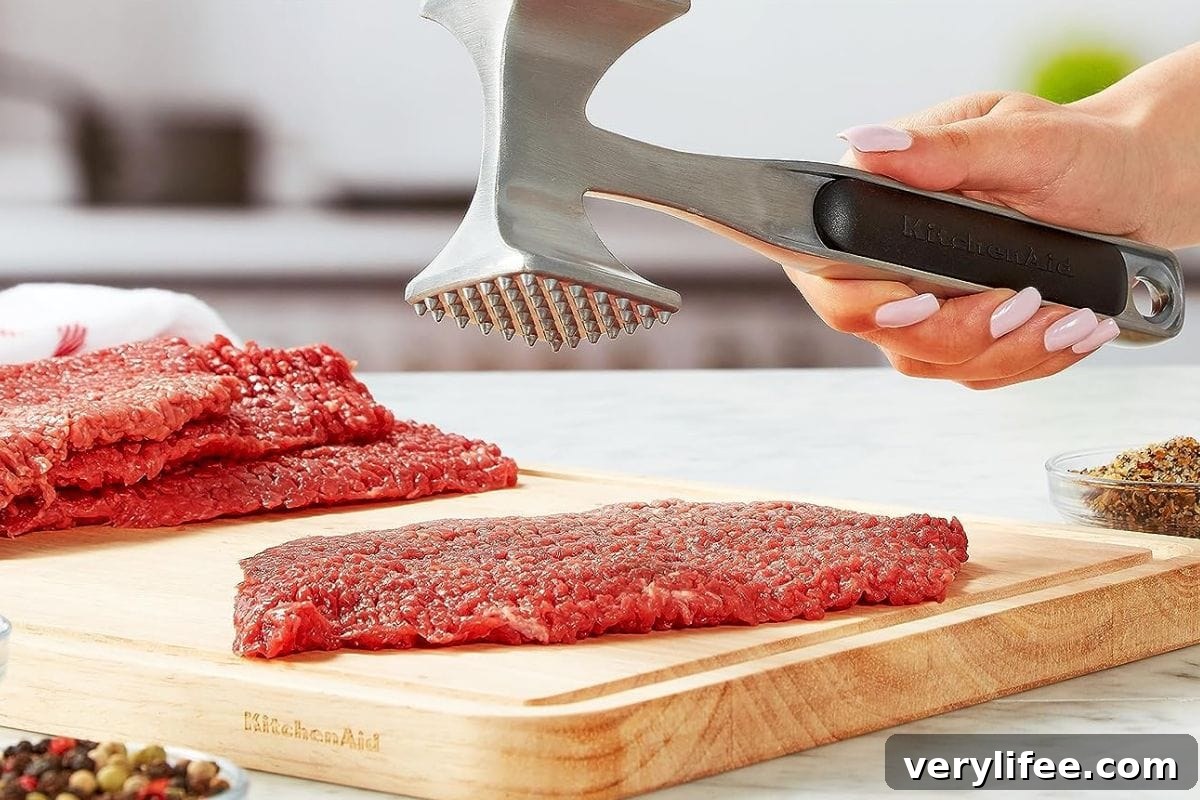
A classic mallet is the go-to when you need to pound chicken or veal into a thin, even cut for recipes like Milanese or schnitzel. The KitchenAid Gourmet Meat Tenderizer is lightweight cast aluminum and features a dual-sided head—one flat side for flattening and one textured side for tenderizing. It’s comfortable to hold and versatile for other kitchen tasks, such as crushing nuts or ice. Because it’s not dishwasher safe, plan to wash it carefully by hand after contact with raw meat.
The Specs
- Type: Mallet
- Dimensions: 9.45 x 3.4 inches
- Dishwasher-Safe: No
- Material: Cast aluminum
Pros:
- Affordable
- Comfortable handle
- Dual-sided head for different tasks
- Versatile in the kitchen
Cons:
- Hand-wash only
- Less effective than bladed tools for marinade penetration
What Others Are Saying: This KitchenAid mallet has earned high ratings from many reviewers for value and usability.
Price: Approximately $13.99
3. Best Budget: OXO Good Grips Meat Tenderizer
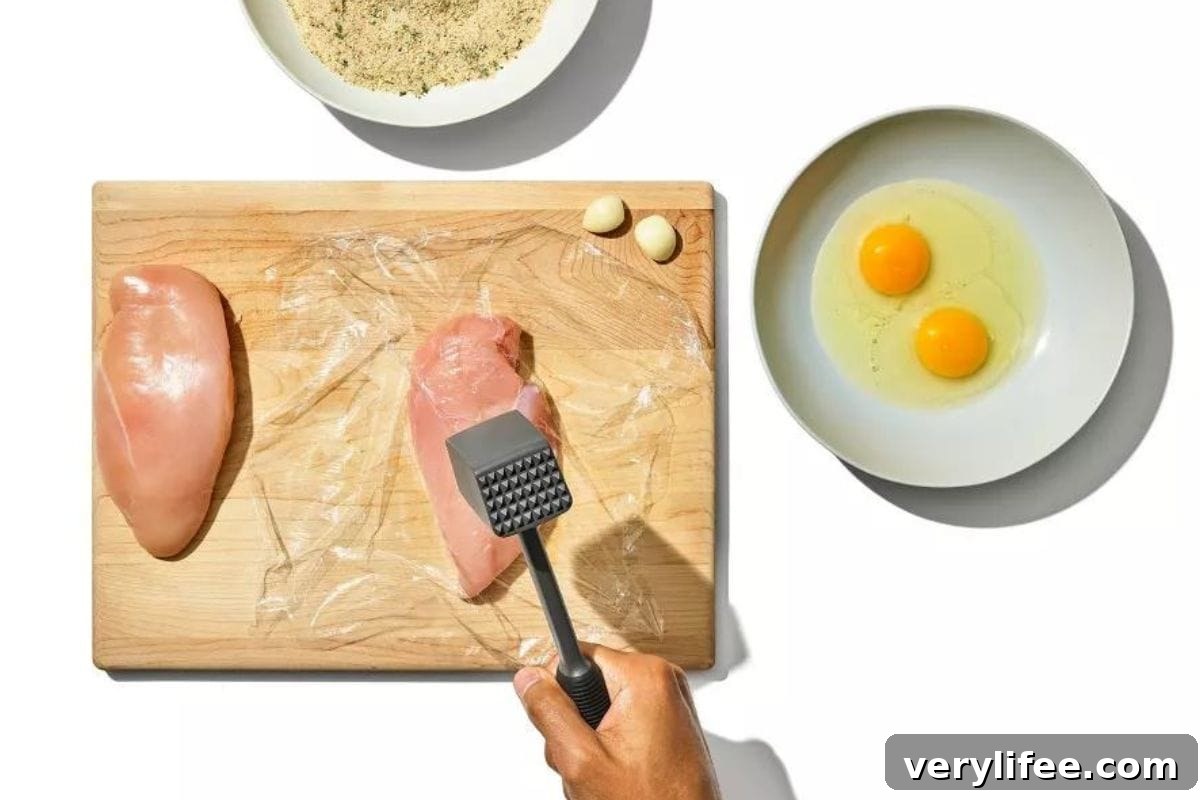
If you want a dependable mallet without spending much, this OXO model is a solid choice. It has a dual-sided head (flat and spiked), a steel core for added power, and a non-slip soft-grip handle. It’s also dishwasher-safe, so sanitizing after use is easy. The head is on the small side and the spikes are shorter than some professional mallets, so it may not be ideal for very thick cuts or deep marination needs.
The Specs
- Type: Mallet
- Dimensions: 9.7 x 2.4 inches
- Dishwasher-Safe: Yes
- Material: Steel
Pros:
- Low cost
- Dishwasher-safe
- Comfortable handle
- Dual-sided head
Cons:
- Small head and short spikes
What Others Are Saying: This OXO mallet has received strong reviews and recognition from food publications for its balance of price and performance.
Price: Approximately $11.99
4. Best for Marinades: Jaccard 48-Blade Meat Tenderizer
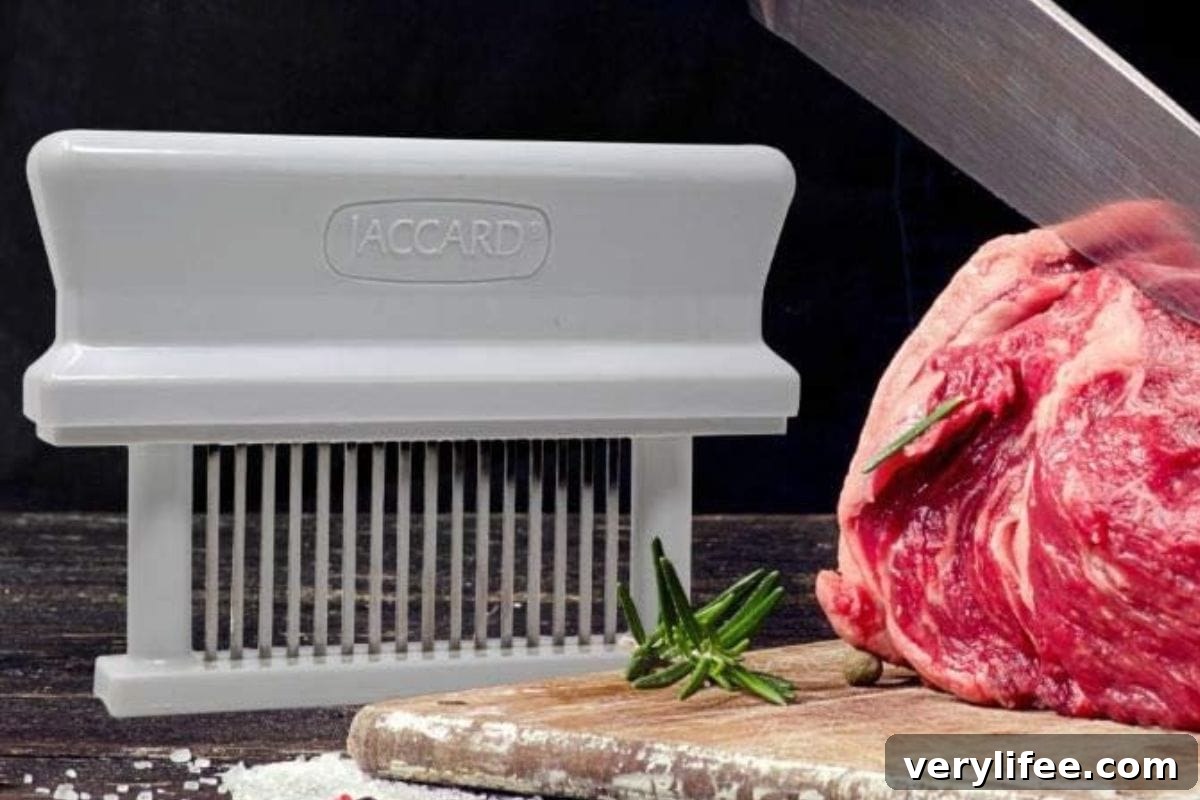
Bladed tenderizers like the Jaccard are designed to create many small channels in the meat, allowing marinades to penetrate deeply and evenly. The Jaccard model has numerous double-edged blades and typically ships with a protective cover for safe storage. It washes well on the top rack of a dishwasher. Because it punctures the meat rather than pounding it, this tool is best suited to red meats and cuts prepared for marinating rather than thinly flattening chicken breasts.
The Specs
- Type: Bladed
- Dimensions: 4.5 x 6.2 inches
- Dishwasher-Safe: Yes, top-rack only
- Material: Metal and plastic
Pros:
- Numerous sharp blades for deep penetration
- Creates consistent channels for marinades
- Includes protective cover
- Top-rack dishwasher-safe
Cons:
- Not intended for pounding or flattening
- Can require more force to press into thick cuts
What Others Are Saying: The Jaccard tenderizer receives strong praise for marinade preparation and is commonly recommended by cooks who work with tougher cuts.
Price: Approximately $21.39
Other Meat Tenderizers to Consider
Weston Meat Tenderizer and Cuber
For large-batch processing, crank-operated units like the Weston tenderizer and cuber make quick work of many pounds of meat. These freestanding machines push meat through multiple blades and can also produce cube steak. They’re efficient for volume but tend to be large and relatively expensive, so they’re better suited to commercial kitchens or avid home cooks who frequently prepare big batches.
Gorilla Grips Heavy Duty Meat Tenderizer
A popular mallet-style option, this model offers a dual-sided head and a non-slip handle available in several colors. It’s dishwasher-safe but lightweight, which means it may require a bit more effort for heavy-duty pounding.
Norpro Grip-EZ Tenderizer
The Norpro design features a short handle and a larger diameter head for greater coverage per strike. Its spikes are often longer than those on other mallets, and you can flip the head for a flat pounding surface. Some users find the handle less ergonomic than longer-handled mallets.
Aliglow Meat Tenderizer
An inexpensive double-sided mallet that works fine for occasional use. It’s compact and hand-wash only, making it a basic affordable option for home cooks who don’t need pro-level durability.
Williams Sonoma Reversible Meat Tenderizer
A short-handled reversible head design similar to the Norpro. It offers a respectable coverage area but can be pricier than many comparable mallets and may lack a non-slip handle.
Why You Can Trust Me
I’m Gina Homolka, recipe developer at Skinnytaste. I create lighter versions of family favorites and rely on practical kitchen tools to make consistent, flavorful meals. I’ve used several of the tenderizers listed here and compiled the rest based on extensive customer reviews and trusted culinary testing. My goal is to recommend reliable, easy-to-use tools that help home cooks improve texture and flavor without fuss.
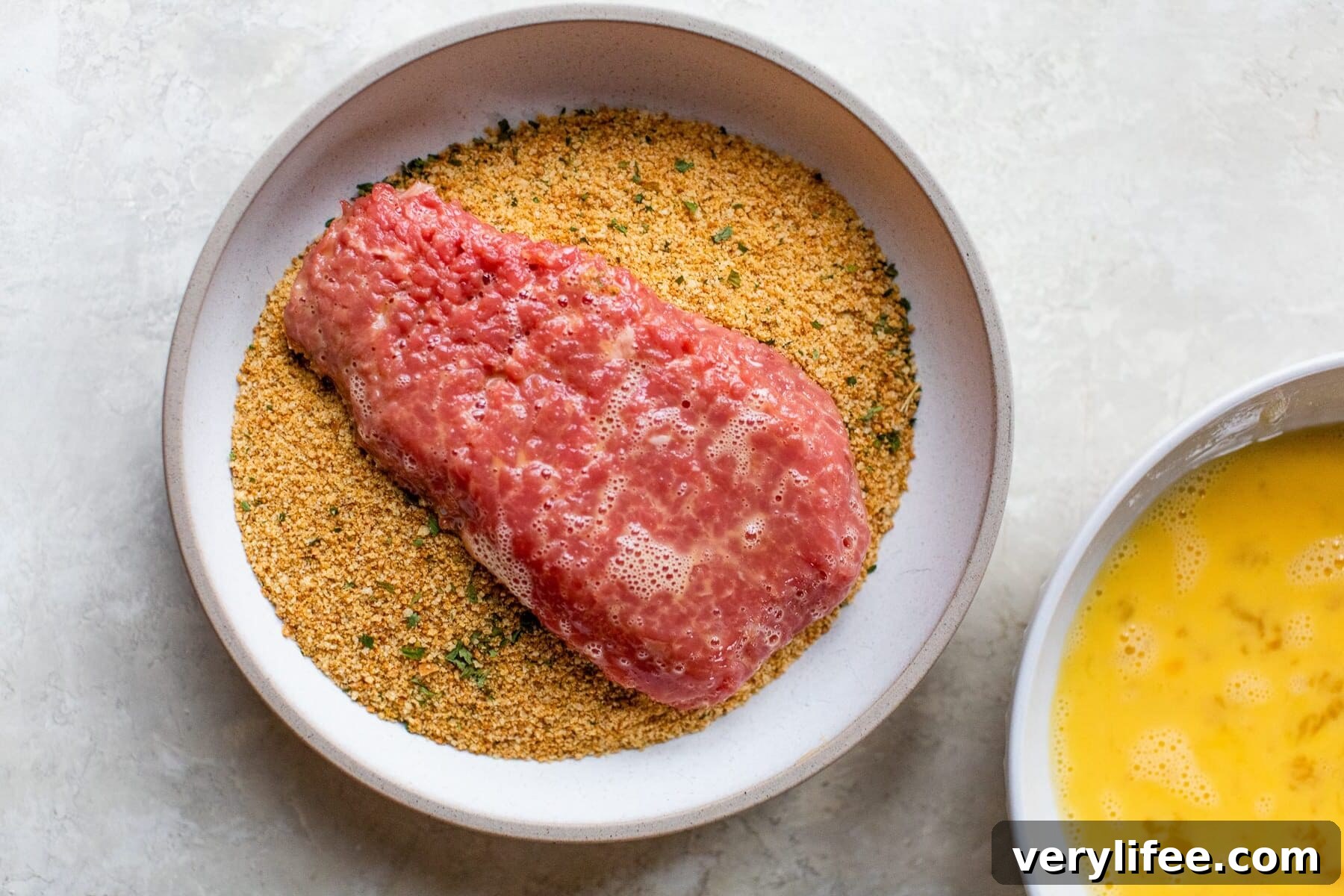
A good tenderizer gets used more often than you might expect—whether you’re pounding chicken for a sandwich, flattening veal for schnitzel, or prepping steak for the grill. Below are tips and guidance to help you choose and use the right tool for the job.
Everything to Know Before Buying a Meat Tenderizer
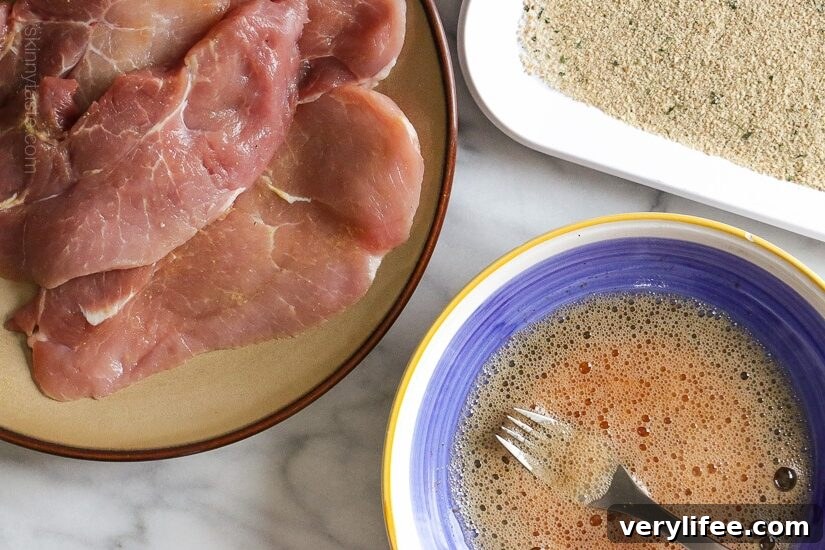
What to Consider Before Buying
Style: Mallets and bladed tenderizers serve different purposes. Mallets are versatile and good for flattening and surface tenderizing; bladed tools puncture the meat to help marinades penetrate and are ideal for very tough cuts.
Size: Small mallets are easy to store and fine for occasional use, while larger freestanding units speed up processing for bulk cooking.
Cleaning: Because these tools contact raw meat, choose a model that can be thoroughly cleaned. Dishwasher-safe designs simplify sanitizing, especially for bladed units with many crevices.
How Do You Tenderize Meat?
For a mallet: place meat on a stable surface and cover with plastic wrap to reduce mess. Use the spiked side to work from the center outward, applying measured strikes until the desired thickness and texture are reached. For bladed tenderizers: work directly on the meat, pressing evenly to create a uniform pattern of small holes that break up fibers and allow marinades to penetrate.
How Do You Tenderize Stew Meat?
Stew meat is often tougher because it comes from well-exercised parts of the animal. Rather than mechanical tenderizing, slow, low-temperature braising or simmering for several hours dissolves collagen and transforms tough pieces into tender, melt-in-your-mouth bites—perfect for beef stew and similar recipes.
What Does Tenderizing Meat Do?
Tenderizing breaks down muscle proteins and connective tissue, which reduces toughness and makes the meat easier to slice and eat. It also helps marinades and seasonings penetrate more effectively, enhancing flavor throughout the cut.
Does Vinegar and Salt Tenderize Meat?
Yes. Brining with salt is an effective way to tenderize while improving juiciness and flavor—commonly used for poultry and other proteins. Acidic ingredients like vinegar or citrus can also tenderize by breaking down fibers, but excessive exposure can alter texture and impart a tangy flavor, so use moderation and follow timing guidelines in recipes.
The Best Meat Recipes to Use a Tenderizer

A tenderizer is useful for many recipes. Here are a few where it really improves results: Grilled Chicken Sandwich, Air Fryer Breaded Cubed Steak, Skillet French Onion Chicken, Grilled Steak Fajitas, Cubed Steak with Peppers and Olives, and Chicken Divan. Try keeping a mallet and a bladed tool in your drawer so you’re prepared for either flattening or deep marinading.
Prices and availability were as reported at the time of publication.