
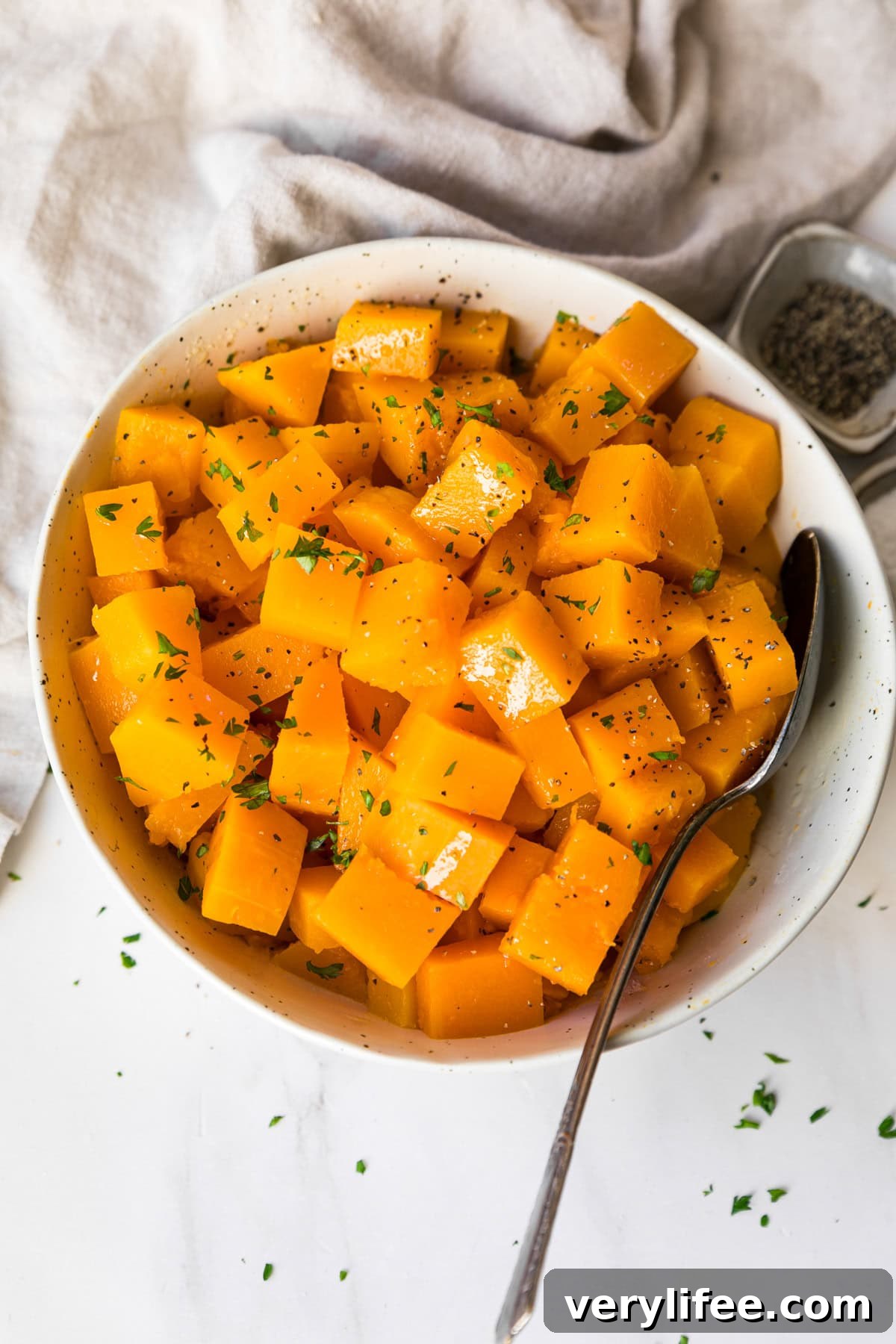
The simplest way to roast a whole butternut squash—no peeling required. Roast it as a quick side, toss cubes into salads or grain bowls, puree for soups, or blend into a creamy pasta sauce. This method is low-effort and yields tender, caramelized squash with deep, sweet flavor.
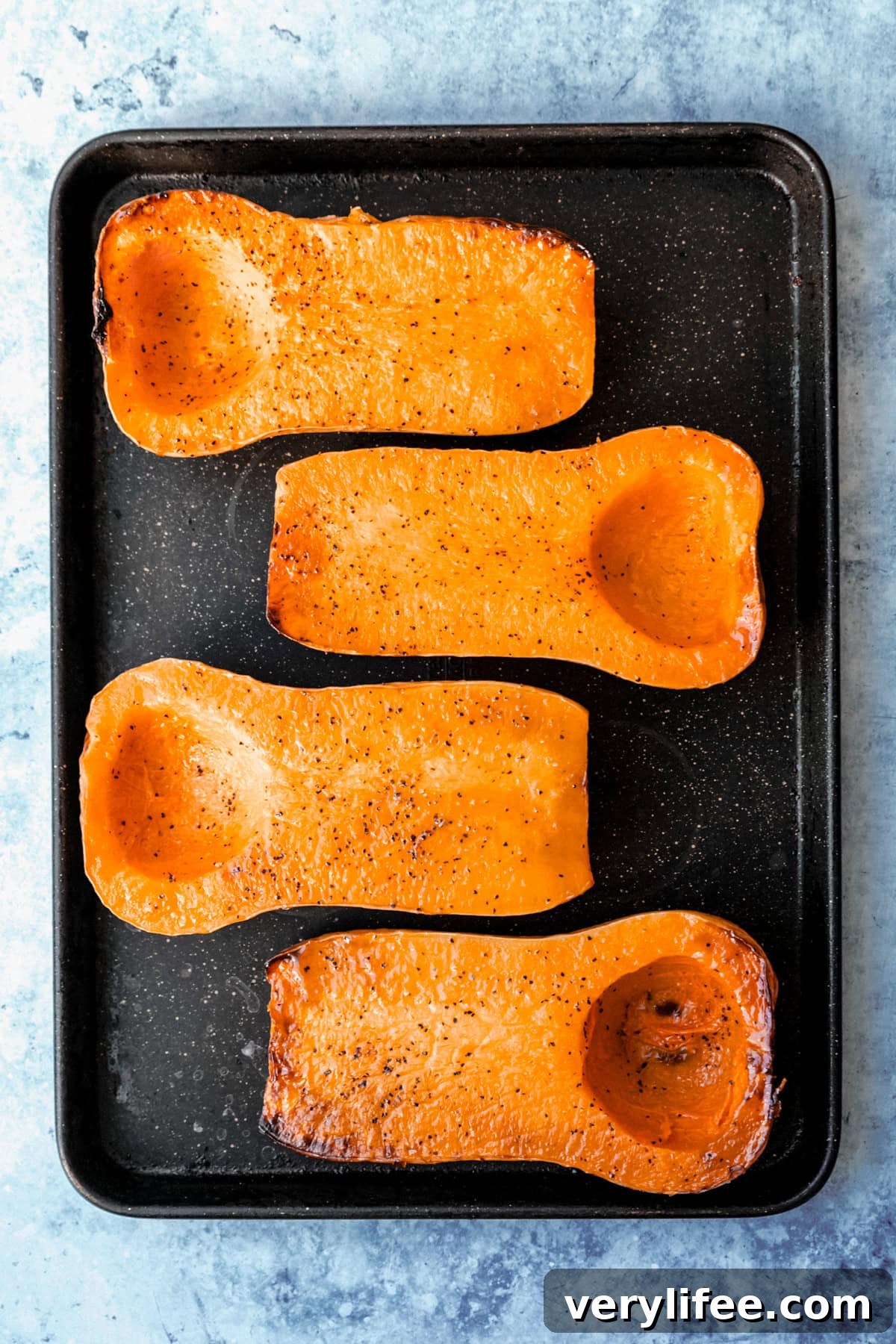
How To Roast Butternut Squash
A whole roasted butternut squash is a kitchen staple: easy to prepare, versatile in use, and full of natural sweetness. Roasting intensifies the squash’s flavor and softens the flesh so you can scoop it out without peeling. After roasting, use it straight from the skin as a side dish, mash it for soups, fold it into salads, add to tacos, or puree for sauces. It’s nutritious, economical when in season, and a reliable make-ahead component for weekday meals.
If you enjoy roasting winter squash, there are many variations—maple-glazed, air-fried, stuffed with grains, or paired with roasted Brussels sprouts and bacon. Use this basic technique as the foundation, then adapt seasonings and finishings to suit your meal.
A Back-Pocket Recipe for Whole Roasted Butternut Squash

I love cooking seasonally because produce offers the best flavors and value. When butternut squash is in season, keep a roasted squash in your fridge for quick meal prep. Roast a few halves on the weekend and use them throughout the week—this method is my go-to for fast, flexible meals.
- Easy: No peeling required—roast the halves and scoop the flesh.
- Versatile: Use roasted squash in salads, soups, pastas, bowls, or as a simple side.
- Nutritious: Butternut squash provides fiber, vitamins A and C, potassium, magnesium, and antioxidants.
- Diet-Friendly: Naturally vegetarian, vegan, gluten-free and dairy-free; it’s also high in fiber and suitable for many eating plans.
If you try this recipe, I’d love to see a photo—share your results on social media and tag the creator if you like.

What You’ll Need
This roasted butternut squash uses just a few ingredients—most are pantry staples. Exact amounts are listed in the recipe card below.
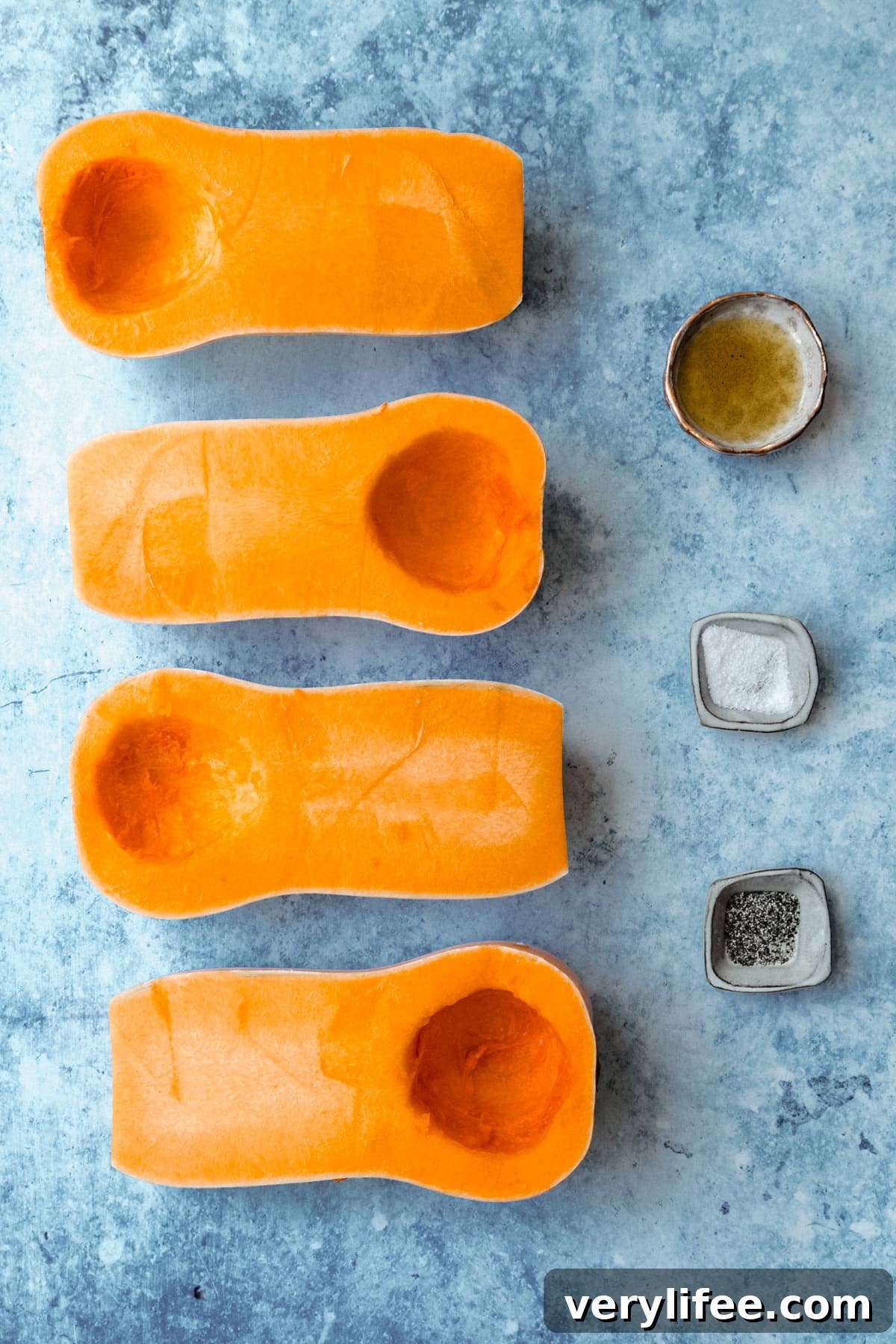
- Butternut squash: Halved lengthwise and seeded. No peeling needed for roasting halves.
- Extra virgin olive oil: Lightly coats the flesh to prevent drying and boost flavor.
- Salt and pepper: Simple seasoning lets the squash’s natural sweetness shine.
How to Roast Butternut Squash
After minimal prep, roasting is hands-off. Preheat the oven, oil and season the squash, and roast until tender. The full step-by-step directions and quantities are in the recipe card below.
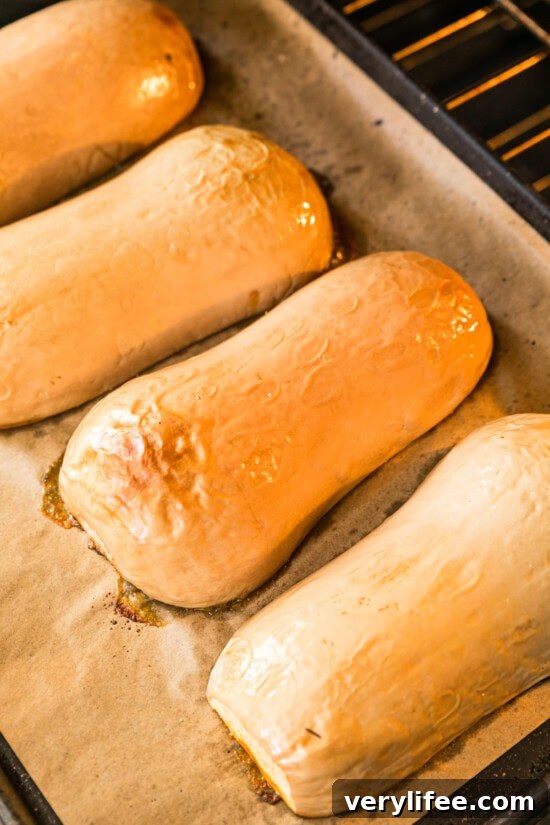
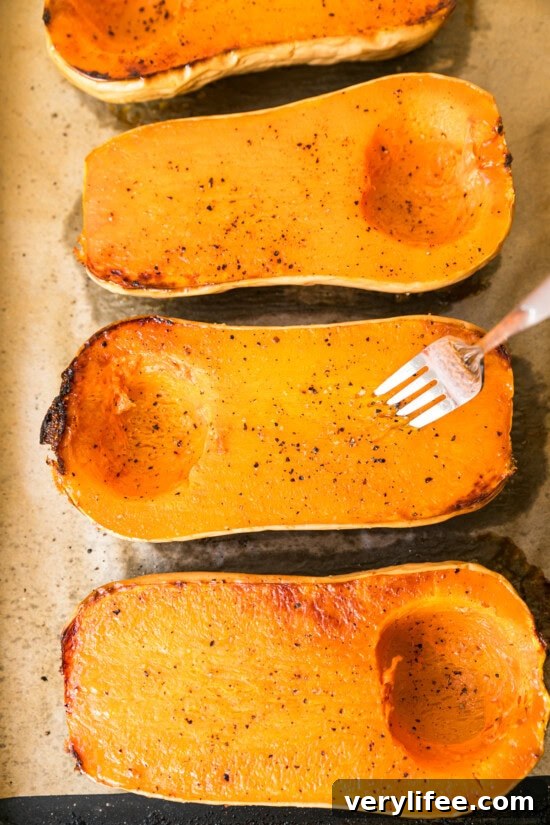
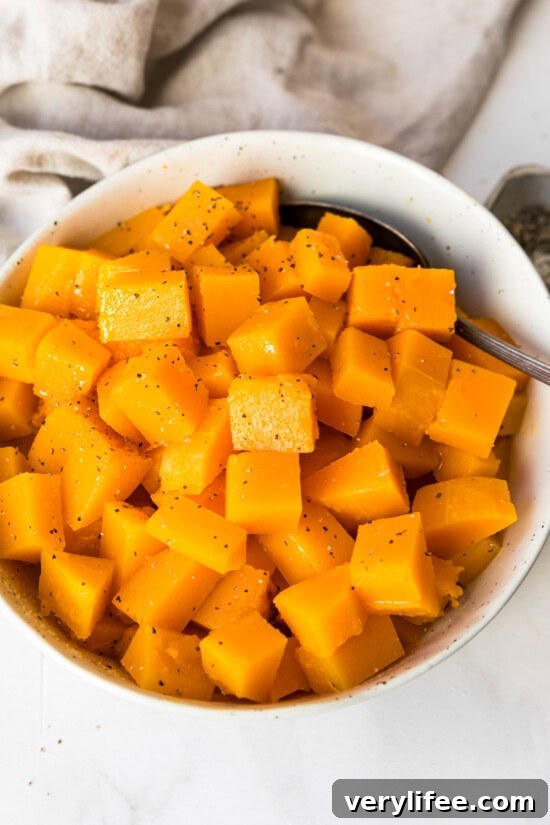
- Prep: Rub the cut surfaces with olive oil and sprinkle with kosher salt and freshly ground black pepper. Place the halves cut-side down on a rimmed baking sheet lined with a little oil or parchment.
- Roast: Bake at 425°F (220°C) for 40–45 minutes, or until a fork pierces the flesh easily and the interior is soft and caramelized.
Variations
- Spices: Try cinnamon, cumin, smoked paprika, or chili powder for different flavor profiles.
- Oils: Avocado or coconut oil can replace olive oil for a different flavor and smoke point.
How to Serve Roasted Butternut Squash
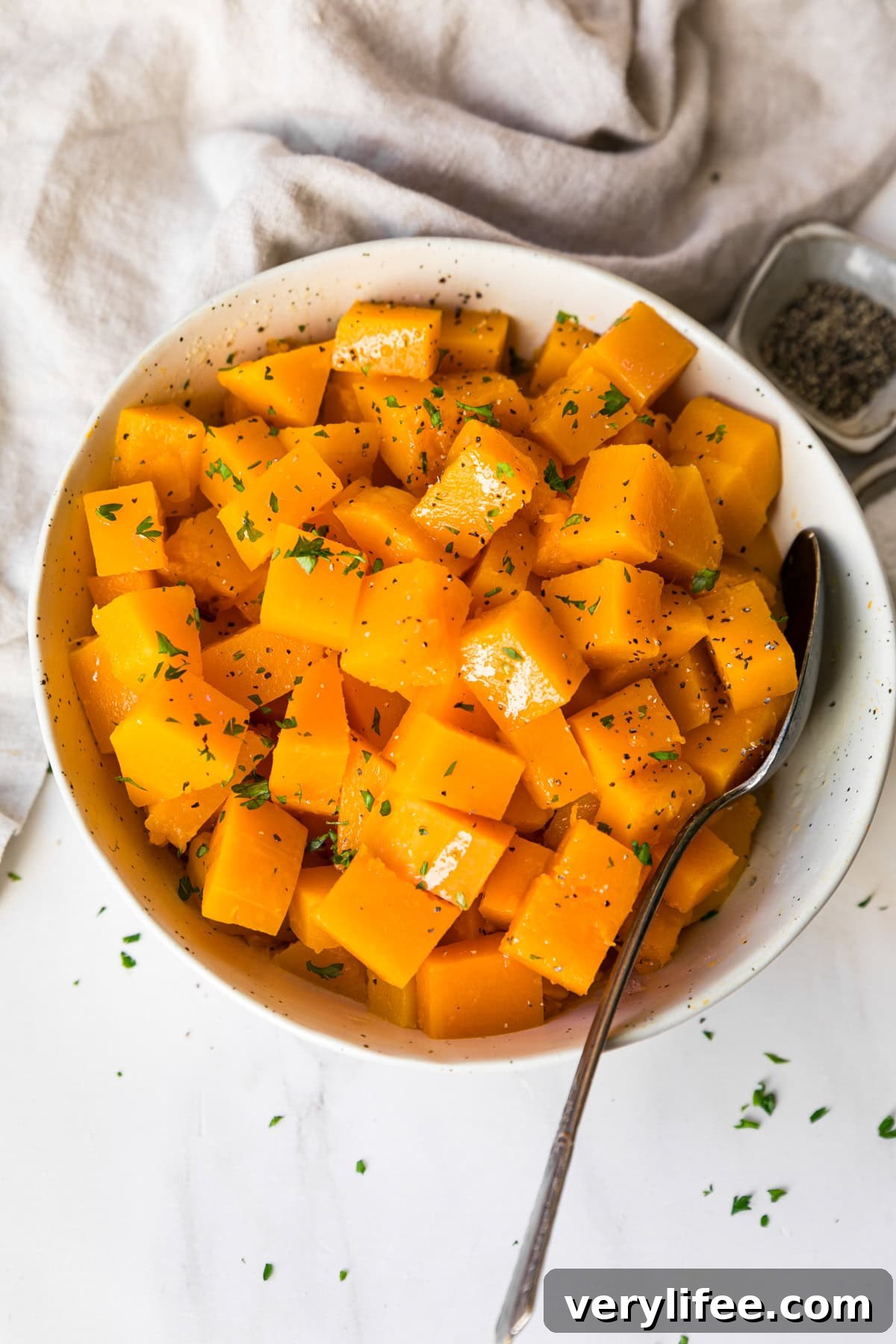
- Cube it: Scoop flesh from the skin, cube, and toss with butter or maple syrup as a sweet-savory side for roast chicken or pork.
- Mash: Use roasted squash in place of potatoes for a sweeter, nutrient-rich mash.
- Salad: Add cubes to hearty fall salads with kale, pears, apples, pomegranate seeds, or toasted nuts.
- Soup: Puree roasted squash with stock and aromatics for a velvety soup; finish with coconut milk, cream, or a splash of citrus.
- Pasta sauce: Blend roasted squash into a creamy sauce for pasta—season with garlic, Parmesan (or nutritional yeast), and herbs.
Storage
Store cooled roasted squash in an airtight container in the refrigerator for up to 4 days. Reheat gently in the oven, microwave, or an air fryer. Roasted squash also freezes well—spread cubes on a tray to flash-freeze, then transfer to a freezer bag for up to 3 months.
FAQ
No—if you roast the squash halves, you don’t need to peel them. The skin holds the squash together while it cooks and you can scoop out the soft flesh afterward. If you plan to cube raw squash before cooking, peel it first.
Both work, but placing the squash cut-side down concentrates heat on the flesh, encouraging faster caramelization and a moister interior.
More Butternut Squash Ideas
- Maple-roasted squash variations
- Air fryer squash cubes for quick sides
- Kale and butternut salads with pears and almonds
- Stuffed squash with wild rice and savory fillings
- Roasted vegetable medleys like Brussels sprouts and squash with a maple-soy glaze
Roasted Butternut Squash

Ingredients
- 2 large butternut squash, halved lengthwise, seeds scooped out and discarded (about 2 1/2 lbs)
- 1 tablespoon extra virgin olive oil
- 1/2 teaspoon kosher salt
- Freshly ground black pepper, to taste
Instructions
- Preheat the oven to 425°F. Lightly oil a rimmed baking sheet or line it with parchment.
- Brush the cut surfaces of the squash with the olive oil and season with kosher salt and pepper. Place the halves cut-side down on the prepared sheet pan.
- Roast for about 40 to 45 minutes, until the flesh is tender and easily pierced with a fork.
- Scoop out the flesh and serve hot, or let cool and store for other uses: cube and reheat with butter and maple syrup, mash, puree for soup or sauce, or add to salads and bowls.