Glass cooktops offer a sleek, modern aesthetic to any kitchen, but keeping them pristine can be a challenge. Grease splatters, grime, and burnt-on food can accumulate quickly, creating stubborn layers that are difficult to remove. This guide outlines a comprehensive, tiered approach to cleaning your cooktop—whether you need a quick daily wipe-down or a deep clean for heavy buildup.
Supplies Needed
To achieve a streak-free shine without damaging the glass surface, gather the following supplies:
- Degreasing Agent: A high-quality dish soap (spray-style dish soaps are highly effective for cutting grease).
- Cooktop Cleaner: A specialized cleaning paste or liquid designed specifically for glass cooktops,.
- Non-Scratch Scrubbers: Sponges designed to be firm in cold water and soft in warm water, or specific non-abrasive scouring pads,.
- Microfiber Towels: You will need several for rinsing and buffing,.
- Razor Blade Scraper: For removing heavy, burnt-on residue.
- Warm Water: For rinsing and softening sponges.
Step-by-Step Cleaning Instructions
Follow these steps in order. If your cooktop is only lightly soiled, you may only need to complete Step 1. For heavier messes, proceed through the subsequent steps.
1. The Initial Degrease
Before attacking burnt-on food, it is essential to remove surface grease and splatter. Cleaning often requires working layer by layer.
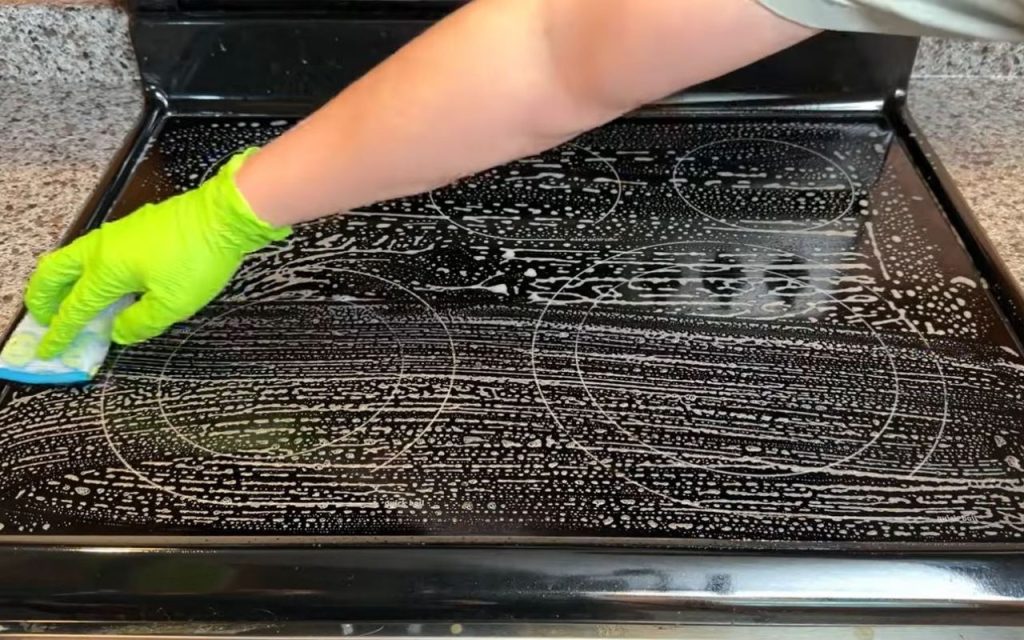
- Apply Soap: Spray a generous layer of dish soap over the entire surface. Allow it to sit briefly to break down the grime.
- Scrub: Using a non-scratch scrubber dampened with warm water, scrub the surface in circular motions. Pay special attention to the burners, as this is where grease accumulation is usually heaviest,.
- Rinse: Wipe away the soap and lifted grease with a damp microfiber towel. It is critical to remove all cleaning residue; leftover soap can become sticky and attract more dirt, causing the surface to get dirty faster.
- Dry: Buff the surface with a clean, dry microfiber towel to prevent water spots and streaks.
2. Deep Cleaning with Paste
If burnt-on food remains after degreasing (a level 1 to 4 on the mess scale), use a specialized cooktop cleaner,.
- Apply Cleaner: Wet your scrubber and scoop up a small amount of cleaning paste. Apply a thorough layer across the cooktop.
- Dwell Time: Let the paste sit for one to two minutes to break down baked-on food. Note: Do not let the cleaner completely dry on the surface.
- Scrub Again: Scrub the entire cooktop again using circular motions, focusing on the burner areas.
- Rinse and Buff: Use a damp microfiber towel to rinse the surface completely, followed by a dry towel to buff it to a shine.
3. Removing Heavy Buildup (The Scraper Method)
For extreme messes (level 8 to 10) where food is solidified on the glass, a razor blade scraper is a powerful tool. However, it must be used with caution to avoid damage.
- Inspect the Blade: Always use a fresh blade. Old blades with rust or corrosion can scratch the glass.
- Lubricate: Never scrape a dry surface. Apply cleaner to the area first to ensure it is properly lubricated.
- Scrape Carefully: Using low pressure and a slow speed, gently push the blade against the burnt-on residues. This allows you to get underneath the grime and lift it completely off the surface.
4. Cleaning the Control Panel
Grease splatter often reaches the back control panel, making it difficult to clean around knobs.
- Remove Knobs: Carefully pop the control knobs off the panel.
- Soak: Let the knobs soak in soapy water while you clean the glass panel.
- Wipe and Replace: Clean the panel surface, dry the knobs thoroughly, and place them back on the unit.
Additional Tips and Warnings
- Avoid Abrasive Sponges: Never use green and yellow scouring sponges on a glass cooktop, as they are too abrasive and will cause permanent scratches.
- Manage Expectations on Wear: Glass cooktops will naturally develop wear over time. “White haze” on frequently used burners is often a sign of heat wear, not dirt, and cannot always be cleaned away,.
- Watch Your Cookware:
- Cast Iron: While great for cooking, cast iron pans have rough bottoms that can scratch the glass if dragged across the surface.
- Clean Pans: Ensure the bottom of your cookware is clean before placing it on the stove. Dirty pans can cause scratches.
- Regular Maintenance: The best way to avoid difficult deep cleaning sessions is to wipe down the cooktop after every single use.