Granite and natural stone countertops add elegance and durability to a home, but they require specific care to maintain their shine and longevity. Because natural stone is porous, it can absorb liquids and harbor bacteria if not treated correctly. While the material is tough, it is sensitive to acidic chemicals and abrasive tools. This guide covers the safest methods for daily cleaning, disinfecting, removing stubborn stains, and resealing your surfaces to keep them looking pristine.
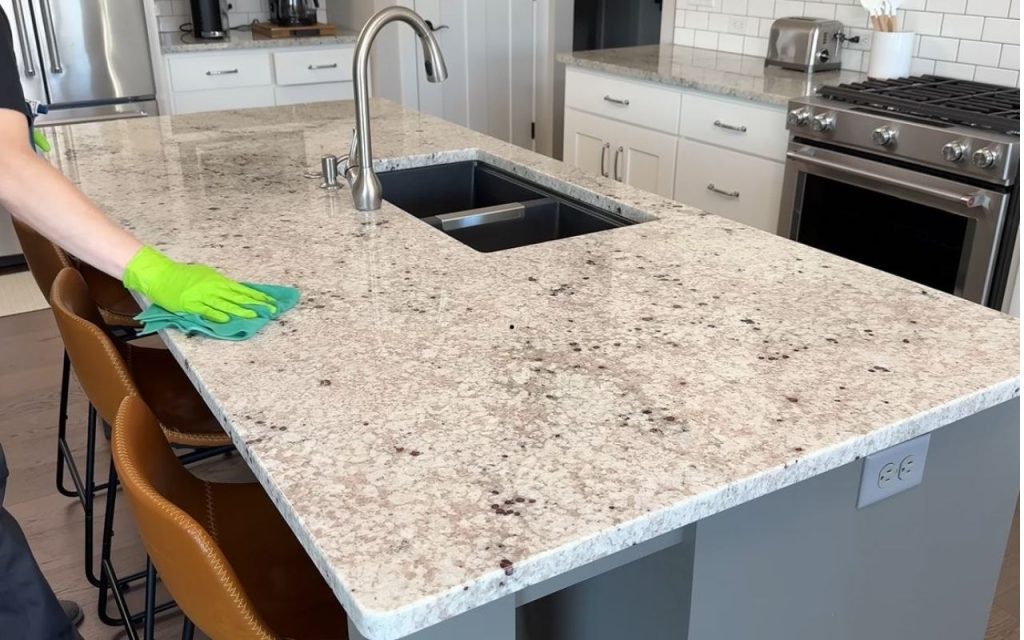
Supplies Needed
To properly care for your countertops without causing damage, gather the following supplies:
- Dish Soap: A gentle formula to cut through grease.
- Water: For mixing cleaning solutions.
- Spray Bottles: You will need one for your daily cleaner and potentially one for disinfecting.
- Microfiber Towels: Have both damp cloths for washing and clean, dry cloths for buffing.
- Plastic Scraper: For removing stuck-on food.
- Non-Scratch Scrub Sponge: Such as a gentle foam scrubber.
- 70% Isopropyl Alcohol: For disinfecting.
- Baking Soda: For stain removal.
- Plastic Wrap and Painter’s Tape: For creating a stain-removing poultice.
- Granite/Stone Sealer: A commercial sealer recommended for natural stone.
Step-by-Step Cleaning Instructions
1. Daily Cleaning Solution
For everyday maintenance, simplicity is best. Create a gentle yet effective cleaner by mixing water with a few drops of dish soap in a spray bottle. This solution cuts through grease and grime without damaging the stone.
- Spray the Surface: Generously spray the countertop with your soap mixture.
- Scrub High-Touch Areas: Using a damp towel, wipe down the entire surface. Pay extra attention to high-traffic areas, such as near the stove, sink, or eating areas on an island, where grease and grime tend to build up.
- Remove Stuck Debris: If you encounter stuck-on food or gunk, use a plastic scraper to gently lift it off without scratching the stone.
2. Rinsing and Buffing
Proper drying is crucial to the final look of granite, especially on darker stones.
- Rinse: After scrubbing with soapy water, wipe the counters again with a damp cloth to remove any soap residue. Leftover soap can dry sticky and attract more dirt.
- Buff Dry: Immediately follow up with a clean, dry microfiber towel. This step dries the surface and buffs it, preventing water spots and streaks from forming.
3. Disinfecting the Surface
While soap and water clean the surface, you may occasionally need to disinfect, particularly after handling raw meat.
- Prepare the Disinfectant: Use 70% isopropyl alcohol. A convenient tip is to take a spray nozzle from a standard spray bottle and thread it directly onto the alcohol bottle, as the threads often match.
- Apply and Wait: Spray the alcohol onto the surface and let it sit for at least 3 to 5 minutes to effectively kill bacteria.
- Wipe Clean: After the dwell time, wipe the surface dry. This is an affordable and effective alternative to harsh chemicals.
4. Removing Deep Stains (The Poultice Method)
Natural stone is porous and can absorb liquids, leading to deep stains. If a standard clean doesn’t work, use a baking soda poultice.
- Make a Paste: Mix baking soda and water in a small dish until it reaches the consistency of toothpaste.
- Apply to Stain: Spread the paste evenly over the stained area.
- Cover and Seal: Place plastic wrap over the paste and secure it with painter’s tape. Using painter’s tape prevents leaving sticky adhesive residue on the counter.
- Wait: Poke a few small holes in the plastic wrap and let it sit for 24 hours. As the paste dries, the absorbent baking soda will pull the stain out of the stone.
- Repeat if Necessary: If the stain persists, repeat the process.
5. Sealing Your Countertops
To prevent staining and make cleaning easier, granite should be resealed once or twice a year.
How to Test Your Seal: Pour a small amount of water on the countertop. If the water beads up, your seal is good. If the water spreads out and soaks into the stone, it is time to reseal.
Application:
- Clean and Dry: Ensure the surface is perfectly clean.
- Apply Sealer: Working in small sections (e.g., 3-foot areas), spray the sealer and spread it evenly with a towel.
- Buff: Wipe off excess with a dry, lint-free towel.
- Layer and Cure: It is often recommended to apply a second coat after 20 to 30 minutes. Allow the sealer to cure for at least 24 hours before cleaning the counters again.
Additional Tips and Warnings
- Avoid Harsh Chemicals: Never use vinegar or bleach on granite or natural stone. Vinegar is acidic and can etch the surface, remove sealers, and dull the finish over time. Bleach can also cause significant damage.
- No Abrasives: Do not use steel wool, metal scouring pads, or melamine foam sponges (erasers). These are too abrasive and will dull the countertop’s finish.
- Clean Spills Immediately: Because stone is porous, wipe up spills as soon as they happen to avoid having to use the long poultice stain-removal method later.