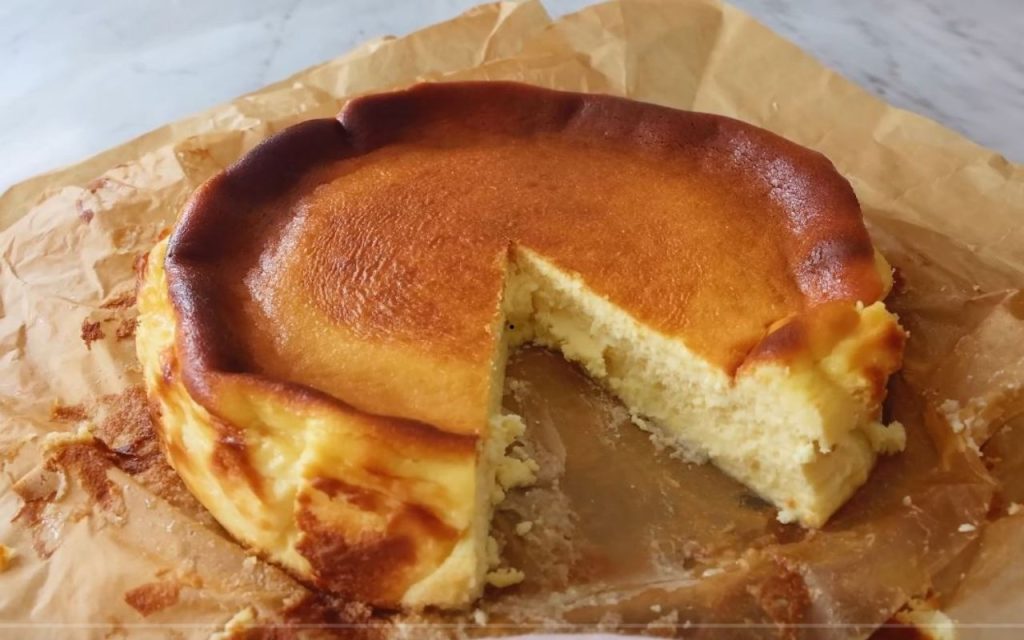
This unique cheesecake, known for its iconic deeply caramelized exterior and wonderfully gooey, soft interior, requires no fussy crust and is incredibly straightforward to master. Unlike a traditional New York cheesecake, the Basque variation achieves a beautiful depth of flavor through its signature caramelized look, which some might mistake for being burnt, while the inside remains incredibly creamy and delicate. The secret to its success lies in gentle mixing and ensuring your ingredients are at the proper temperature.
Ingredients
- Room temperature cream cheese (Note: must be very soft)
- 4 large eggs (room temperature)
- 1 1/2 cups heavy cream
- 1 cup granulated sugar
- 2 teaspoons vanilla
- 3/4 teaspoon kosher salt
- 2 tablespoons all-purpose flour
Instructions
- Prepare the Oven and Pan: Preheat your oven to 400 degrees Fahrenheit (200°C). Ensure the oven rack is positioned toward the middle or upper third of the oven. Line a 9-inch springform pan with two pieces of parchment paper. Use one piece lengthwise and the other crossed over to form a cross, ensuring the pan is totally clean and nothing will stick or burn. Press the paper down towards the bottom and fold any excess bits hanging over the edge downward.
- Soften the Cream Cheese: It is crucial that the cream cheese is soft and at room temperature; lumps will affect the delicate texture of the cheesecake. If the cream cheese is too firm, you may microwave it on half power in short 10-second spurts until it becomes soft and slightly warmed up.
- Mix the Cream Cheese Base: Place the softened cream cheese into the bowl of a stand mixer fitted with the paddle attachment (a hand mixer also works). Cream it up until smooth.
- Add Dry Ingredients and Flavoring: Add 1 cup of granulated sugar, 3/4 teaspoon of kosher salt (which adds contrast), and 2 teaspoons of vanilla to the cream cheese mixture.
- Combine Gently: Mix the ingredients on medium-low speed until creamy. You must avoid whipping the batter on high speed or using a whisk attachment, as incorporating too many air bubbles will cause the cake to crack when it bakes. Scrape the bowl down a couple of times while mixing. Continue mixing for about three minutes.
- Incorporate Eggs: Add the four room-temperature eggs one at a time, allowing each egg to fully incorporate before adding the next. Continue mixing on medium-low speed, being gentle with the batter. Scrape the bowl down at least halfway through adding the eggs to ensure uniform mixing.
- Add Flour: While the mixture is still running on low speed, sift in the 2 tablespoons of all-purpose flour. The flour provides a little structure to help hold the cake together. A couple of small lumps at this stage are acceptable.
- Drizzle in Cream: Measure out 1 1/2 cups of heavy cream and drizzle it slowly into the batter while the mixer runs on low.
- Final Mix: Continue mixing on low speed until everything is smoothly incorporated. The resulting batter will be very thin, liquidy, and silky smooth with almost no air bubbles. Be sure to check and scrape the bottom of the bowl to mix in any unmixed parts.
- Pour and Prepare for Baking: Pour the finished batter into the prepared springform pan. Gently tap the pan using a kitchen towel to help remove some of the air bubbles. Place the cheesecake pan onto a lined baking sheet for easier handling and in case of spills.
- Bake and Cool: Bake at 400°F for approximately 45 minutes, or until the top is golden and domed. The cake will look like it is not fully set when you remove it from the oven. Allow the cheesecake to cool completely to room temperature.
- Chill: Refrigerate the cheesecake, uncovered, for a minimum of five hours, or up to two days.
- Serve: Carefully remove the springform ring and unwrap the parchment paper before serving this amazing dessert.
Optional Tips
- Temperature Control: Always use room-temperature cream cheese and eggs. Cold ingredients will result in lumps in the batter, which detracts from the smooth texture.
- Mixing Speed is Key: When mixing the batter, stick to medium-low speed. Using a high speed or a whisk attachment pumps too much air into the mixture, which can cause the cheesecake to crack during baking.
- Batter Texture: The finished batter should be thin, liquidy, and silky smooth.
- Caramelization: The exterior of the cake, which is dark and caramelized, is responsible for the wonderful depth of flavor, while the inside remains creamy. Do not worry if the exterior looks dark.
- Serving Prep: Refrigerating the cheesecake uncovered helps set the texture. It can be refrigerated for up to two days.
To understand the difference in texture, imagine a crème brûlée: the top is a firm, caramelized layer (the Basque exterior), while the interior is a rich, soft custard (the gooey cheesecake center).