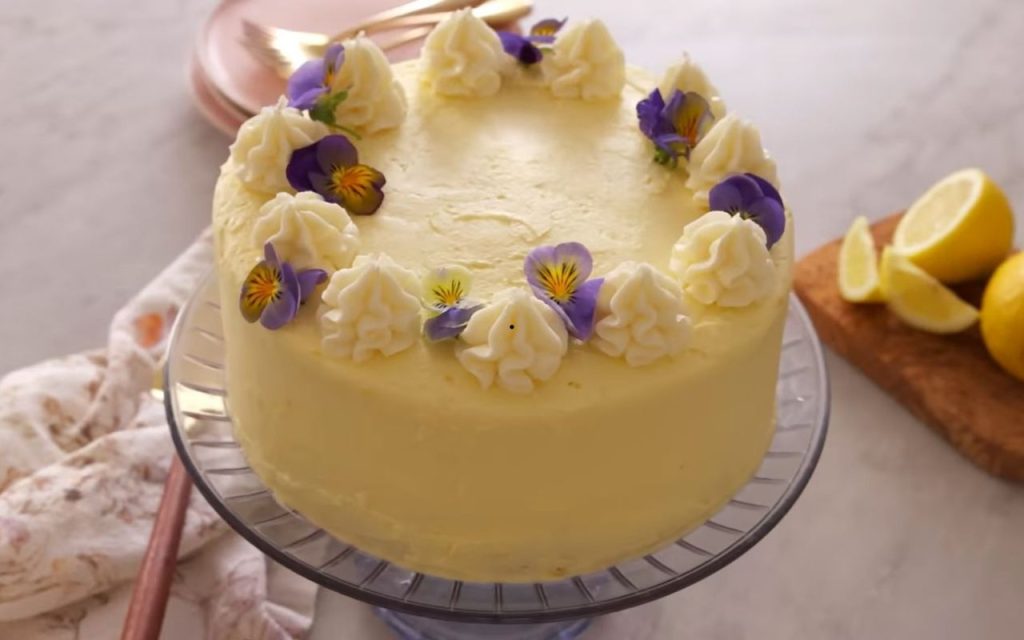
If you are looking for a dessert that embodies pure, sunny flavor, this luscious lemon cake is the perfect choice. The secret to its incredible taste lies in the technique: mixing the zest directly with the butter and sugar allows the sugar to act as an abrasive, releasing essential lemon oils for maximum flavor. Paired with a tangy, fluffy cream cheese frosting, this cake balances sweetness and acidity perfectly, resulting in a tender crumb that is never dense or bready.
Ingredients
For the Lemon Cake Layers
- 2 ½ cups (300g) all-purpose flour
- ½ tsp baking soda
- 1 ½ tsp baking powder
- ¾ tsp salt
- 1 cup (226g) unsalted butter, room temperature
- 1 ½ cups (300g) granulated sugar
- 2 tbsp lemon zest (approx. zest of 2 lemons)
- 3 large eggs
- ¼ cup fresh lemon juice
- 1 cup buttermilk
- 1 tbsp vanilla extract
For the Lemon Cream Cheese Frosting
- 8 oz (226g) cream cheese, softened
- 1 cup (226g) unsalted butter, softened
- 2 tbsp lemon zest (approx. zest of 2 lemons)
- Pinch of salt (optional)
- 7 cups (approx. 1 lb) confectioners’ sugar, sifted if lumpy
- Approx. 2 tbsp fresh lemon juice (adjusted to taste/consistency)
- Optional: Yellow food coloring or turmeric powder for tinting
Instructions
1. Prepare the Oven and Pans Preheat your oven to 350°F (175°C). Grease two 8-inch cake pans and place a round sheet of parchment paper in the center of each pan to ensure the cakes release perfectly.
2. Whisk the Dry Ingredients In a medium bowl, combine the all-purpose flour, baking soda, baking powder, and salt. Whisk these ingredients thoroughly to ensure the leavening agents are distributed evenly, which helps the cake rise properly. Note: If measuring by volume, sprinkle the flour into the cup and level it off rather than scooping, as packing the flour can result in a dense cake.
3. Cream the Butter, Sugar, and Zest In the bowl of a stand mixer fitted with the paddle attachment, cream the room-temperature butter on medium speed for 30 to 60 seconds. Add the granulated sugar and the lemon zest. Beat on medium speed for about 5 minutes until the mixture is light, fluffy, and pale. Scrape down the bowl halfway through mixing to ensure everything is incorporated.
4. Incorporate Eggs Add the eggs one at a time, allowing each egg to fully mix in before adding the next. Scrape down the sides of the bowl and the paddle to ensure the denser butter mixture isn’t sticking to the top.
5. Prepare the Liquid Mixture In a separate container, combine the buttermilk, ¼ cup fresh lemon juice, and vanilla extract. Stir to combine.
6. Combine Wet and Dry Ingredients Reduce the mixer speed to low. Add the flour mixture and the buttermilk mixture in three alternating additions: start with one-third of the flour, followed by half of the buttermilk mixture, then another third of flour, the remaining buttermilk, and finally the remaining flour. Stop the mixer before the flour is fully incorporated and finish folding by hand to avoid overmixing.
7. Bake Distribute the batter evenly between the two prepared pans. Bake for 35 to 40 minutes, or until the centers are set and spring back when gently pressed. Allow the cakes to cool completely before frosting.
8. Make the Frosting In a clean mixer bowl, beat the softened cream cheese and butter on medium speed for about 30 seconds until creamy. Add the lemon zest and an optional pinch of salt, then mix on medium for about 3 minutes until the mixture is light and fluffy. Turn the mixer to low and gradually add the confectioners’ sugar. As the sugar incorporates, add the lemon juice slowly (about 2 tablespoons), adjusting the amount to achieve your desired consistency and tartness. Increase the speed to medium-low and beat for another minute until fluffy.
9. Assemble and Decorate Place the first cake layer on your serving plate. Spread about one cup of frosting evenly over the top. Place the second cake layer on top. Cover the top and sides with the remaining frosting.
- For a decorative touch: You can reserve ¾ cup of frosting before tinting the rest with a drop of yellow food coloring or turmeric. Pipe white dollops on top using a star tip for contrast.
- Optional garnishes: Finish with ribbons of lemon peel, edible flowers (such as violas), or sprinkles.
Chef’s Tips
- Room Temperature Ingredients: Ensure your butter is soft enough to press with a finger but not melting. This creates the correct emulsion for a fluffy cake.
- Don’t Over-Acidify: While lemon juice adds flavor, too much acid can inhibit gluten formation and make the cake gummy. Stick to the ¼ cup measurement for the batter.
- Flat Cake Layers: To prevent the cakes from doming in the center, you can use “cake strips” (damp fabric strips wrapped around the outside of the pan) to insulate the edges and promote even rising.
- Storage: This cake keeps well in the refrigerator for up to 4 days, or it can be frozen for up to 3 months. Ensure the cake comes to room temperature before serving for the best texture.