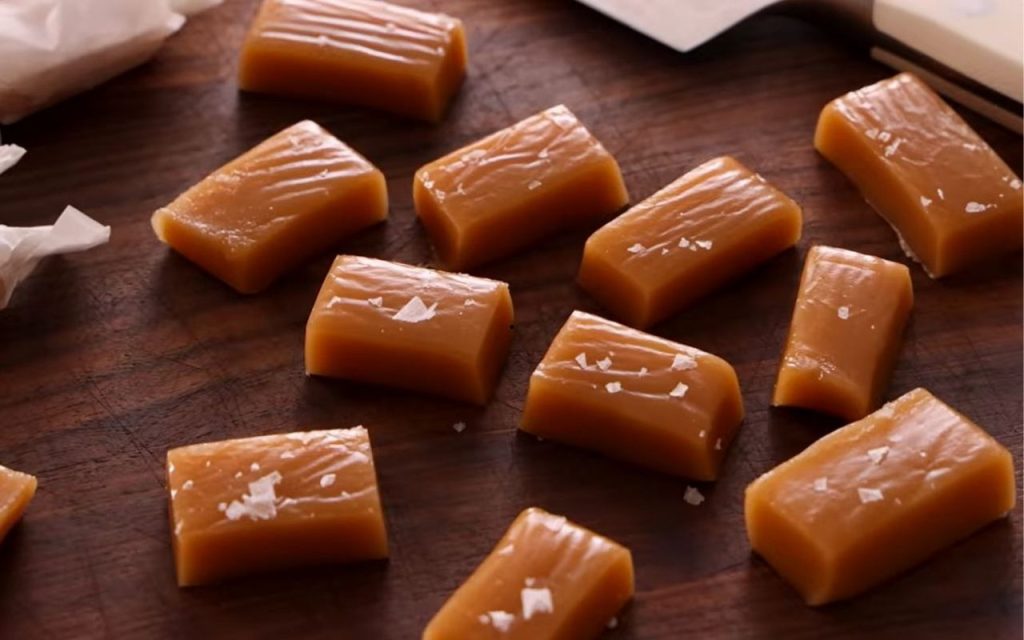
There is something undeniably special about homemade caramels. Unlike the store-bought variety, these artisanal treats are incredibly soft, “melt in your mouth” delicious, and full of rich, buttery flavor. While candy making can sometimes feel intimidating, this recipe comes together quickly with the right preparation.
These salty-sweet delights make excellent gifts or party favors, as they contain no preservatives and allow you to tailor the salt level to your personal preference. Whether you wrap them up for holiday cookie boxes or enjoy them fresh from the cutting board, this method ensures a perfect, chewy texture every time.
Ingredients
For the Caramel:
- Butter: 1 cup, cubed (plus extra for greasing the pan),
- Granulated Sugar: 2 cups (400g)
- Light Brown Sugar: 1 cup (220g), packed
- Corn Syrup: 1 cup (ensure this is standard corn syrup, not high fructose)
- Salt: 1 teaspoon (or slightly more for a saltier profile)
- Heavy Cream: 2 cups
- Vanilla Extract: 2 teaspoons
Optional Topping:
- Flaked Sea Salt: For finishing
Instructions
1. Prepare the Pan
Before beginning the cooking process, prepare your workspace. Lightly butter a 9×13-inch baking dish. Place a sheet of parchment paper inside, pressing it down to fit the corners, and then lightly butter the parchment paper itself. This double-greasing ensures the sticky caramels release easily later on.
2. Combine the Base Ingredients
Select a heavy-bottomed, 4-to-5-quart saucepan. It is crucial to use a large, deep pot because the mixture will bubble up significantly during cooking.
Place the pot over medium heat. Add the cubed butter, granulated sugar, packed light brown sugar, corn syrup, and salt. Stir constantly with a wooden spoon until the butter is melted and the sugars begin to bubble,.
3. Add the Cream
Once the sugar and butter mixture has melted and is bubbling, slowly pour in the 2 cups of heavy cream while continuing to stir. Adding the cream will temporarily lower the temperature of the mixture.
4. The Boil
Continue to cook the mixture over medium heat, stirring constantly to prevent scorching. As the caramel boils, sugar crystals may splash onto the sides of the pot. To prevent crystallization, dip a pastry brush in water and brush down the sides of the pot.
Use a candy thermometer to monitor the temperature. The mixture will heat up quickly to the 220°F range and then likely “stall” for a period as the water from the butter and cream boils off. Be patient and keep stirring. You will notice the mixture changing from a frothy liquid to a thicker consistency with larger, slower bubbles that look like “burps”.
5. Reach the Soft Ball Stage
Cook until the thermometer registers 245°F, which is known as the “soft ball stage”,.
- Tip: If you do not have a thermometer, you can use the cold water test. Drop a small spoonful of hot caramel into a glass of cold water. If it forms a soft, gummy ball that doesn’t immediately dissolve but isn’t hard like a rock, it is ready,.
6. Flavor and Pour
Immediately remove the pot from the heat once it hits 245°F. Stir in the vanilla extract (caution: the alcohol may burn off rapidly).
Carefully pour the molten caramel into your prepared, parchment-lined pan. Do not scrape the bottom of the pot excessively if there are any burnt bits; just let the smooth caramel flow out.
7. Cool and Set
Allow the caramel to sit at room temperature for about 4 hours to cool and solidify.
- If you want to create salted caramels, let the slab cool for 30 minutes, then sprinkle flaked sea salt over the top so it sits on the surface rather than sinking in.
- To speed up the setting process, you can place the pan in the fridge, but let it stand at room temperature for 30 minutes before cutting.
8. Cut and Wrap
Once the slab is cool and firm, lift it out of the pan using the parchment paper. Using a sharp knife, cut the slab into your desired shapes, such as squares or traditional bars.
Wrap each piece individually in wax paper or parchment paper immediately after cutting. Do not stack unwrapped caramels, as they will fuse back together.
Chef’s Tips
- Pot Selection: Avoid thin-sided pots, as they can cause the caramel to burn. A heavy-duty, nonstick pot is ideal. If your pot looks too small once the mixture starts boiling, switch to a larger one immediately to avoid boil-overs.
- Flavor Variations: While vanilla is classic, you can substitute it with bourbon or rum for a different flavor profile.
- Storage: These caramels can be stored at room temperature for up to one week, or in the refrigerator for several weeks. If storing them in a container, separate layers with parchment paper.