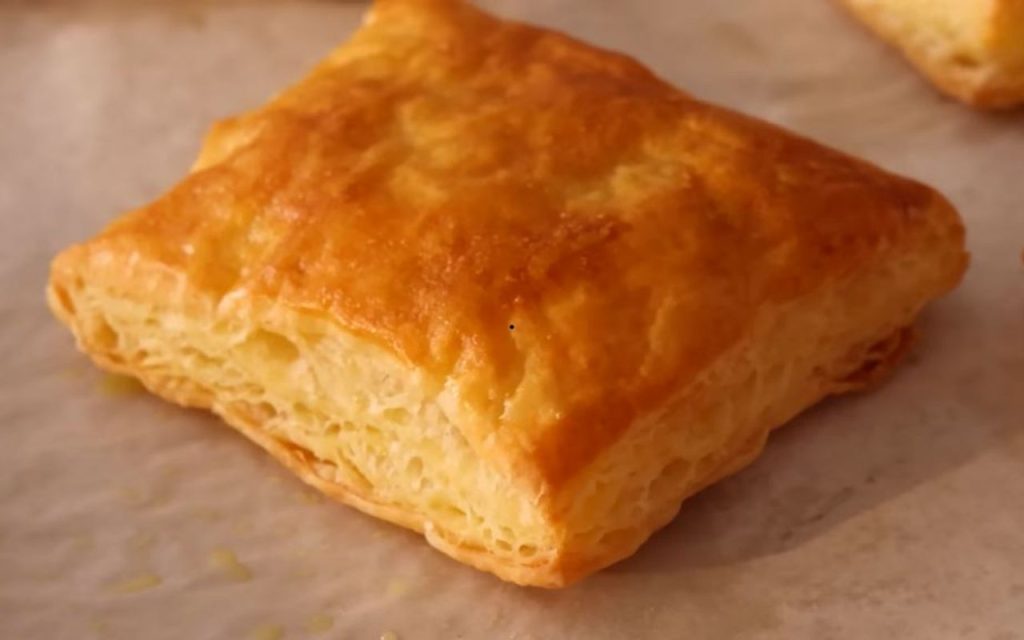
Puff pastry is an incredibly versatile staple in the baking world, used for everything from sweet fruit turnovers to savory tarts. While store-bought options are readily available, making your own at home yields a result that tastes significantly better and performs beautifully.
This recipe utilizes a “rough puff” method rather than the traditional, labor-intensive lamination process. By grating frozen butter into the flour, you achieve sky-high, flaky layers without the need to create a complex butter block. Whether you are craving a crisp vegetable tart or a delicate Danish, this dough provides the perfect foundation with lovely, buttery flavor.
Ingredients
- 1 cup Butter, frozen rock hard
- 2 cups (240g) All-purpose flour
- 1 tablespoon Granulated sugar
- 1/2 teaspoon Salt
- 6 tablespoons Cold water (plus more as needed)
Instructions
- Prepare the Butter Begin by placing your butter in the freezer. It must be frozen rock hard before you start the recipe to ensure the correct texture.
- Combine Dry Ingredients In a large bowl, measure out the all-purpose flour. Add the granulated sugar for a “barest kiss of sweetness” and the salt for contrast. Whisk these ingredients together to combine.
- Incorporate the Butter Remove the frozen butter from the freezer. Using a grater, grate the butter directly into the flour mixture. As you grate, periodically toss the butter shreds with the flour to prevent them from sticking together in a large clump. Repeat this process until all the butter is grated and coated in flour.
- Hydrate the Dough Drizzle 6 tablespoons of cold water into the bowl while mixing with your hands or a utensil. The goal is to achieve a “shaggy” dough that clumps together and holds its shape when squeezed. If the mixture is too dry, add more water one tablespoon at a time, being careful not to add too much, or the consistency will change.
- Form and Chill Gently knead the dough in the bowl, pressing down with the palm of your hand to bring it together while keeping the butter pieces intact. Transfer the dough to a counter and shape it into a square approximately 1 inch (2.5 cm) thick. Wrap the square tightly in plastic wrap and refrigerate for one hour to allow the butter to firm up.
- Roll and Fold (The Lamination) After chilling, unwrap the dough on a lightly floured surface. Roll it out into a rectangle about 1/2-inch thick.
- The Fold: Fold the dough into thirds, just like folding a letter for an envelope.
- The Rotate: Rotate the dough 90 degrees.
- Repeat: Roll the dough out again and repeat the folding and rotating process. You will perform this “roll, fold, rotate” cycle a total of four times.
- Final Rest After the fourth cycle, perform one final fold into thirds. Wrap the dough in plastic again to prevent it from drying out. Chill the dough in the refrigerator for at least two hours (or up to two days) before using.
Optional Tips for Success
- Butter Selection: Using European-style butter is recommended because it has a higher fat content and less water, which often yields a better result and color. However, American-style butter works well and is less prone to melting quickly.
- Temperature Control: If the butter begins to melt or the dough becomes sticky at any point, immediately pop the bowl or dough into the fridge or freezer until it is cold again.
- Freezing: This dough freezes exceptionally well. You can freeze the block for up to two months. Alternatively, roll the dough to 1/8-inch thickness between sheets of parchment paper, fold it, and freeze it so it is ready to use later.
- Baking Temperatures: While you should consult your specific pastry recipe, a standard baking temperature for puff pastry is generally around 400°F (200°C), while filled pastries like Danishes may bake at 375°F (190°C).
- Finishing: For a glossy, golden finish on your tarts or turnovers, brush the pastry with an egg wash before baking.