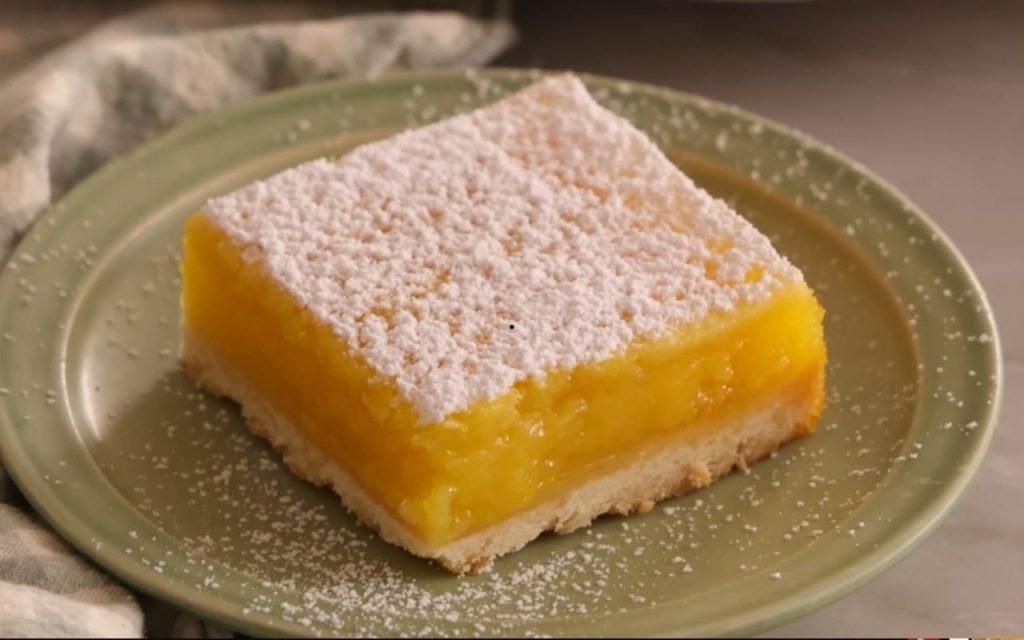
There are few desserts as satisfying as a perfectly executed lemon bar. This classic treat strikes the ideal balance between a luscious, gooey citrus topping and a melt-in-your-mouth buttery base. While the combination of lemon curd and shortbread became a widely popular American dessert in the 1960s, it remains a timeless favorite today due to its vibrant flavor and straightforward preparation.
This recipe falls into the “quick and easy” category, yet it delivers professional-bakery results. The secret lies in a specific technique: pouring the filling directly over the hot crust to give the baking process a jump start, ensuring perfect layers every time.
Ingredients
For the Shortbread Crust
- All-purpose flour: 3 cups (360g)
- Powdered sugar: 3/4 cup (90g)
- Salt: 1/2 teaspoon
- Unsalted butter: 3/4 cup plus 2 tablespoons (200g), melted
- Vanilla extract: 1 teaspoon (optional, for extra flavor)
For the Lemon Filling
- Granulated sugar: 3 cups (600g)
- Lemon zest: 3 tablespoons (approximately 3 lemons)
- All-purpose flour: 1/2 cup (60g)
- Fresh lemon juice: 1 cup (no seeds)
- Eggs: 8 large eggs, room temperature
For Garnish
- Powdered sugar: For dusting
Instructions
- Preheat and Prep: Preheat your oven to 350°F (175°C). Line a 9×13 inch baking dish with parchment paper, ensuring the paper covers the sides for easy removal later.
- Whisk Dry Crust Ingredients: In a large bowl, combine the 3 cups of flour, powdered sugar, and salt. Whisk these together to distribute the ingredients evenly.
- Mix the Dough: Pour the melted butter into the flour mixture. If desired, add the optional vanilla extract at this stage. Mix with a spatula until combined; you can also use a stand mixer with a paddle attachment if preferred.
- Press the Crust: Sprinkle the dough crumbles evenly into your prepared baking pan. Using clean hands or the flat bottom of a glass, press the dough firmly into an even layer.
- Note: Ensure there are no gaps or cracks in the crust. Gaps can cause the filling to seep underneath during baking, resulting in a “floating crust”.
- Bake the Crust: Place the crust in the oven and bake at 350°F for 20 to 25 minutes, or until it is a light golden color.
- Prepare the Lemon Sugar: While the crust bakes, place the granulated sugar and lemon zest into a food processor. Pulse until the mixture turns a light yellow color and resembles the texture of wet sand. This process extracts the lemon oils for maximum flavor.
- Alternative: If you do not have a food processor, mince the zest finely and rub it into the sugar by hand until fragrant and yellow.
- Make the Filling Batter: Transfer the lemon sugar to a large bowl. Sprinkle in the 1/2 cup of flour and whisk to combine; the flour acts as a thickening agent to help the curd set. Pour in the fresh lemon juice and add the 8 eggs. Whisk well until fully combined.
- Pour Over Hot Crust: Once the crust is finished baking, carefully remove it from the oven. Give your filling one final stir and immediately pour it over the hot crust. This helps the layers adhere and starts the cooking process instantly.
- Bake the Bars: Return the pan to the oven and bake at 350°F for approximately 25 minutes. You will know they are done when the center has only a very slight jiggle.
- Cool and Chill: Allow the bars to cool at room temperature for about one hour. Afterward, transfer them to the refrigerator to chill for at least 2 hours to set completely.
- Serve: Lift the bars out of the pan using the parchment paper. Dust generously with powdered sugar and cut into squares.
Chef’s Tips for Success
- Preventing “Floating Crust”: The only common error with lemon bars is a crust that floats to the top of the filling. To prevent this, be meticulous about pressing the crust down to eliminate any cracks where the liquid filling could seep through.
- Clean Cuts: For bakery-perfect squares, wipe your knife with a damp paper towel between every cut.
- Storage: These bars will last for one week in an airtight container in the refrigerator.
- Freezing: You can freeze these bars for up to 3 months. Cut them first, freeze them on a baking sheet, and then transfer them to a container.